







Royal Japanese names have a timeless charm. They reflect honor, tradition, and beauty. Many people love Japanese names because they carry deep cultural meaning. Some come from Japan’s imperial history while others are inspired by noble families and respected leaders. If you enjoy learning about meaningful names then royal Japanese names offer plenty of inspiration. They blend history with elegance in a way that still feels relevant today.
Many readers also search for Japanese names that mean royalty because they want names that symbolize dignity and respect. Others look for Japanese names that mean king or a Japanese name meaning king to find a strong and noble choice. While direct translations are uncommon in Japanese naming traditions many names carry meanings linked to leadership honor and strength. That’s why royal Japanese names remain a popular topic.
This guide explores the best royal Japanese names with meanings and origins. You’ll also discover Japanese names meaning king, traditional favorites, and rare gems. Whether you’re choosing a baby name, writing a story, or simply exploring Japanese culture, this collection of Japanese names will help you find a name that stands out.
What Are Royal Japanese Names?
Royal Japanese names are names linked to Japan’s imperial history, noble families, and traditional court culture. These names often come from emperors, empresses, princes, and princesses in the Japanese imperial family. They carry deep meanings like honor, wisdom, strength, beauty, and harmony. Many people also explore Japanese royal names, Japanese noble names, and Japanese names with meanings to understand their cultural roots. In short, royal Japanese names reflect respect, heritage, and timeless elegance.
1. Akihito
Pronunciation: ah-kee-hee-toh
Meaning: Bright compassion
Kanji: 明仁
2. Naruhito
Pronunciation: nah-roo-hee-toh
Meaning: Virtuous humanity
Kanji: 徳仁
3. Fumihito
Pronunciation: foo-mee-hee-toh
Meaning: Scholarly compassion
Kanji: 文仁
4. Aiko
Pronunciation: eye-koh
Meaning: Child of love
Kanji: 愛子
5. Mako
Pronunciation: mah-koh
Meaning: True child
Kanji: 眞子
6. Kako
Pronunciation: kah-koh
Meaning: Excellent child
Kanji: 佳子
7. Kiko
Pronunciation: kee-koh
Meaning: Noble child
Kanji: 紀子
8. Masako
Pronunciation: mah-sah-koh
Meaning: Elegant child
Kanji: 雅子
9. Michiko
Pronunciation: mee-chee-koh
Meaning: Beautiful wise child
Kanji: 美智子
10. Sayako
Pronunciation: sah-yah-koh
Meaning: Pure child
Kanji: 清子
11. Hisahito
Pronunciation: hee-sah-hee-toh
Meaning: Lasting virtue
Kanji: 悠仁
12. Hirohito
Pronunciation: hee-roh-hee-toh
Meaning: Broad compassion
Kanji: 裕仁
13. Yoshihito
Pronunciation: yoh-shee-hee-toh
Meaning: Righteous person
Kanji: 嘉仁
14. Takahito
Pronunciation: tah-kah-hee-toh
Meaning: Noble person
Kanji: 崇仁
15. Tomohito
Pronunciation: toh-moh-hee-toh
Meaning: Wise companion
Kanji: 寬仁
16. Norihito
Pronunciation: noh-ree-hee-toh
Meaning: Lawful person
Kanji: 憲仁
17. Yasuhito
Pronunciation: yah-soo-hee-toh
Meaning: Peaceful person
Kanji: 雍仁
18. Nobuhito
Pronunciation: noh-boo-hee-toh
Meaning: Faithful person
Kanji: 宣仁
19. Morihito
Pronunciation: moh-ree-hee-toh
Meaning: Guardian of virtue
Kanji: 守仁
20. Atsuhito
Pronunciation: ah-tsoo-hee-toh
Meaning: Sincere person
Kanji: 敦仁
21. Rei
Pronunciation: ray
Meaning: Grace and elegance
Kanji: 麗
22. Rin
Pronunciation: rin
Meaning: Dignity and strength
Kanji: 凛
23. Haru
Pronunciation: hah-roo
Meaning: Spring
Kanji: 春
24. Akira
Pronunciation: ah-kee-rah
Meaning: Bright and clear
Kanji: 明
25. Makoto
Pronunciation: mah-koh-toh
Meaning: Sincerity
Kanji: 誠
26. Hikaru
Pronunciation: hee-kah-roo
Meaning: Light
Kanji: 光
27. Kaoru
Pronunciation: kah-oh-roo
Meaning: Fragrance
Kanji: 薫
28. Sora
Pronunciation: soh-rah
Meaning: Sky
Kanji: 空
29. Yuki
Pronunciation: yoo-kee
Meaning: Happiness
Kanji: 幸
30. Ren
Pronunciation: ren
Meaning: Lotus
Kanji: 蓮
The History Behind Royal Japanese Names
The history of royal Japanese names dates back thousands of years to Japan’s imperial court. These names reflected honor, wisdom, leadership, and family heritage. Members of the Japanese imperial family received names that symbolized noble values instead of power alone. Many traditional Japanese names still inspire parents, writers, and history lovers because they preserve the beauty of Japanese naming traditions. Today, royal Japanese names continue to represent elegance, respect, and a strong connection to Japan’s rich cultural past.
1. Jimmu
Meaning: Divine warrior
Pronunciation: jim-moo
Kanji: 神武
2. Suizei
Meaning: Peaceful ruler
Pronunciation: soo-ee-zay
Kanji: 綏靖
3. Annei
Meaning: Lasting peace
Pronunciation: ahn-nay
Kanji: 安寧
4. Itoku
Meaning: Great virtue
Pronunciation: ee-toh-koo
Kanji: 懿徳
5. Kōshō
Meaning: Filial respect
Pronunciation: koh-shoh
Kanji: 孝昭
6. Kōan
Meaning: Peace through virtue
Pronunciation: koh-ahn
Kanji: 孝安
7. Kōrei
Meaning: Wise spirit
Pronunciation: koh-ray
Kanji: 孝霊
8. Kōgen
Meaning: Noble origin
Pronunciation: koh-gen
Kanji: 孝元
9. Kaika
Meaning: Flourishing civilization
Pronunciation: kai-kah
Kanji: 開化
10. Sujin
Meaning: Revered deity
Pronunciation: soo-jin
Kanji: 崇神
11. Suinin
Meaning: Gentle virtue
Pronunciation: soo-ee-neen
Kanji: 垂仁
12. Keikō
Meaning: Respectful light
Pronunciation: kay-koh
Kanji: 景行
13. Seimu
Meaning: Sacred governance
Pronunciation: say-moo
Kanji: 成務
14. Chūai
Meaning: Loyal love
Pronunciation: choo-eye
Kanji: 仲哀
15. Ōjin
Meaning: Divine ruler
Pronunciation: oh-jin
Kanji: 応神
16. Nintoku
Meaning: Benevolent virtue
Pronunciation: nin-toh-koo
Kanji: 仁徳
17. Richū
Meaning: Noble center
Pronunciation: ree-choo
Kanji: 履中
18. Hanzei
Meaning: Peaceful prosperity
Pronunciation: han-zay
Kanji: 反正
19. Ingyō
Meaning: Peaceful righteousness
Pronunciation: een-gyoh
Kanji: 允恭
20. Ankō
Meaning: Calm happiness
Pronunciation: ahn-koh
Kanji: 安康
21. Yūryaku
Meaning: Courageous strategy
Pronunciation: yoo-ryah-koo
Kanji: 雄略
22. Seinei
Meaning: Pure tranquility
Pronunciation: say-nay
Kanji: 清寧
23. Kenzō
Meaning: Healthy creation
Pronunciation: ken-zoh
Kanji: 顕宗
24. Ninken
Meaning: Compassionate ruler
Pronunciation: nin-ken
Kanji: 仁賢
25. Buretsu
Meaning: Strong determination
Pronunciation: boo-ret-soo
Kanji: 武烈
26. Keitai
Meaning: Blessed succession
Pronunciation: kay-tie
Kanji: 継体
27. Kinmei
Meaning: Bright wisdom
Pronunciation: kin-may
Kanji: 欽明
28. Bidatsu
Meaning: Noble achievement
Pronunciation: bee-daht-soo
Kanji: 敏達
29. Yōmei
Meaning: Eternal brightness
Pronunciation: yoh-may
Kanji: 用明
30. Suiko
Meaning: Crystal-like child
Pronunciation: soo-ee-koh
Kanji: 推古
Why Royal Japanese Names Hold Cultural Significance
Royal Japanese names are more than beautiful names. They represent Japan’s history, values, and traditions. Many Japanese royal names symbolize honor, wisdom, loyalty, and harmony. Members of the Japanese imperial family have passed these names through generations, making them an important part of Japanese royal heritage. Today, many parents and writers still admire these traditional Japanese names because they carry timeless meanings and reflect the elegance of Japanese court culture.
1. Akihito
Meaning: Bright compassion
Pronunciation: ah-kee-hee-toh
Kanji: 明仁
2. Naruhito
Meaning: Virtuous humanity
Pronunciation: nah-roo-hee-toh
Kanji: 徳仁
3. Fumihito
Meaning: Scholarly compassion
Pronunciation: foo-mee-hee-toh
Kanji: 文仁
4. Aiko
Meaning: Child of love
Pronunciation: eye-koh
Kanji: 愛子
5. Mako
Meaning: True child
Pronunciation: mah-koh
Kanji: 眞子
6. Kako
Meaning: Excellent child
Pronunciation: kah-koh
Kanji: 佳子
7. Kiko
Meaning: Noble child
Pronunciation: kee-koh
Kanji: 紀子
8. Michiko
Meaning: Beautiful wise child
Pronunciation: mee-chee-koh
Kanji: 美智子
9. Masako
Meaning: Elegant child
Pronunciation: mah-sah-koh
Kanji: 雅子
10. Sayako
Meaning: Pure child
Pronunciation: sah-yah-koh
Kanji: 清子
11. Yoshihito
Meaning: Righteous person
Pronunciation: yoh-shee-hee-toh
Kanji: 嘉仁
12. Hirohito
Meaning: Broad compassion
Pronunciation: hee-roh-hee-toh
Kanji: 裕仁
13. Takahito
Meaning: Noble person
Pronunciation: tah-kah-hee-toh
Kanji: 崇仁
14. Tomohito
Meaning: Wise companion
Pronunciation: toh-moh-hee-toh
Kanji: 寬仁
15. Norihito
Meaning: Lawful person
Pronunciation: noh-ree-hee-toh
Kanji: 憲仁
16. Yasuhito
Meaning: Peaceful person
Pronunciation: yah-soo-hee-toh
Kanji: 雍仁
17. Nobuhito
Meaning: Faithful person
Pronunciation: noh-boo-hee-toh
Kanji: 宣仁
18. Hisahito
Meaning: Lasting virtue
Pronunciation: hee-sah-hee-toh
Kanji: 悠仁
19. Morihito
Meaning: Guardian of virtue
Pronunciation: moh-ree-hee-toh
Kanji: 守仁
20. Atsuhito
Meaning: Sincere person
Pronunciation: aht-soo-hee-toh
Kanji: 敦仁
21. Naoko
Meaning: Honest child
Pronunciation: nah-oh-koh
Kanji: 尚子
22. Chikako
Meaning: Wise child
Pronunciation: chee-kah-koh
Kanji: 智香子
23. Ayako
Meaning: Colorful child
Pronunciation: ah-yah-koh
Kanji: 綾子
24. Reiko
Meaning: Graceful child
Pronunciation: ray-koh
Kanji: 麗子
25. Kimiko
Meaning: Noble child
Pronunciation: kee-mee-koh
Kanji: 君子
26. Haruko
Meaning: Spring child
Pronunciation: hah-roo-koh
Kanji: 春子
27. Akiko
Meaning: Bright child
Pronunciation: ah-kee-koh
Kanji: 明子
28. Yoshiko
Meaning: Good child
Pronunciation: yoh-shee-koh
Kanji: 良子
29. Sachiko
Meaning: Happy child
Pronunciation: sah-chee-koh
Kanji: 幸子
30. Kumiko
Meaning: Long-lasting beauty
Pronunciation: koo-mee-koh
Kanji: 久美子
How Royal Japanese Names Reflect Japanese Tradition
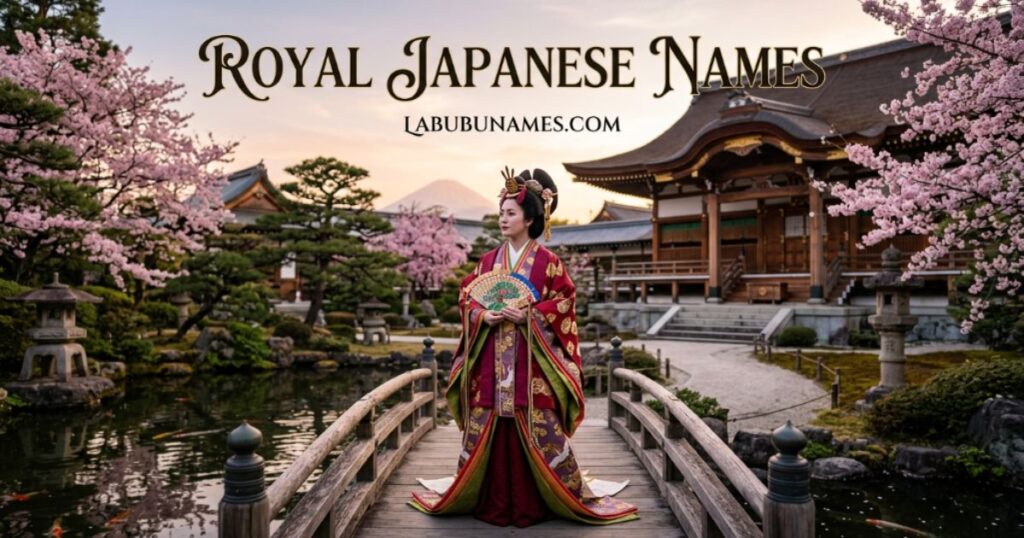
Royal Japanese names reflect the heart of Japan’s traditions. They often express respect, harmony, loyalty, and wisdom. Many Japanese royal names include kanji that symbolize nature, virtue, or noble character. These names also preserve Japanese cultural names, Japanese heritage names, and Japanese imperial naming traditions. Even today, many families admire royal Japanese names because they connect modern generations with Japan’s rich history and enduring values.
1. Akihito
Meaning: Bright compassion
Pronunciation: ah-kee-hee-toh
Kanji: 明仁
2. Naruhito
Meaning: Virtuous humanity
Pronunciation: nah-roo-hee-toh
Kanji: 徳仁
3. Fumihito
Meaning: Scholarly compassion
Pronunciation: foo-mee-hee-toh
Kanji: 文仁
4. Michiko
Meaning: Beautiful wise child
Pronunciation: mee-chee-koh
Kanji: 美智子
5. Masako
Meaning: Elegant child
Pronunciation: mah-sah-koh
Kanji: 雅子
6. Aiko
Meaning: Child of love
Pronunciation: eye-koh
Kanji: 愛子
7. Mako
Meaning: True child
Pronunciation: mah-koh
Kanji: 眞子
8. Kako
Meaning: Excellent child
Pronunciation: kah-koh
Kanji: 佳子
9. Kiko
Meaning: Noble child
Pronunciation: kee-koh
Kanji: 紀子
10. Sayako
Meaning: Pure child
Pronunciation: sah-yah-koh
Kanji: 清子
11. Hisahito
Meaning: Lasting virtue
Pronunciation: hee-sah-hee-toh
Kanji: 悠仁
12. Takahito
Meaning: Noble person
Pronunciation: tah-kah-hee-toh
Kanji: 崇仁
13. Tomohito
Meaning: Wise companion
Pronunciation: toh-moh-hee-toh
Kanji: 寬仁
14. Norihito
Meaning: Lawful person
Pronunciation: noh-ree-hee-toh
Kanji: 憲仁
15. Yasuhito
Meaning: Peaceful person
Pronunciation: yah-soo-hee-toh
Kanji: 雍仁
16. Nobuhito
Meaning: Faithful person
Pronunciation: noh-boo-hee-toh
Kanji: 宣仁
17. Hirohito
Meaning: Broad compassion
Pronunciation: hee-roh-hee-toh
Kanji: 裕仁
18. Yoshihito
Meaning: Righteous person
Pronunciation: yoh-shee-hee-toh
Kanji: 嘉仁
19. Atsuhito
Meaning: Sincere person
Pronunciation: aht-soo-hee-toh
Kanji: 敦仁
20. Morihito
Meaning: Guardian of virtue
Pronunciation: moh-ree-hee-toh
Kanji: 守仁
21. Reiko
Meaning: Graceful child
Pronunciation: ray-koh
Kanji: 麗子
22. Kimiko
Meaning: Noble child
Pronunciation: kee-mee-koh
Kanji: 君子
23. Akiko
Meaning: Bright child
Pronunciation: ah-kee-koh
Kanji: 明子
24. Haruko
Meaning: Spring child
Pronunciation: hah-roo-koh
Kanji: 春子
25. Naoko
Meaning: Honest child
Pronunciation: nah-oh-koh
Kanji: 尚子
26. Ayako
Meaning: Colorful child
Pronunciation: ah-yah-koh
Kanji: 綾子
27. Chikako
Meaning: Wise child
Pronunciation: chee-kah-koh
Kanji: 智香子
28. Yoshiko
Meaning: Good child
Pronunciation: yoh-shee-koh
Kanji: 良子
29. Sachiko
Meaning: Happy child
Pronunciation: sah-chee-koh
Kanji: 幸子
30. Kumiko
Meaning: Long-lasting beauty
Pronunciation: koo-mee-koh
Kanji: 久美子
Royal Japanese Names Used by the Imperial Family
The Japanese imperial family has used many of the most respected royal Japanese names throughout history. These Japanese imperial names often include kanji that represent kindness, wisdom, dignity, and harmony. Many of these names belong to emperors, empresses, princes, and princesses. They remain some of the best royal Japanese names because they reflect the traditions of the Japanese royal lineage and continue to inspire people around the world.
1. Naruhito
Meaning: Virtuous humanity
Pronunciation: nah-roo-hee-toh
Kanji: 徳仁
2. Masako
Meaning: Elegant child
Pronunciation: mah-sah-koh
Kanji: 雅子
3. Aiko
Meaning: Child of love
Pronunciation: eye-koh
Kanji: 愛子
4. Fumihito
Meaning: Scholarly compassion
Pronunciation: foo-mee-hee-toh
Kanji: 文仁
5. Kiko
Meaning: Noble child
Pronunciation: kee-koh
Kanji: 紀子
6. Mako
Meaning: True child
Pronunciation: mah-koh
Kanji: 眞子
7. Kako
Meaning: Excellent child
Pronunciation: kah-koh
Kanji: 佳子
8. Hisahito
Meaning: Lasting virtue
Pronunciation: hee-sah-hee-toh
Kanji: 悠仁
9. Akihito
Meaning: Bright compassion
Pronunciation: ah-kee-hee-toh
Kanji: 明仁
10. Michiko
Meaning: Beautiful wise child
Pronunciation: mee-chee-koh
Kanji: 美智子
11. Hirohito
Meaning: Broad compassion
Pronunciation: hee-roh-hee-toh
Kanji: 裕仁
12. Yoshihito
Meaning: Righteous person
Pronunciation: yoh-shee-hee-toh
Kanji: 嘉仁
13. Takahito
Meaning: Noble person
Pronunciation: tah-kah-hee-toh
Kanji: 崇仁
14. Tomohito
Meaning: Wise companion
Pronunciation: toh-moh-hee-toh
Kanji: 寬仁
15. Norihito
Meaning: Lawful person
Pronunciation: noh-ree-hee-toh
Kanji: 憲仁
16. Yasuhito
Meaning: Peaceful person
Pronunciation: yah-soo-hee-toh
Kanji: 雍仁
17. Nobuhito
Meaning: Faithful person
Pronunciation: noh-boo-hee-toh
Kanji: 宣仁
18. Sayako
Meaning: Pure child
Pronunciation: sah-yah-koh
Kanji: 清子
19. Atsuhito
Meaning: Sincere person
Pronunciation: aht-soo-hee-toh
Kanji: 敦仁
20. Morihito
Meaning: Guardian of virtue
Pronunciation: moh-ree-hee-toh
Kanji: 守仁
21. Reiko
Meaning: Graceful child
Pronunciation: ray-koh
Kanji: 麗子
22. Kimiko
Meaning: Noble child
Pronunciation: kee-mee-koh
Kanji: 君子
23. Akiko
Meaning: Bright child
Pronunciation: ah-kee-koh
Kanji: 明子
24. Haruko
Meaning: Spring child
Pronunciation: hah-roo-koh
Kanji: 春子
25. Yoshiko
Meaning: Good child
Pronunciation: yoh-shee-koh
Kanji: 良子
26. Naoko
Meaning: Honest child
Pronunciation: nah-oh-koh
Kanji: 尚子
27. Ayako
Meaning: Colorful child
Pronunciation: ah-yah-koh
Kanji: 綾子
28. Chikako
Meaning: Wise child
Pronunciation: chee-kah-koh
Kanji: 智香子
29. Sachiko
Meaning: Happy child
Pronunciation: sah-chee-koh
Kanji: 幸子
30. Kumiko
Meaning: Long-lasting beauty
Pronunciation: koo-mee-koh
Kanji: 久美子
Popular Royal Japanese Names for Boys
Royal Japanese names for boys often represent courage, wisdom, honor, and leadership. Many of these Japanese royal names come from emperors, princes, and noble families who shaped Japan’s history. Their meanings reflect the values of the Japanese imperial family and continue to inspire modern parents. If you’re searching for royal Japanese boy names, this collection offers authentic choices with deep cultural significance.
1. Akihito
Meaning: Bright compassion
Pronunciation: ah-kee-hee-toh
Kanji: 明仁
2. Naruhito
Meaning: Virtuous humanity
Pronunciation: nah-roo-hee-toh
Kanji: 徳仁
3. Fumihito
Meaning: Scholarly compassion
Pronunciation: foo-mee-hee-toh
Kanji: 文仁
4. Hisahito
Meaning: Lasting virtue
Pronunciation: hee-sah-hee-toh
Kanji: 悠仁
5. Hirohito
Meaning: Broad compassion
Pronunciation: hee-roh-hee-toh
Kanji: 裕仁
6. Yoshihito
Meaning: Righteous person
Pronunciation: yoh-shee-hee-toh
Kanji: 嘉仁
7. Takahito
Meaning: Noble person
Pronunciation: tah-kah-hee-toh
Kanji: 崇仁
8. Tomohito
Meaning: Wise companion
Pronunciation: toh-moh-hee-toh
Kanji: 寬仁
9. Norihito
Meaning: Lawful person
Pronunciation: noh-ree-hee-toh
Kanji: 憲仁
10. Nobuhito
Meaning: Faithful person
Pronunciation: noh-boo-hee-toh
Kanji: 宣仁
11. Yasuhito
Meaning: Peaceful person
Pronunciation: yah-soo-hee-toh
Kanji: 雍仁
12. Morihito
Meaning: Guardian of virtue
Pronunciation: moh-ree-hee-toh
Kanji: 守仁
13. Atsuhito
Meaning: Sincere person
Pronunciation: aht-soo-hee-toh
Kanji: 敦仁
14. Teruhito
Meaning: Shining person
Pronunciation: teh-roo-hee-toh
Kanji: 照仁
15. Toshihito
Meaning: Wise person
Pronunciation: toh-shee-hee-toh
Kanji: 俊仁
16. Haruhito
Meaning: Spring virtue
Pronunciation: hah-roo-hee-toh
Kanji: 春仁
17. Kazuhito
Meaning: Harmonious person
Pronunciation: kah-zoo-hee-toh
Kanji: 和仁
18. Michihiko
Meaning: Wise prince
Pronunciation: mee-chee-hee-koh
Kanji: 道彦
19. Hidehito
Meaning: Excellent person
Pronunciation: hee-deh-hee-toh
Kanji: 秀仁
20. Naohito
Meaning: Honest person
Pronunciation: nah-oh-hee-toh
Kanji: 尚仁
21. Kiyohito
Meaning: Pure person
Pronunciation: kee-yoh-hee-toh
Kanji: 清仁
22. Masahito
Meaning: Righteous person
Pronunciation: mah-sah-hee-toh
Kanji: 正仁
23. Shigehito
Meaning: Prosperous person
Pronunciation: shee-geh-hee-toh
Kanji: 茂仁
24. Kanehito
Meaning: Golden person
Pronunciation: kah-neh-hee-toh
Kanji: 金仁
25. Ryohito
Meaning: Good person
Pronunciation: ryoh-hee-toh
Kanji: 良仁
26. Kunitaka
Meaning: Noble nation
Pronunciation: koo-nee-tah-kah
Kanji: 国隆
27. Tadamasa
Meaning: Loyal justice
Pronunciation: tah-dah-mah-sah
Kanji: 忠正
28. Motohito
Meaning: Original virtue
Pronunciation: moh-toh-hee-toh
Kanji: 基仁
29. Yorihito
Meaning: Dependable person
Pronunciation: yoh-ree-hee-toh
Kanji: 頼仁
30. Akisada
Meaning: Bright righteousness
Pronunciation: ah-kee-sah-dah
Kanji: 明貞
Popular Royal Japanese Names for Girls
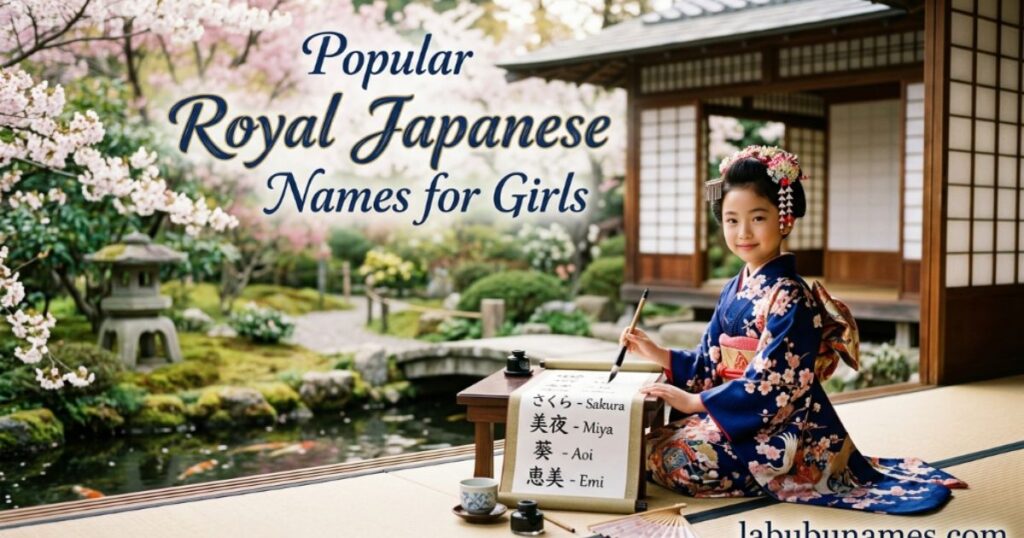
Royal Japanese names for girls are known for their elegance, grace, and timeless beauty. Many of these Japanese princess names and Japanese empress names come from the Japanese imperial family and noble households. Their meanings often reflect kindness, wisdom, purity, and strength. If you’re looking for royal Japanese girl names, these traditional choices combine cultural heritage with beautiful symbolism.
1. Aiko
Meaning: Child of love
Pronunciation: eye-koh
Kanji: 愛子
2. Mako
Meaning: True child
Pronunciation: mah-koh
Kanji: 眞子
3. Kako
Meaning: Excellent child
Pronunciation: kah-koh
Kanji: 佳子
4. Kiko
Meaning: Noble child
Pronunciation: kee-koh
Kanji: 紀子
5. Masako
Meaning: Elegant child
Pronunciation: mah-sah-koh
Kanji: 雅子
6. Michiko
Meaning: Beautiful wise child
Pronunciation: mee-chee-koh
Kanji: 美智子
7. Sayako
Meaning: Pure child
Pronunciation: sah-yah-koh
Kanji: 清子
8. Reiko
Meaning: Graceful child
Pronunciation: ray-koh
Kanji: 麗子
9. Kimiko
Meaning: Noble child
Pronunciation: kee-mee-koh
Kanji: 君子
10. Akiko
Meaning: Bright child
Pronunciation: ah-kee-koh
Kanji: 明子
11. Haruko
Meaning: Spring child
Pronunciation: hah-roo-koh
Kanji: 春子
12. Yoshiko
Meaning: Good child
Pronunciation: yoh-shee-koh
Kanji: 良子
13. Sachiko
Meaning: Happy child
Pronunciation: sah-chee-koh
Kanji: 幸子
14. Kumiko
Meaning: Long-lasting beauty
Pronunciation: koo-mee-koh
Kanji: 久美子
15. Ayako
Meaning: Colorful child
Pronunciation: ah-yah-koh
Kanji: 綾子
16. Naoko
Meaning: Honest child
Pronunciation: nah-oh-koh
Kanji: 尚子
17. Chikako
Meaning: Wise child
Pronunciation: chee-kah-koh
Kanji: 智香子
18. Yuriko
Meaning: Lily child
Pronunciation: yoo-ree-koh
Kanji: 百合子
19. Takako
Meaning: Noble child
Pronunciation: tah-kah-koh
Kanji: 貴子
20. Emiko
Meaning: Blessed child
Pronunciation: eh-mee-koh
Kanji: 恵美子
21. Nobuko
Meaning: Faithful child
Pronunciation: noh-boo-koh
Kanji: 信子
22. Hiroko
Meaning: Generous child
Pronunciation: hee-roh-koh
Kanji: 裕子
23. Sumiko
Meaning: Clear-thinking child
Pronunciation: soo-mee-koh
Kanji: 澄子
24. Junko
Meaning: Pure child
Pronunciation: joon-koh
Kanji: 純子
25. Keiko
Meaning: Respectful child
Pronunciation: kay-koh
Kanji: 恵子
26. Shizuko
Meaning: Quiet child
Pronunciation: shee-zoo-koh
Kanji: 静子
27. Fumiko
Meaning: Literary child
Pronunciation: foo-mee-koh
Kanji: 文子
28. Kazuko
Meaning: Harmonious child
Pronunciation: kah-zoo-koh
Kanji: 和子
29. Tomoko
Meaning: Wise child
Pronunciation: toh-moh-koh
Kanji: 智子
30. Hisako
Meaning: Long-lasting child
Pronunciation: hee-sah-koh
Kanji: 久子
Gender-Neutral Royal Japanese Names with Noble Meanings
Royal Japanese names are not limited to boys or girls. Many gender-neutral royal Japanese names carry noble meanings that suit any child. These Japanese noble names often symbolize wisdom, harmony, honor, beauty, and strength. They have roots in Japanese royal heritage, Japanese court culture, and Japanese naming traditions. If you’re searching for meaningful Japanese royal names, these unisex options offer timeless elegance.
1. Rei
Meaning: Grace, elegance
Pronunciation: ray
Kanji: 麗
2. Haru
Meaning: Spring
Pronunciation: hah-roo
Kanji: 春
3. Akira
Meaning: Bright, clear
Pronunciation: ah-kee-rah
Kanji: 明
4. Hikaru
Meaning: Light
Pronunciation: hee-kah-roo
Kanji: 光
5. Kaoru
Meaning: Fragrance
Pronunciation: kah-oh-roo
Kanji: 薫
6. Makoto
Meaning: Sincerity
Pronunciation: mah-koh-toh
Kanji: 誠
7. Ren
Meaning: Lotus
Pronunciation: ren
Kanji: 蓮
8. Sora
Meaning: Sky
Pronunciation: soh-rah
Kanji: 空
9. Yuki
Meaning: Happiness
Pronunciation: yoo-kee
Kanji: 幸
10. Izumi
Meaning: Fountain
Pronunciation: ee-zoo-mee
Kanji: 泉
11. Nao
Meaning: Honest
Pronunciation: now
Kanji: 直
12. Minori
Meaning: Truth, harvest
Pronunciation: mee-noh-ree
Kanji: 実
13. Subaru
Meaning: Unite
Pronunciation: soo-bah-roo
Kanji: 昴
14. Chihiro
Meaning: Thousand fathoms
Pronunciation: chee-hee-roh
Kanji: 千尋
15. Asahi
Meaning: Morning sun
Pronunciation: ah-sah-hee
Kanji: 朝日
16. Hinata
Meaning: Sunny place
Pronunciation: hee-nah-tah
Kanji: 陽向
17. Aoi
Meaning: Hollyhock, blue
Pronunciation: ah-oh-ee
Kanji: 葵
18. Itsuki
Meaning: Tree
Pronunciation: eet-soo-kee
Kanji: 樹
19. Mio
Meaning: Beautiful cherry blossom
Pronunciation: mee-oh
Kanji: 美桜
20. Kanade
Meaning: Melody
Pronunciation: kah-nah-day
Kanji: 奏
21. Nagi
Meaning: Calm sea
Pronunciation: nah-ghee
Kanji: 凪
22. Shion
Meaning: Aster flower
Pronunciation: shee-on
Kanji: 紫苑
23. Kohaku
Meaning: Amber
Pronunciation: koh-hah-koo
Kanji: 琥珀
24. Riku
Meaning: Land
Pronunciation: ree-koo
Kanji: 陸
25. Nozomi
Meaning: Hope
Pronunciation: noh-zoh-mee
Kanji: 希
26. Sei
Meaning: Sacred, pure
Pronunciation: say
Kanji: 清
27. Tsubasa
Meaning: Wings
Pronunciation: tsoo-bah-sah
Kanji: 翼
28. Yu
Meaning: Excellence
Pronunciation: yoo
Kanji: 優
29. Rin
Meaning: Dignified
Pronunciation: rin
Kanji: 凛
30. Kiyomi
Meaning: Pure beauty
Pronunciation: kee-yoh-mee
Kanji: 清美
Rare Royal Japanese Names You Should Know
Rare royal Japanese names stand out because they blend history, elegance, and cultural depth. Many of these rare Japanese names appear in historical records, noble families, or the Japanese imperial family. Others reflect the beauty of Japanese royal heritage and Japanese naming traditions. If you want unique royal Japanese names with timeless appeal, these uncommon choices offer meaningful inspiration for babies, fictional characters, or anyone who appreciates authentic Japanese culture.
1. Morihito
Meaning: Guardian of virtue
Pronunciation: moh-ree-hee-toh
Kanji: 守仁
2. Atsuhito
Meaning: Sincere person
Pronunciation: aht-soo-hee-toh
Kanji: 敦仁
3. Teruhito
Meaning: Shining person
Pronunciation: teh-roo-hee-toh
Kanji: 照仁
4. Toshihito
Meaning: Wise person
Pronunciation: toh-shee-hee-toh
Kanji: 俊仁
5. Yasuhito
Meaning: Peaceful person
Pronunciation: yah-soo-hee-toh
Kanji: 雍仁
6. Nobuhito
Meaning: Faithful person
Pronunciation: noh-boo-hee-toh
Kanji: 宣仁
7. Takahito
Meaning: Noble person
Pronunciation: tah-kah-hee-toh
Kanji: 崇仁
8. Tomohito
Meaning: Wise companion
Pronunciation: toh-moh-hee-toh
Kanji: 寬仁
9. Norihito
Meaning: Lawful person
Pronunciation: noh-ree-hee-toh
Kanji: 憲仁
10. Akisada
Meaning: Bright righteousness
Pronunciation: ah-kee-sah-dah
Kanji: 明貞
11. Kunitaka
Meaning: Noble prosperity
Pronunciation: koo-nee-tah-kah
Kanji: 国隆
12. Yorihito
Meaning: Dependable person
Pronunciation: yoh-ree-hee-toh
Kanji: 頼仁
13. Hidehito
Meaning: Excellent person
Pronunciation: hee-deh-hee-toh
Kanji: 秀仁
14. Naohito
Meaning: Honest person
Pronunciation: nah-oh-hee-toh
Kanji: 尚仁
15. Kiyohito
Meaning: Pure person
Pronunciation: kee-yoh-hee-toh
Kanji: 清仁
16. Masahito
Meaning: Righteous person
Pronunciation: mah-sah-hee-toh
Kanji: 正仁
17. Shigehito
Meaning: Prosperous person
Pronunciation: shee-geh-hee-toh
Kanji: 茂仁
18. Kanehito
Meaning: Golden virtue
Pronunciation: kah-neh-hee-toh
Kanji: 金仁
19. Ryohito
Meaning: Good person
Pronunciation: ryoh-hee-toh
Kanji: 良仁
20. Tadamasa
Meaning: Loyal justice
Pronunciation: tah-dah-mah-sah
Kanji: 忠正
21. Reiko
Meaning: Graceful child
Pronunciation: ray-koh
Kanji: 麗子
22. Takako
Meaning: Noble child
Pronunciation: tah-kah-koh
Kanji: 貴子
23. Chikako
Meaning: Wise child
Pronunciation: chee-kah-koh
Kanji: 智香子
24. Hisako
Meaning: Long-lasting child
Pronunciation: hee-sah-koh
Kanji: 久子
25. Sumiko
Meaning: Clear-thinking child
Pronunciation: soo-mee-koh
Kanji: 澄子
26. Fumiko
Meaning: Literary child
Pronunciation: foo-mee-koh
Kanji: 文子
27. Shizuko
Meaning: Quiet child
Pronunciation: shee-zoo-koh
Kanji: 静子
28. Emiko
Meaning: Blessed child
Pronunciation: eh-mee-koh
Kanji: 恵美子
29. Nobuko
Meaning: Faithful child
Pronunciation: noh-boo-koh
Kanji: 信子
30. Kazuko
Meaning: Harmonious child
Pronunciation: kah-zoo-koh
Kanji: 和子
Ancient Royal Japanese Names and Their Origins
Ancient royal Japanese names offer a fascinating look into Japan’s earliest imperial history. Many of these ancient Japanese names belonged to legendary emperors, empresses, and members of the Japanese royal lineage. Their names often expressed strength, peace, wisdom, and divine ancestry. Today, these historic Japanese names continue to inspire people who appreciate Japanese royal heritage, traditional Japanese names, and authentic naming traditions.
1. Jimmu
Meaning: Divine warrior
Pronunciation: jim-moo
Kanji: 神武
2. Suizei
Meaning: Peaceful governance
Pronunciation: soo-ee-zay
Kanji: 綏靖
3. Annei
Meaning: Lasting peace
Pronunciation: ahn-nay
Kanji: 安寧
4. Itoku
Meaning: Great virtue
Pronunciation: ee-toh-koo
Kanji: 懿徳
5. Kōshō
Meaning: Filial respect
Pronunciation: koh-shoh
Kanji: 孝昭
6. Kōan
Meaning: Peace through virtue
Pronunciation: koh-ahn
Kanji: 孝安
7. Kōrei
Meaning: Wise spirit
Pronunciation: koh-ray
Kanji: 孝霊
8. Kōgen
Meaning: Noble origin
Pronunciation: koh-gen
Kanji: 孝元
9. Kaika
Meaning: Flourishing civilization
Pronunciation: kai-kah
Kanji: 開化
10. Sujin
Meaning: Revered deity
Pronunciation: soo-jin
Kanji: 崇神
11. Suinin
Meaning: Gentle virtue
Pronunciation: soo-ee-neen
Kanji: 垂仁
12. Keikō
Meaning: Respectful light
Pronunciation: kay-koh
Kanji: 景行
13. Seimu
Meaning: Sacred governance
Pronunciation: say-moo
Kanji: 成務
14. Chūai
Meaning: Loyal compassion
Pronunciation: choo-eye
Kanji: 仲哀
15. Ōjin
Meaning: Divine ruler
Pronunciation: oh-jin
Kanji: 応神
16. Nintoku
Meaning: Benevolent virtue
Pronunciation: nin-toh-koo
Kanji: 仁徳
17. Richū
Meaning: Noble center
Pronunciation: ree-choo
Kanji: 履中
18. Hanzei
Meaning: Peaceful prosperity
Pronunciation: han-zay
Kanji: 反正
19. Ingyō
Meaning: Peaceful righteousness
Pronunciation: een-gyoh
Kanji: 允恭
20. Ankō
Meaning: Calm happiness
Pronunciation: ahn-koh
Kanji: 安康
21. Yūryaku
Meaning: Courageous strategy
Pronunciation: yoo-ryah-koo
Kanji: 雄略
22. Seinei
Meaning: Pure tranquility
Pronunciation: say-nay
Kanji: 清寧
23. Kenzō
Meaning: Wise ancestor
Pronunciation: ken-zoh
Kanji: 顕宗
24. Ninken
Meaning: Compassionate ruler
Pronunciation: nin-ken
Kanji: 仁賢
25. Buretsu
Meaning: Strong determination
Pronunciation: boo-ret-soo
Kanji: 武烈
26. Keitai
Meaning: Blessed succession
Pronunciation: kay-tie
Kanji: 継体
27. Kinmei
Meaning: Bright wisdom
Pronunciation: kin-may
Kanji: 欽明
28. Bidatsu
Meaning: Noble achievement
Pronunciation: bee-daht-soo
Kanji: 敏達
29. Yōmei
Meaning: Eternal brightness
Pronunciation: yoh-may
Kanji: 用明
30. Suiko
Meaning: Crystal-like child
Pronunciation: soo-ee-koh
Kanji: 推古
Modern Royal Japanese Names Inspired by Tradition
Modern royal Japanese names blend timeless tradition with contemporary style. Many families choose names that honor Japan’s imperial heritage while feeling fresh and meaningful today. These Japanese royal names often reflect qualities like wisdom, kindness, courage, and elegance. If you’re looking for royal Japanese names for babies, this collection combines the beauty of traditional Japanese names with a modern touch.
1. Aiko
Meaning: Child of love
Pronunciation: eye-koh
Kanji: 愛子
2. Hisahito
Meaning: Lasting virtue
Pronunciation: hee-sah-hee-toh
Kanji: 悠仁
3. Naruhito
Meaning: Virtuous humanity
Pronunciation: nah-roo-hee-toh
Kanji: 徳仁
4. Akira
Meaning: Bright and clear
Pronunciation: ah-kee-rah
Kanji: 明
5. Ren
Meaning: Lotus
Pronunciation: ren
Kanji: 蓮
6. Haruto
Meaning: Sunlight flying high
Pronunciation: hah-roo-toh
Kanji: 陽翔
7. Yuto
Meaning: Gentle excellence
Pronunciation: yoo-toh
Kanji: 優翔
8. Sota
Meaning: Great and healthy
Pronunciation: soh-tah
Kanji: 蒼太
9. Riku
Meaning: Land
Pronunciation: ree-koo
Kanji: 陸
10. Hinata
Meaning: Sunny place
Pronunciation: hee-nah-tah
Kanji: 陽向
11. Mio
Meaning: Beautiful cherry blossom
Pronunciation: mee-oh
Kanji: 美桜
12. Yui
Meaning: Bind together
Pronunciation: yoo-ee
Kanji: 結衣
13. Hina
Meaning: Sunlight and greens
Pronunciation: hee-nah
Kanji: 陽菜
14. Sakura
Meaning: Cherry blossom
Pronunciation: sah-koo-rah
Kanji: 桜
15. Rio
Meaning: Jasmine village
Pronunciation: ree-oh
Kanji: 莉央
16. Aoi
Meaning: Hollyhock
Pronunciation: ah-oh-ee
Kanji: 葵
17. Koharu
Meaning: Little spring
Pronunciation: koh-hah-roo
Kanji: 小春
18. Kanade
Meaning: Melody
Pronunciation: kah-nah-day
Kanji: 奏
19. Nagi
Meaning: Calm sea
Pronunciation: nah-ghee
Kanji: 凪
20. Itsuki
Meaning: Tree
Pronunciation: eet-soo-kee
Kanji: 樹
21. Rei
Meaning: Grace and dignity
Pronunciation: ray
Kanji: 麗
22. Haru
Meaning: Spring
Pronunciation: hah-roo
Kanji: 春
23. Makoto
Meaning: Sincerity
Pronunciation: mah-koh-toh
Kanji: 誠
24. Kaoru
Meaning: Fragrance
Pronunciation: kah-oh-roo
Kanji: 薫
25. Hikaru
Meaning: Radiance
Pronunciation: hee-kah-roo
Kanji: 光
26. Sora
Meaning: Sky
Pronunciation: soh-rah
Kanji: 空
27. Nozomi
Meaning: Hope
Pronunciation: noh-zoh-mee
Kanji: 希
28. Rin
Meaning: Dignified
Pronunciation: rin
Kanji: 凛
29. Yuki
Meaning: Happiness
Pronunciation: yoo-kee
Kanji: 幸
30. Subaru
Meaning: Unite
Pronunciation: soo-bah-roo
Kanji: 昴
Royal Japanese Names and Their Beautiful Meanings
Royal Japanese names are admired for their elegant sound and meaningful origins. Many Japanese royal names reflect qualities such as wisdom, love, courage, peace, and honor. These names have deep roots in the Japanese imperial family, noble households, and centuries of Japanese naming traditions. If you’re searching for royal Japanese names with meanings, this collection highlights beautiful choices that continue to inspire parents, writers, and anyone who appreciates Japanese culture.
1. Akihito
Meaning: Bright compassion
Pronunciation: ah-kee-hee-toh
Kanji: 明仁
2. Aiko
Meaning: Child of love
Pronunciation: eye-koh
Kanji: 愛子
3. Naruhito
Meaning: Virtuous humanity
Pronunciation: nah-roo-hee-toh
Kanji: 徳仁
4. Michiko
Meaning: Beautiful wise child
Pronunciation: mee-chee-koh
Kanji: 美智子
5. Masako
Meaning: Elegant child
Pronunciation: mah-sah-koh
Kanji: 雅子
6. Fumihito
Meaning: Scholarly compassion
Pronunciation: foo-mee-hee-toh
Kanji: 文仁
7. Hisahito
Meaning: Lasting virtue
Pronunciation: hee-sah-hee-toh
Kanji: 悠仁
8. Mako
Meaning: True child
Pronunciation: mah-koh
Kanji: 眞子
9. Kako
Meaning: Excellent child
Pronunciation: kah-koh
Kanji: 佳子
10. Kiko
Meaning: Noble child
Pronunciation: kee-koh
Kanji: 紀子
11. Hirohito
Meaning: Broad compassion
Pronunciation: hee-roh-hee-toh
Kanji: 裕仁
12. Yoshihito
Meaning: Righteous person
Pronunciation: yoh-shee-hee-toh
Kanji: 嘉仁
13. Takahito
Meaning: Noble person
Pronunciation: tah-kah-hee-toh
Kanji: 崇仁
14. Tomohito
Meaning: Wise companion
Pronunciation: toh-moh-hee-toh
Kanji: 寬仁
15. Norihito
Meaning: Lawful person
Pronunciation: noh-ree-hee-toh
Kanji: 憲仁
16. Yasuhito
Meaning: Peaceful person
Pronunciation: yah-soo-hee-toh
Kanji: 雍仁
17. Nobuhito
Meaning: Faithful person
Pronunciation: noh-boo-hee-toh
Kanji: 宣仁
18. Morihito
Meaning: Guardian of virtue
Pronunciation: moh-ree-hee-toh
Kanji: 守仁
19. Atsuhito
Meaning: Sincere person
Pronunciation: aht-soo-hee-toh
Kanji: 敦仁
20. Rei
Meaning: Grace and elegance
Pronunciation: ray
Kanji: 麗
21. Akira
Meaning: Bright and clear
Pronunciation: ah-kee-rah
Kanji: 明
22. Makoto
Meaning: Sincerity and honesty
Pronunciation: mah-koh-toh
Kanji: 誠
23. Kaoru
Meaning: Fragrance
Pronunciation: kah-oh-roo
Kanji: 薫
24. Hikaru
Meaning: Radiance and light
Pronunciation: hee-kah-roo
Kanji: 光
25. Rin
Meaning: Dignified and graceful
Pronunciation: rin
Kanji: 凛
26. Yuki
Meaning: Happiness and good fortune
Pronunciation: yoo-kee
Kanji: 幸
27. Haru
Meaning: Spring and renewal
Pronunciation: hah-roo
Kanji: 春
28. Kanade
Meaning: Melody and harmony
Pronunciation: kah-nah-day
Kanji: 奏
29. Nozomi
Meaning: Hope and aspiration
Pronunciation: noh-zoh-mee
Kanji: 希
30. Sakura
Meaning: Cherry blossom and beauty
Pronunciation: sah-koo-rah
Kanji: 桜
Royal Japanese Names Based on Virtues and Honor
Royal Japanese names often reflect the values that Japan’s imperial family and noble households have cherished for centuries. Many Japanese royal names symbolize honor, wisdom, loyalty, courage, compassion, and integrity. These qualities played an important role in Japanese royal culture and Japanese naming traditions. If you’re looking for Japanese names with noble meanings, the following names represent timeless virtues that continue to inspire modern families.
1. Akihito
Meaning: Bright compassion
Pronunciation: ah-kee-hee-toh
Kanji: 明仁
2. Naruhito
Meaning: Virtuous humanity
Pronunciation: nah-roo-hee-toh
Kanji: 徳仁
3. Fumihito
Meaning: Scholarly compassion
Pronunciation: foo-mee-hee-toh
Kanji: 文仁
4. Makoto
Meaning: Sincerity and honesty
Pronunciation: mah-koh-toh
Kanji: 誠
5. Nobuhito
Meaning: Faithful person
Pronunciation: noh-boo-hee-toh
Kanji: 宣仁
6. Yoshihito
Meaning: Righteous person
Pronunciation: yoh-shee-hee-toh
Kanji: 嘉仁
7. Masahito
Meaning: Just and righteous person
Pronunciation: mah-sah-hee-toh
Kanji: 正仁
8. Yasuhito
Meaning: Peaceful person
Pronunciation: yah-soo-hee-toh
Kanji: 雍仁
9. Hisahito
Meaning: Lasting virtue
Pronunciation: hee-sah-hee-toh
Kanji: 悠仁
10. Takahito
Meaning: Noble person
Pronunciation: tah-kah-hee-toh
Kanji: 崇仁
11. Tomohito
Meaning: Wise companion
Pronunciation: toh-moh-hee-toh
Kanji: 寬仁
12. Morihito
Meaning: Guardian of virtue
Pronunciation: moh-ree-hee-toh
Kanji: 守仁
13. Atsuhito
Meaning: Sincere person
Pronunciation: aht-soo-hee-toh
Kanji: 敦仁
14. Hirohito
Meaning: Broad compassion
Pronunciation: hee-roh-hee-toh
Kanji: 裕仁
15. Akira
Meaning: Bright and intelligent
Pronunciation: ah-kee-rah
Kanji: 明
16. Rei
Meaning: Grace and dignity
Pronunciation: ray
Kanji: 麗
17. Rin
Meaning: Dignified and honorable
Pronunciation: rin
Kanji: 凛
18. Kaoru
Meaning: Fragrance and virtue
Pronunciation: kah-oh-roo
Kanji: 薫
19. Haru
Meaning: Spring and renewal
Pronunciation: hah-roo
Kanji: 春
20. Nozomi
Meaning: Hope and aspiration
Pronunciation: noh-zoh-mee
Kanji: 希
21. Aiko
Meaning: Child of love
Pronunciation: eye-koh
Kanji: 愛子
22. Michiko
Meaning: Beautiful wise child
Pronunciation: mee-chee-koh
Kanji: 美智子
23. Masako
Meaning: Elegant child
Pronunciation: mah-sah-koh
Kanji: 雅子
24. Kiko
Meaning: Noble child
Pronunciation: kee-koh
Kanji: 紀子
25. Mako
Meaning: True child
Pronunciation: mah-koh
Kanji: 眞子
26. Sayako
Meaning: Pure child
Pronunciation: sah-yah-koh
Kanji: 清子
27. Kimiko
Meaning: Noble child
Pronunciation: kee-mee-koh
Kanji: 君子
28. Sachiko
Meaning: Happy and fortunate child
Pronunciation: sah-chee-koh
Kanji: 幸子
29. Reiko
Meaning: Graceful child
Pronunciation: ray-koh
Kanji: 麗子
30. Naoko
Meaning: Honest child
Pronunciation: nah-oh-koh
Kanji: 尚子
Royal Japanese Names Inspired by Nature and Royalty
Royal Japanese names often combine the beauty of nature with the elegance of Japan’s imperial heritage. Many Japanese royal names include kanji that represent flowers, mountains, rivers, the sun, the moon, or the changing seasons. These names have long been admired by the Japanese imperial family because they symbolize harmony, grace, strength, and prosperity. If you’re searching for Japanese names inspired by royalty, the following names beautifully reflect both nature and noble traditions.
1. Sakura
Meaning: Cherry blossom
Pronunciation: sah-koo-rah
Kanji: 桜
2. Haru
Meaning: Spring
Pronunciation: hah-roo
Kanji: 春
3. Hinata
Meaning: Sunny place
Pronunciation: hee-nah-tah
Kanji: 陽向
4. Aoi
Meaning: Hollyhock flower
Pronunciation: ah-oh-ee
Kanji: 葵
5. Kaoru
Meaning: Fragrance
Pronunciation: kah-oh-roo
Kanji: 薫
6. Hikaru
Meaning: Radiance
Pronunciation: hee-kah-roo
Kanji: 光
7. Sora
Meaning: Sky
Pronunciation: soh-rah
Kanji: 空
8. Nagi
Meaning: Calm sea
Pronunciation: nah-ghee
Kanji: 凪
9. Yuki
Meaning: Snow or happiness
Pronunciation: yoo-kee
Kanji: 雪
10. Asahi
Meaning: Morning sun
Pronunciation: ah-sah-hee
Kanji: 朝日
11. Rio
Meaning: Jasmine village
Pronunciation: ree-oh
Kanji: 莉央
12. Mio
Meaning: Beautiful cherry blossom
Pronunciation: mee-oh
Kanji: 美桜
13. Koharu
Meaning: Little spring
Pronunciation: koh-hah-roo
Kanji: 小春
14. Kanade
Meaning: Melody
Pronunciation: kah-nah-day
Kanji: 奏
15. Shion
Meaning: Aster flower
Pronunciation: shee-on
Kanji: 紫苑
16. Ren
Meaning: Lotus
Pronunciation: ren
Kanji: 蓮
17. Itsuki
Meaning: Tree
Pronunciation: eet-soo-kee
Kanji: 樹
18. Subaru
Meaning: Unite, the Pleiades star cluster
Pronunciation: soo-bah-roo
Kanji: 昴
19. Tsukiko
Meaning: Moon child
Pronunciation: tsoo-kee-koh
Kanji: 月子
20. Hotaru
Meaning: Firefly
Pronunciation: hoh-tah-roo
Kanji: 蛍
21. Akihito
Meaning: Bright compassion
Pronunciation: ah-kee-hee-toh
Kanji: 明仁
22. Naruhito
Meaning: Virtuous humanity
Pronunciation: nah-roo-hee-toh
Kanji: 徳仁
23. Aiko
Meaning: Child of love
Pronunciation: eye-koh
Kanji: 愛子
24. Michiko
Meaning: Beautiful wise child
Pronunciation: mee-chee-koh
Kanji: 美智子
25. Masako
Meaning: Elegant child
Pronunciation: mah-sah-koh
Kanji: 雅子
26. Hisahito
Meaning: Lasting virtue
Pronunciation: hee-sah-hee-toh
Kanji: 悠仁
27. Rei
Meaning: Grace and elegance
Pronunciation: ray
Kanji: 麗
28. Rin
Meaning: Dignified and graceful
Pronunciation: rin
Kanji: 凛
29. Nozomi
Meaning: Hope
Pronunciation: noh-zoh-mee
Kanji: 希
30. Kiyomi
Meaning: Pure beauty
Pronunciation: kee-yoh-mee
Kanji: 清美
How Royal Japanese Names Are Chosen
Choosing royal Japanese names is a thoughtful process rooted in history, culture, and family tradition. Members of the Japanese imperial family often receive names that express noble virtues, harmony, wisdom, and hope. Each kanji is carefully selected because it carries a unique meaning and reflects the family’s values. Many Japanese royal names also honor ancestors and preserve the rich heritage of Japanese naming traditions. Today, these meaningful names continue to inspire parents looking for elegant and timeless choices.
1. Akihito
Meaning: Bright compassion
Pronunciation: ah-kee-hee-toh
Kanji: 明仁
2. Naruhito
Meaning: Virtuous humanity
Pronunciation: nah-roo-hee-toh
Kanji: 徳仁
3. Fumihito
Meaning: Scholarly compassion
Pronunciation: foo-mee-hee-toh
Kanji: 文仁
4. Hisahito
Meaning: Lasting virtue
Pronunciation: hee-sah-hee-toh
Kanji: 悠仁
5. Aiko
Meaning: Child of love
Pronunciation: eye-koh
Kanji: 愛子
6. Masako
Meaning: Elegant child
Pronunciation: mah-sah-koh
Kanji: 雅子
7. Michiko
Meaning: Beautiful wise child
Pronunciation: mee-chee-koh
Kanji: 美智子
8. Mako
Meaning: True child
Pronunciation: mah-koh
Kanji: 眞子
9. Kako
Meaning: Excellent child
Pronunciation: kah-koh
Kanji: 佳子
10. Kiko
Meaning: Noble child
Pronunciation: kee-koh
Kanji: 紀子
11. Hirohito
Meaning: Broad compassion
Pronunciation: hee-roh-hee-toh
Kanji: 裕仁
12. Yoshihito
Meaning: Righteous person
Pronunciation: yoh-shee-hee-toh
Kanji: 嘉仁
13. Takahito
Meaning: Noble person
Pronunciation: tah-kah-hee-toh
Kanji: 崇仁
14. Tomohito
Meaning: Wise companion
Pronunciation: toh-moh-hee-toh
Kanji: 寬仁
15. Norihito
Meaning: Lawful person
Pronunciation: noh-ree-hee-toh
Kanji: 憲仁
16. Nobuhito
Meaning: Faithful person
Pronunciation: noh-boo-hee-toh
Kanji: 宣仁
17. Yasuhito
Meaning: Peaceful person
Pronunciation: yah-soo-hee-toh
Kanji: 雍仁
18. Morihito
Meaning: Guardian of virtue
Pronunciation: moh-ree-hee-toh
Kanji: 守仁
19. Atsuhito
Meaning: Sincere person
Pronunciation: aht-soo-hee-toh
Kanji: 敦仁
20. Rei
Meaning: Grace and dignity
Pronunciation: ray
Kanji: 麗
21. Akira
Meaning: Bright and clear
Pronunciation: ah-kee-rah
Kanji: 明
22. Makoto
Meaning: Sincerity and honesty
Pronunciation: mah-koh-toh
Kanji: 誠
23. Rin
Meaning: Dignified and honorable
Pronunciation: rin
Kanji: 凛
24. Kaoru
Meaning: Fragrance
Pronunciation: kah-oh-roo
Kanji: 薫
25. Haru
Meaning: Spring
Pronunciation: hah-roo
Kanji: 春
26. Nozomi
Meaning: Hope
Pronunciation: noh-zoh-mee
Kanji: 希
27. Kanade
Meaning: Melody
Pronunciation: kah-nah-day
Kanji: 奏
28. Kiyomi
Meaning: Pure beauty
Pronunciation: kee-yoh-mee
Kanji: 清美
29. Yuki
Meaning: Happiness and good fortune
Pronunciation: yoo-kee
Kanji: 幸
30. Chikako
Meaning: Wise child
Pronunciation: chee-kah-koh
Kanji: 智香子
Royal Japanese Names Found in Japanese History
Royal Japanese names have played an important role in Japan’s history for centuries. Many of these historic Japanese names belonged to emperors, empresses, princes, and princesses who helped shape the nation. These Japanese royal names reflect the traditions of the Japanese imperial family and the values of honor, wisdom, and leadership. If you’re looking for authentic royal Japanese names, the following historical names offer a meaningful connection to Japan’s royal heritage.
1. Jimmu
Meaning: Divine warrior
Pronunciation: jim-moo
Kanji: 神武
2. Suizei
Meaning: Peaceful governance
Pronunciation: soo-ee-zay
Kanji: 綏靖
3. Annei
Meaning: Lasting peace
Pronunciation: ahn-nay
Kanji: 安寧
4. Itoku
Meaning: Great virtue
Pronunciation: ee-toh-koo
Kanji: 懿徳
5. Kōshō
Meaning: Filial respect
Pronunciation: koh-shoh
Kanji: 孝昭
6. Kōan
Meaning: Peace through virtue
Pronunciation: koh-ahn
Kanji: 孝安
7. Kōrei
Meaning: Wise spirit
Pronunciation: koh-ray
Kanji: 孝霊
8. Kōgen
Meaning: Noble origin
Pronunciation: koh-gen
Kanji: 孝元
9. Kaika
Meaning: Flourishing civilization
Pronunciation: kai-kah
Kanji: 開化
10. Sujin
Meaning: Revered deity
Pronunciation: soo-jin
Kanji: 崇神
11. Suinin
Meaning: Gentle virtue
Pronunciation: soo-ee-neen
Kanji: 垂仁
12. Keikō
Meaning: Respectful light
Pronunciation: kay-koh
Kanji: 景行
13. Seimu
Meaning: Sacred governance
Pronunciation: say-moo
Kanji: 成務
14. Chūai
Meaning: Loyal compassion
Pronunciation: choo-eye
Kanji: 仲哀
15. Ōjin
Meaning: Divine ruler
Pronunciation: oh-jin
Kanji: 応神
16. Nintoku
Meaning: Benevolent virtue
Pronunciation: nin-toh-koo
Kanji: 仁徳
17. Richū
Meaning: Noble center
Pronunciation: ree-choo
Kanji: 履中
18. Hanzei
Meaning: Peaceful prosperity
Pronunciation: han-zay
Kanji: 反正
19. Ingyō
Meaning: Peaceful righteousness
Pronunciation: een-gyoh
Kanji: 允恭
20. Ankō
Meaning: Calm happiness
Pronunciation: ahn-koh
Kanji: 安康
21. Yūryaku
Meaning: Courageous strategy
Pronunciation: yoo-ryah-koo
Kanji: 雄略
22. Seinei
Meaning: Pure tranquility
Pronunciation: say-nay
Kanji: 清寧
23. Kenzō
Meaning: Wise ancestor
Pronunciation: ken-zoh
Kanji: 顕宗
24. Ninken
Meaning: Compassionate ruler
Pronunciation: nin-ken
Kanji: 仁賢
25. Buretsu
Meaning: Strong determination
Pronunciation: boo-ret-soo
Kanji: 武烈
26. Keitai
Meaning: Blessed succession
Pronunciation: kay-tie
Kanji: 継体
27. Kinmei
Meaning: Bright wisdom
Pronunciation: kin-may
Kanji: 欽明
28. Bidatsu
Meaning: Noble achievement
Pronunciation: bee-daht-soo
Kanji: 敏達
29. Yōmei
Meaning: Eternal brightness
Pronunciation: yoh-may
Kanji: 用明
30. Suiko
Meaning: Crystal-like child
Pronunciation: soo-ee-koh
Kanji: 推古
Royal Japanese Names Inspired by Famous Emperors and Empresses
Many royal Japanese names come from the names of Japan’s most respected emperors and empresses. These Japanese emperor names and Japanese empress names have been passed down through history and remain symbols of wisdom, honor, compassion, and strong leadership. If you’re looking for Japanese names inspired by royalty, this collection features names connected to famous rulers who left a lasting mark on the Japanese imperial family and the nation’s rich cultural heritage.
1. Jimmu
Meaning: Divine warrior
Pronunciation: jim-moo
Kanji: 神武
2. Suiko
Meaning: Crystal-like child
Pronunciation: soo-ee-koh
Kanji: 推古
3. Tenji
Meaning: Heavenly wisdom
Pronunciation: ten-jee
Kanji: 天智
4. Tenmu
Meaning: Heavenly warrior
Pronunciation: ten-moo
Kanji: 天武
5. Genmei
Meaning: Original brightness
Pronunciation: gen-may
Kanji: 元明
6. Genshō
Meaning: Original radiance
Pronunciation: gen-show
Kanji: 元正
7. Kōken
Meaning: Broad wisdom
Pronunciation: koh-ken
Kanji: 孝謙
8. Shōmu
Meaning: Sacred governance
Pronunciation: shoh-moo
Kanji: 聖武
9. Kanmu
Meaning: Divine military strength
Pronunciation: kahn-moo
Kanji: 桓武
10. Saga
Meaning: Prosperous reign
Pronunciation: sah-gah
Kanji: 嵯峨
11. Seiwa
Meaning: Pure harmony
Pronunciation: say-wah
Kanji: 清和
12. Murakami
Meaning: Village above
Pronunciation: moo-rah-kah-mee
Kanji: 村上
13. Go-Daigo
Meaning: Later Daigo Emperor
Pronunciation: goh-dye-goh
Kanji: 後醍醐
14. Go-Mizunoo
Meaning: Later Mizunoo Emperor
Pronunciation: goh-mee-zoo-noh-oh
Kanji: 後水尾
15. Meiji
Meaning: Enlightened rule
Pronunciation: may-jee
Kanji: 明治
16. Taishō
Meaning: Great righteousness
Pronunciation: tie-show
Kanji: 大正
17. Shōwa
Meaning: Bright harmony
Pronunciation: show-wah
Kanji: 昭和
18. Akihito
Meaning: Bright compassion
Pronunciation: ah-kee-hee-toh
Kanji: 明仁
19. Naruhito
Meaning: Virtuous humanity
Pronunciation: nah-roo-hee-toh
Kanji: 徳仁
20. Masako
Meaning: Elegant child
Pronunciation: mah-sah-koh
Kanji: 雅子
21. Michiko
Meaning: Beautiful wise child
Pronunciation: mee-chee-koh
Kanji: 美智子
22. Aiko
Meaning: Child of love
Pronunciation: eye-koh
Kanji: 愛子
23. Kōmyō
Meaning: Bright light
Pronunciation: koh-myoh
Kanji: 光明
24. Kōgyoku
Meaning: Radiant jewel
Pronunciation: koh-gyoh-koo
Kanji: 皇極
25. Jitō
Meaning: Enduring governance
Pronunciation: jee-toh
Kanji: 持統
26. Gemmei
Meaning: Bright origin
Pronunciation: gem-may
Kanji: 元明
27. Genshō
Meaning: Pure brilliance
Pronunciation: gen-show
Kanji: 元正
28. Kōken
Meaning: Filial wisdom
Pronunciation: koh-ken
Kanji: 孝謙
29. Go-Sakuramachi
Meaning: Later Sakuramachi Empress
Pronunciation: goh-sah-koo-rah-mah-chee
Kanji: 後桜町
30. Reigen
Meaning: Noble origin
Pronunciation: ray-gen
Kanji: 霊元
Royal Japanese Names from Japanese Legends and Folklore
Royal Japanese names are deeply connected to Japan’s myths, legends, and ancient folklore. Many Japanese royal names come from legendary emperors, divine ancestors, and heroic figures found in early Japanese stories. These names reflect courage, wisdom, beauty, and spiritual strength. If you’re searching for Japanese names inspired by royalty, this collection highlights legendary names that have influenced Japanese royal heritage and Japanese cultural names for centuries.
1. Jimmu
Meaning: Divine warrior
Pronunciation: jim-moo
Kanji: 神武
2. Ninigi
Meaning: Heavenly descendant
Pronunciation: nee-nee-ghee
Kanji: 瓊瓊杵
3. Konohana
Meaning: Blossom princess
Pronunciation: koh-noh-hah-nah
Kanji: 木花咲耶
4. Hoori
Meaning: Fire and prosperity
Pronunciation: hoh-oh-ree
Kanji: 火遠理
5. Ugayafukiaezu
Meaning: Unfinished cormorant feathers
Pronunciation: oo-gah-yah-foo-kee-ah-eh-zoo
Kanji: 鸕鶿草葺不合
6. Yamato
Meaning: Great harmony
Pronunciation: yah-mah-toh
Kanji: 大和
7. Takeru
Meaning: Brave warrior
Pronunciation: tah-keh-roo
Kanji: 武
8. Ojin
Meaning: Divine ruler
Pronunciation: oh-jin
Kanji: 応神
9. Toyotama
Meaning: Abundant jewel
Pronunciation: toh-yoh-tah-mah
Kanji: 豊玉
10. Tamayori
Meaning: Spirit jewel
Pronunciation: tah-mah-yoh-ree
Kanji: 玉依
11. Amaterasu
Meaning: Shining over heaven
Pronunciation: ah-mah-teh-rah-soo
Kanji: 天照
12. Susanoo
Meaning: Brave storm deity
Pronunciation: soo-sah-noh-oh
Kanji: 須佐之男
13. Tsukuyomi
Meaning: Moon reader
Pronunciation: tsoo-koo-yoh-mee
Kanji: 月読
14. Okuninushi
Meaning: Great land master
Pronunciation: oh-koo-nee-noo-shee
Kanji: 大国主
15. Sukunabikona
Meaning: Little noble deity
Pronunciation: soo-koo-nah-bee-koh-nah
Kanji: 少彦名
16. Ame-no-Uzume
Meaning: Heavenly joyful maiden
Pronunciation: ah-meh-noh-oo-zoo-meh
Kanji: 天鈿女
17. Takemikazuchi
Meaning: Brave thunder deity
Pronunciation: tah-keh-mee-kah-zoo-chee
Kanji: 建御雷
18. Futsunushi
Meaning: Divine sword spirit
Pronunciation: foo-tsoo-noo-shee
Kanji: 経津主
19. Isotakeru
Meaning: Brave forest guardian
Pronunciation: ee-soh-tah-keh-roo
Kanji: 五十猛
20. Kuebiko
Meaning: Wise scarecrow deity
Pronunciation: koo-eh-bee-koh
Kanji: 久延毘古
21. Sarutahiko
Meaning: Monkey field prince
Pronunciation: sah-roo-tah-hee-koh
Kanji: 猿田彦
22. Omoikane
Meaning: God of wisdom
Pronunciation: oh-moh-ee-kah-neh
Kanji: 思兼
23. Tajikarao
Meaning: Strong-handed deity
Pronunciation: tah-jee-kah-rah-oh
Kanji: 手力男
24. Hoderi
Meaning: Fire brilliance
Pronunciation: hoh-deh-ree
Kanji: 火照
25. Hosuseri
Meaning: Fire prosperity
Pronunciation: hoh-soo-seh-ree
Kanji: 火須勢理
26. Emishi
Meaning: Ancient frontier people
Pronunciation: eh-mee-shee
Kanji: 蝦夷
27. Kaguya
Meaning: Radiant princess
Pronunciation: kah-goo-yah
Kanji: かぐや
28. Urashima
Meaning: Island village
Pronunciation: oo-rah-shee-mah
Kanji: 浦島
29. Momotaro
Meaning: Peach boy
Pronunciation: moh-moh-tah-roh
Kanji: 桃太郎
30. Issun-boshi
Meaning: One-inch warrior
Pronunciation: ees-soon-boh-shee
Kanji: 一寸法師
Royal Japanese Names That Symbolize Strength and Wisdom
Royal Japanese names often represent the qualities that Japan’s emperors, empresses, princes, and noble families admired most. Strength and wisdom were considered essential traits for successful leaders. Many Japanese royal names reflect courage, intelligence, honor, and resilience. These Japanese names with noble meanings continue to inspire parents, writers, and history enthusiasts who appreciate the rich legacy of Japanese royal heritage and Japanese imperial naming traditions.
1. Akihito
Meaning: Bright compassion
Pronunciation: ah-kee-hee-toh
Kanji: 明仁
2. Naruhito
Meaning: Virtuous humanity
Pronunciation: nah-roo-hee-toh
Kanji: 徳仁
3. Fumihito
Meaning: Scholarly compassion
Pronunciation: foo-mee-hee-toh
Kanji: 文仁
4. Hirohito
Meaning: Broad wisdom and compassion
Pronunciation: hee-roh-hee-toh
Kanji: 裕仁
5. Hisahito
Meaning: Lasting virtue
Pronunciation: hee-sah-hee-toh
Kanji: 悠仁
6. Takahito
Meaning: Noble person
Pronunciation: tah-kah-hee-toh
Kanji: 崇仁
7. Tomohito
Meaning: Wise companion
Pronunciation: toh-moh-hee-toh
Kanji: 寬仁
8. Nobuhito
Meaning: Faithful person
Pronunciation: noh-boo-hee-toh
Kanji: 宣仁
9. Yasuhito
Meaning: Peaceful and honorable person
Pronunciation: yah-soo-hee-toh
Kanji: 雍仁
10. Morihito
Meaning: Guardian of virtue
Pronunciation: moh-ree-hee-toh
Kanji: 守仁
11. Atsuhito
Meaning: Sincere person
Pronunciation: aht-soo-hee-toh
Kanji: 敦仁
12. Yoshihito
Meaning: Righteous person
Pronunciation: yoh-shee-hee-toh
Kanji: 嘉仁
13. Akira
Meaning: Bright and intelligent
Pronunciation: ah-kee-rah
Kanji: 明
14. Makoto
Meaning: Honesty and sincerity
Pronunciation: mah-koh-toh
Kanji: 誠
15. Rei
Meaning: Grace and dignity
Pronunciation: ray
Kanji: 麗
16. Rin
Meaning: Dignified and courageous
Pronunciation: rin
Kanji: 凛
17. Hikaru
Meaning: Radiance and brilliance
Pronunciation: hee-kah-roo
Kanji: 光
18. Takeru
Meaning: Brave warrior
Pronunciation: tah-keh-roo
Kanji: 武
19. Masahito
Meaning: Righteous person
Pronunciation: mah-sah-hee-toh
Kanji: 正仁
20. Naohito
Meaning: Honest person
Pronunciation: nah-oh-hee-toh
Kanji: 尚仁
21. Kanehito
Meaning: Golden virtue
Pronunciation: kah-neh-hee-toh
Kanji: 金仁
22. Ryohito
Meaning: Good and honorable person
Pronunciation: ryoh-hee-toh
Kanji: 良仁
23. Yorihito
Meaning: Dependable person
Pronunciation: yoh-ree-hee-toh
Kanji: 頼仁
24. Kiyohito
Meaning: Pure and wise person
Pronunciation: kee-yoh-hee-toh
Kanji: 清仁
25. Haruto
Meaning: Sunlight soaring high
Pronunciation: hah-roo-toh
Kanji: 陽翔
26. Ren
Meaning: Lotus and purity
Pronunciation: ren
Kanji: 蓮
27. Subaru
Meaning: Unity and leadership
Pronunciation: soo-bah-roo
Kanji: 昴
28. Sora
Meaning: Sky and limitless potential
Pronunciation: soh-rah
Kanji: 空
29. Nozomi
Meaning: Hope and ambition
Pronunciation: noh-zoh-mee
Kanji: 希
30. Kanade
Meaning: Harmony and melody
Pronunciation: kah-nah-day
Kanji: 奏
Royal Japanese Names That Represent Beauty and Grace
Royal Japanese names often capture the soft elegance and refined beauty found in Japanese culture. Many Japanese royal names are inspired by nature, emotions, and noble qualities like grace, kindness, and inner strength. These names have deep roots in the Japanese imperial family and reflect centuries of tradition in Japanese naming culture. If you’re looking for Japanese names with beautiful meanings, this collection highlights names that symbolize purity, charm, and timeless elegance.
1. Aiko
Meaning: Child of love
Pronunciation: eye-koh
Kanji: 愛子
2. Michiko
Meaning: Beautiful wise child
Pronunciation: mee-chee-koh
Kanji: 美智子
3. Masako
Meaning: Elegant child
Pronunciation: mah-sah-koh
Kanji: 雅子
4. Mako
Meaning: True child
Pronunciation: mah-koh
Kanji: 眞子
5. Kako
Meaning: Excellent child
Pronunciation: kah-koh
Kanji: 佳子
6. Kiko
Meaning: Noble child
Pronunciation: kee-koh
Kanji: 紀子
7. Sayako
Meaning: Pure child
Pronunciation: sah-yah-koh
Kanji: 清子
8. Reiko
Meaning: Graceful child
Pronunciation: ray-koh
Kanji: 麗子
9. Kimiko
Meaning: Noble child
Pronunciation: kee-mee-koh
Kanji: 君子
10. Akiko
Meaning: Bright child
Pronunciation: ah-kee-koh
Kanji: 明子
11. Sachiko
Meaning: Happy child
Pronunciation: sah-chee-koh
Kanji: 幸子
12. Kumiko
Meaning: Long-lasting beauty
Pronunciation: koo-mee-koh
Kanji: 久美子
13. Emiko
Meaning: Blessed beautiful child
Pronunciation: eh-mee-koh
Kanji: 恵美子
14. Yuriko
Meaning: Lily child
Pronunciation: yoo-ree-koh
Kanji: 百合子
15. Haruko
Meaning: Spring child
Pronunciation: hah-roo-koh
Kanji: 春子
16. Naoko
Meaning: Honest child
Pronunciation: nah-oh-koh
Kanji: 尚子
17. Chikako
Meaning: Wise child
Pronunciation: chee-kah-koh
Kanji: 智香子
18. Shizuko
Meaning: Quiet child
Pronunciation: shee-zoo-koh
Kanji: 静子
19. Fumiko
Meaning: Literary child
Pronunciation: foo-mee-koh
Kanji: 文子
20. Kazuko
Meaning: Harmonious child
Pronunciation: kah-zoo-koh
Kanji: 和子
21. Tomoko
Meaning: Wise child
Pronunciation: toh-moh-koh
Kanji: 智子
22. Hisako
Meaning: Long-lasting child
Pronunciation: hee-sah-koh
Kanji: 久子
23. Takako
Meaning: Noble child
Pronunciation: tah-kah-koh
Kanji: 貴子
24. Sumiko
Meaning: Clear-thinking child
Pronunciation: soo-mee-koh
Kanji: 澄子
25. Junko
Meaning: Pure child
Pronunciation: joon-koh
Kanji: 純子
26. Keiko
Meaning: Respectful child
Pronunciation: kay-koh
Kanji: 恵子
27. Yoshiko
Meaning: Good child
Pronunciation: yoh-shee-koh
Kanji: 良子
28. Hiroko
Meaning: Generous child
Pronunciation: hee-roh-koh
Kanji: 裕子
29. Noriko
Meaning: Lawful child
Pronunciation: noh-ree-koh
Kanji: 範子
30. Ayako
Meaning: Colorful child
Pronunciation: ah-yah-koh
Kanji: 綾子
Unique Royal Japanese Names for Modern Parents
Royal Japanese names are becoming more popular among modern parents who want something meaningful, elegant, and timeless. These Japanese royal names combine tradition with a fresh modern feel. Many come from Japanese naming traditions, while others are inspired by the Japanese imperial family, nature, and virtues like kindness, strength, and wisdom. If you’re searching for unique royal Japanese names, this list offers stylish choices that still feel deeply cultural.
1. Haruto
Meaning: Sunlight flying high
Pronunciation: hah-roo-toh
Kanji: 陽翔
2. Yuto
Meaning: Gentle excellence
Pronunciation: yoo-toh
Kanji: 優翔
3. Sota
Meaning: Big and strong
Pronunciation: soh-tah
Kanji: 蒼太
4. Riku
Meaning: Land
Pronunciation: ree-koo
Kanji: 陸
5. Hinata
Meaning: Sunny place
Pronunciation: hee-nah-tah
Kanji: 陽向
6. Ren
Meaning: Lotus
Pronunciation: ren
Kanji: 蓮
7. Aoi
Meaning: Hollyhock flower
Pronunciation: ah-oh-ee
Kanji: 葵
8. Sora
Meaning: Sky
Pronunciation: soh-rah
Kanji: 空
9. Haru
Meaning: Spring
Pronunciation: hah-roo
Kanji: 春
10. Rei
Meaning: Grace and elegance
Pronunciation: ray
Kanji: 麗
11. Rin
Meaning: Dignified
Pronunciation: rin
Kanji: 凛
12. Yuki
Meaning: Happiness or snow
Pronunciation: yoo-kee
Kanji: 幸 / 雪
13. Akira
Meaning: Bright and clear
Pronunciation: ah-kee-rah
Kanji: 明
14. Hikaru
Meaning: Light and radiance
Pronunciation: hee-kah-roo
Kanji: 光
15. Kaoru
Meaning: Fragrance
Pronunciation: kah-oh-roo
Kanji: 薫
16. Makoto
Meaning: Sincerity
Pronunciation: mah-koh-toh
Kanji: 誠
17. Kanade
Meaning: Melody
Pronunciation: kah-nah-day
Kanji: 奏
18. Nagi
Meaning: Calm sea
Pronunciation: nah-ghee
Kanji: 凪
19. Itsuki
Meaning: Tree
Pronunciation: eet-soo-kee
Kanji: 樹
20. Nozomi
Meaning: Hope
Pronunciation: noh-zoh-mee
Kanji: 希
21. Sakura
Meaning: Cherry blossom
Pronunciation: sah-koo-rah
Kanji: 桜
22. Rio
Meaning: Jasmine village
Pronunciation: ree-oh
Kanji: 莉央
23. Mio
Meaning: Beautiful cherry blossom
Pronunciation: mee-oh
Kanji: 美桜
24. Koharu
Meaning: Little spring
Pronunciation: koh-hah-roo
Kanji: 小春
25. Yui
Meaning: Bind together
Pronunciation: yoo-ee
Kanji: 結衣
26. Hina
Meaning: Sunshine greens
Pronunciation: hee-nah
Kanji: 陽菜
27. Nao
Meaning: Honest
Pronunciation: now
Kanji: 直
28. Asahi
Meaning: Morning sun
Pronunciation: ah-sah-hee
Kanji: 朝日
29. Subaru
Meaning: Unite / Pleiades star cluster
Pronunciation: soo-bah-roo
Kanji: 昴
30. Kiyomi
Meaning: Pure beauty
Pronunciation: kee-yoh-mee
Kanji: 清美
Traditional Kanji Used in Royal Japanese Names
Royal Japanese names often use traditional kanji that carry deep meaning and cultural weight. In Japanese royal names, each character is chosen carefully to reflect values like honor, wisdom, purity, strength, and harmony. These kanji appear frequently in Japanese imperial names, Japanese noble names, and historical records of the Japanese imperial family. Understanding these characters helps you see why royal Japanese names feel so elegant and meaningful.
1. 仁 (Jin)
Meaning: Compassion, humanity
Usage: Common in imperial names like Akihito (明仁)
2. 明 (Aki / Mei)
Meaning: Bright, clear, wisdom
Usage: Seen in emperors like Meiji (明治)
3. 和 (Wa)
Meaning: Harmony, peace
Usage: Used in names like Yamato (大和)
4. 徳 (Toku)
Meaning: Virtue, moral excellence
Usage: Naruhito (徳仁)
5. 雅 (Masa / Ga)
Meaning: Elegance, refinement
Usage: Masako (雅子)
6. 愛 (Ai)
Meaning: Love, affection
Usage: Aiko (愛子)
7. 子 (Ko)
Meaning: Child
Usage: Common in royal female names like Michiko (美智子)
8. 皇 (Kō)
Meaning: Emperor, royal
Usage: Used in Japanese imperial household names
9. 武 (Bu / Take)
Meaning: Warrior, strength
Usage: Jimmu (神武)
10. 光 (Hikari)
Meaning: Light, radiance
Usage: Hikaru (光)
11. 清 (Kiyo / Sei)
Meaning: Pure, clean
Usage: Kiyoko (清子)
12. 幸 (Yuki / Sachi)
Meaning: Happiness, fortune
Usage: Sachiko (幸子)
13. 智 (Chi)
Meaning: Wisdom, intellect
Usage: Chikako (智香子)
14. 美 (Mi)
Meaning: Beauty
Usage: Michiko (美智子)
15. 春 (Haru)
Meaning: Spring
Usage: Haruko (春子)
16. 薫 (Kaoru)
Meaning: Fragrance, elegance
Usage: Kaoru (薫)
17. 空 (Sora)
Meaning: Sky
Usage: Sora (空)
18. 蓮 (Ren)
Meaning: Lotus
Usage: Ren (蓮)
19. 桜 (Sakura)
Meaning: Cherry blossom
Usage: Sakura (桜)
20. 風 (Kaze)
Meaning: Wind
Usage: Symbolic in poetic royal names
21. 月 (Tsuki)
Meaning: Moon
Usage: Tsukiko (月子)
22. 海 (Umi)
Meaning: Sea
Usage: Symbolic in noble heritage names
23. 星 (Hoshi)
Meaning: Star
Usage: Used in poetic imperial-era naming
24. 山 (Yama)
Meaning: Mountain
Usage: Symbol of strength and permanence
25. 水 (Mizu)
Meaning: Water
Usage: Flow, purity, life
26. 光明 (Kōmyō)
Meaning: Bright light
Usage: Imperial Buddhist-influenced names
27. 令 (Rei)
Meaning: Order, command
Usage: Reiwa era (令和)
28. 平 (Hei / Taira)
Meaning: Peace, calm
Usage: Historical noble clan names
29. 隆 (Taka)
Meaning: Prosperity, rise
Usage: Kunitaka (国隆)
30. 正 (Masa)
Meaning: Justice, correctness
Usage: Masahito (正仁)
Common Themes Found in Royal Japanese Names
Royal Japanese names often share deep cultural and symbolic themes. These names are not random. They reflect values found in the Japanese imperial family, Japanese court culture, and centuries of Japanese naming traditions. Many Japanese royal names focus on virtues like honor, wisdom, peace, and purity. Others connect to nature, history, and spiritual beliefs. Below are 30 common themes and name-style inspirations found in royal Japanese names.
1. Akihito
Theme: Bright compassion
Pronunciation: ah-kee-hee-toh
Kanji: 明仁
2. Naruhito
Theme: Virtuous humanity
Pronunciation: nah-roo-hee-toh
Kanji: 徳仁
3. Fumihito
Theme: Scholarly compassion
Pronunciation: foo-mee-hee-toh
Kanji: 文仁
4. Makoto
Theme: Sincerity and truth
Pronunciation: mah-koh-toh
Kanji: 誠
5. Rei
Theme: Grace and elegance
Pronunciation: ray
Kanji: 麗
6. Rin
Theme: Dignity and strength
Pronunciation: rin
Kanji: 凛
7. Haru
Theme: Spring and renewal
Pronunciation: hah-roo
Kanji: 春
8. Sora
Theme: Sky and freedom
Pronunciation: soh-rah
Kanji: 空
9. Yuki
Theme: Happiness and purity
Pronunciation: yoo-kee
Kanji: 幸
10. Aiko
Theme: Love and affection
Pronunciation: eye-koh
Kanji: 愛子
11. Michiko
Theme: Wisdom and beauty
Pronunciation: mee-chee-koh
Kanji: 美智子
12. Masako
Theme: Elegance and nobility
Pronunciation: mah-sah-koh
Kanji: 雅子
13. Kiko
Theme: Noble spirit
Pronunciation: kee-koh
Kanji: 紀子
14. Mako
Theme: Truth and sincerity
Pronunciation: mah-koh
Kanji: 眞子
15. Hisahito
Theme: Longevity and virtue
Pronunciation: hee-sah-hee-toh
Kanji: 悠仁
16. Kaoru
Theme: Fragrance and grace
Pronunciation: kah-oh-roo
Kanji: 薫
17. Hikaru
Theme: Light and brilliance
Pronunciation: hee-kah-roo
Kanji: 光
18. Sakura
Theme: Beauty and transience
Pronunciation: sah-koo-rah
Kanji: 桜
19. Akira
Theme: Clarity and intelligence
Pronunciation: ah-kee-rah
Kanji: 明
20. Nozomi
Theme: Hope and aspiration
Pronunciation: noh-zoh-mee
Kanji: 希
21. Ren
Theme: Purity and lotus symbolism
Pronunciation: ren
Kanji: 蓮
22. Itsuki
Theme: Nature and strength
Pronunciation: eet-soo-kee
Kanji: 樹
23. Nagi
Theme: Calm and peace
Pronunciation: nah-ghee
Kanji: 凪
24. Asahi
Theme: New beginnings
Pronunciation: ah-sah-hee
Kanji: 朝日
25. Takahito
Theme: Nobility and honor
Pronunciation: tah-kah-hee-toh
Kanji: 崇仁
26. Tomohito
Theme: Wisdom and companionship
Pronunciation: toh-moh-hee-toh
Kanji: 寬仁
27. Norihito
Theme: Justice and law
Pronunciation: noh-ree-hee-toh
Kanji: 憲仁
28. Yasuhito
Theme: Peace and harmony
Pronunciation: yah-soo-hee-toh
Kanji: 雍仁
29. Nobuhito
Theme: Loyalty and faith
Pronunciation: noh-boo-hee-toh
Kanji: 宣仁
30. Morihito
Theme: Protection and guardianship
Pronunciation: moh-ree-hee-toh
Kanji: 守仁
Tips for Choosing Authentic Royal Japanese Names
Choosing royal Japanese names is not just about how a name sounds. It’s about meaning, history, and cultural depth. Many Japanese royal names come from the Japanese imperial family, noble lineages, and centuries-old traditions. If you want truly meaningful authentic Japanese names, you need to understand how kanji, symbolism, and tradition work together.
Here are simple tips to help you pick the right name without losing authenticity.
1. Focus on Meaning First
Always start with meaning. Many Japanese names with meanings carry ideas like honor, wisdom, or peace. For example, names like Akira or Makoto reflect clarity and sincerity.
2. Understand Kanji Carefully
Kanji changes everything. One sound can have many meanings depending on the characters. So, always check the kanji before choosing any royal Japanese names.
3. Respect Historical Usage
Some ancient Japanese names belong to emperors or legendary figures. You should understand their background before using them, especially if they appear in Japanese imperial names or historic Japanese names.
4. Match the Name With Its Tone
Royal names should feel balanced and elegant. Avoid names that sound too casual if you want a noble tone. Many Japanese noble names and aristocratic Japanese names follow this rule naturally.
5. Keep Pronunciation Simple
Even strong names should be easy to say. Names like Rei, Rin, or Haru work well because they feel smooth and natural.
6. Look at Cultural Symbolism
Many Japanese cultural names connect to nature, seasons, or virtues. This adds depth and beauty to royal-inspired Japanese names.
7. Avoid Random Mixing of Kanji
Never combine kanji just for looks. Traditional Japanese naming traditions follow meaning and harmony, not randomness.
8. Study Imperial Examples
Look at real examples from the Japanese imperial family. Names like Naruhito or Aiko show how elegance and meaning come together in royal Japanese names.
9. Keep It Timeless
Trends fade fast. But classic Japanese names and traditional royal names stay meaningful for generations.
10. Think About Emotional Impact
A good name should feel strong but gentle. Many elegant Japanese names balance power and softness in a natural way.
Choosing wisely helps you find royal Japanese names that feel authentic, meaningful, and deeply connected to Japanese heritage.
How Royal Japanese Names Influence Modern Baby Naming Trends
Modern parents often look at royal Japanese names when choosing meaningful baby names. These names feel elegant, timeless, and full of cultural depth. Many Japanese royal names come from the Japanese imperial family, while others reflect traditional values like honor, wisdom, and kindness. Because of this, Japanese names with meanings have become very popular in modern baby naming trends. If you’re exploring royal Japanese baby names, you’ll notice a strong influence from history mixed with modern simplicity.
1. Aiko
Meaning: Child of love
Pronunciation: eye-koh
Kanji: 愛子
2. Haruto
Meaning: Sunlight flying
Pronunciation: hah-roo-toh
Kanji: 陽翔
3. Yuto
Meaning: Gentle excellence
Pronunciation: yoo-toh
Kanji: 優翔
4. Sota
Meaning: Big and strong
Pronunciation: soh-tah
Kanji: 蒼太
5. Riku
Meaning: Land
Pronunciation: ree-koo
Kanji: 陸
6. Hinata
Meaning: Sunny place
Pronunciation: hee-nah-tah
Kanji: 陽向
7. Yuki
Meaning: Happiness
Pronunciation: yoo-kee
Kanji: 幸
8. Rei
Meaning: Grace and elegance
Pronunciation: ray
Kanji: 麗
9. Rin
Meaning: Dignified
Pronunciation: rin
Kanji: 凛
10. Haru
Meaning: Spring
Pronunciation: hah-roo
Kanji: 春
11. Sora
Meaning: Sky
Pronunciation: soh-rah
Kanji: 空
12. Ren
Meaning: Lotus
Pronunciation: ren
Kanji: 蓮
13. Aoi
Meaning: Hollyhock
Pronunciation: ah-oh-ee
Kanji: 葵
14. Sakura
Meaning: Cherry blossom
Pronunciation: sah-koo-rah
Kanji: 桜
15. Kaede
Meaning: Maple leaf
Pronunciation: kah-eh-deh
Kanji: 楓
16. Tsubasa
Meaning: Wings
Pronunciation: tsoo-bah-sah
Kanji: 翼
17. Akira
Meaning: Bright
Pronunciation: ah-kee-rah
Kanji: 明
18. Makoto
Meaning: Sincerity
Pronunciation: mah-koh-toh
Kanji: 誠
19. Hikaru
Meaning: Light
Pronunciation: hee-kah-roo
Kanji: 光
20. Nozomi
Meaning: Hope
Pronunciation: noh-zoh-mee
Kanji: 希
21. Nagi
Meaning: Calm sea
Pronunciation: nah-ghee
Kanji: 凪
22. Itsuki
Meaning: Tree
Pronunciation: eet-soo-kee
Kanji: 樹
23. Kanade
Meaning: Melody
Pronunciation: kah-nah-day
Kanji: 奏
24. Asahi
Meaning: Morning sun
Pronunciation: ah-sah-hee
Kanji: 朝日
25. Koharu
Meaning: Little spring
Pronunciation: koh-hah-roo
Kanji: 小春
26. Mio
Meaning: Beautiful cherry blossom
Pronunciation: mee-oh
Kanji: 美桜
27. Yui
Meaning: Bind together
Pronunciation: yoo-ee
Kanji: 結衣
28. Nao
Meaning: Honest
Pronunciation: now
Kanji: 直
29. Subaru
Meaning: Unite
Pronunciation: soo-bah-roo
Kanji: 昴
30. Chihiro
Meaning: Thousand searches
Pronunciation: chee-hee-roh
Kanji: 千尋
FAQ’s
What makes Japanese royal style names special?
Answer: They reflect history, honor, and tradition. royal Japanese names often symbolize power, purity, and ancient imperial cultural values.
Are these names still used today?
Answer: Yes modern families and writers still choose Japanese names for elegance, inspiration, and strong meaningful identity in Japanese culture
Do these names have meanings?
Answer: Each name carries deep meaning royal Japanese names often represent nature virtues strength and spiritual beauty in tradition history context
Can these names be used for characters?
Answer: Yes writers and creators use Japanese names to build noble characters fantasy stories and historical inspired roles often effectively
Are these names inspired by nature?
Answer: Many royal Japanese names come from nature elements like flowers rivers mountains showing beauty and cultural harmony deep symbolism values
How are these names chosen traditionally?
Answer: Traditionally Japanese names are chosen based on meaning ancestry seasonal signs and respected cultural heritage values carefully considered deeply
Why do people admire these names?
Answer: People admire royal Japanese names for elegance deep meaning historical roots and their timeless cultural significance worldwide great respect today
Conclusion
Royal Japanese names are very meaningful and rich in history. These Japanese names show honor and tradition. Many people love Japanese names because they feel strong and elegant. Japanese culture values royal Japanese names for their deep roots and beauty. They also connect to old stories and noble families.
Many royal Japanese names are inspired by power and leadership. Some Japanese names that mean royalty are used in stories and history. People also search for Japanese names that mean king for strong character ideas. A Japanese name meaning king shows authority. These Japanese names meaning king feel very noble and rare.
Overall royal Japanese names inspire many people and remain timeless. These include Japanese names that mean royalty, Japanese names that mean king, Japanese names meaning king, and Japanese names meaning king in culture. still widely admired today worldwide