









Some names that mean blood carry a little mystery, while others feel bold and unforgettable. If you’re searching for names that mean blood, you may want something with a deeper, darker edge. These names that mean blood can symbolize strength, passion, life, sacrifice, or even danger. They’re especially interesting for characters, stories, games, or unique personal name ideas.
In this guide, you’ll find creative choices inspired by Japanese language, culture, nature, and fantasy. You may also enjoy mysterious names that suggest secrets and hidden power. If darker meanings catch your attention, you can compare them with names that mean death, ice names, or names that mean lost for a different mood.
From traditional meanings to imaginative ideas, there’s plenty to explore. Some dark japanese names sound intense, while others feel subtle and poetic. Take your time, consider the meaning, and choose a name that truly fits your character or story.
Quick Checklist Before Choosing a Japanese Blood-Inspired Name
A striking name should sound good and make sense for its purpose. Before choosing one, take a moment to check what the Japanese words actually mean.
Keep these points in mind:
- Check the kanji: A small change in kanji can completely change a name’s meaning.
- Know the reading: Japanese kanji can have different readings depending on context.
- Separate names from phrases: A literal Japanese word doesn’t automatically make a natural personal name.
- Think about your purpose: A fantasy villain can use a much darker name than a real-life baby.
- Consider symbolism: Red, crimson, roses, wounds, and the moon can suggest blood without saying it directly.
- Check cultural context: Some combinations may sound poetic in English but unnatural in Japanese.
For example, Chi (血) means blood, but it isn’t automatically a conventional Japanese given name. For fictional characters, however, you have much more creative freedom.
Japanese Names That Mean Blood for Boys
Finding genuine Japanese boy names that literally mean “blood” is harder than finding names associated with red or crimson. That’s because 血 (chi) is an ordinary Japanese word rather than a common naming character.
For a fictional boy, you can use blood as the central theme and pair it with ideas such as strength, shadow, moon, or fire. This approach often sounds more natural than forcing a literal translation into a personal name.
Strong Japanese Boy Names Inspired by Blood
If your character needs a powerful identity, focus on the symbolism surrounding blood rather than using the word alone. Blood can represent courage, family ties, vitality, or battle.
Creative examples include Chi Kage, suggesting “blood shadow,” or Chi Ryu, suggesting a “blood dragon” concept. These are best treated as fictional constructions rather than ordinary Japanese given names.
Japanese Names Inspired by the Blood Moon for Girls
The blood moon creates a dramatic image without needing a violent meaning. Its deep red color can represent mystery, beauty, transformation, and nighttime power.
For girls, names connected with the moon or red shades can create an elegant atmosphere. Tsuki means “moon” in Japanese, while Akane is associated with a deep red color and is also used as a feminine given name.
Beautiful Girl Names Inspired by the Red Moon
A red-moon-inspired name can feel mysterious without sounding overly dark. This makes the theme useful for fantasy heroines, witches, celestial characters, and supernatural stories.
Consider creative combinations such as Akane Tsuki or Kurenai Tsuki for fictional characters. These combinations evoke red moonlight, although they shouldn’t be presented as standard Japanese given names with a literal “blood moon” translation.
Japanese Names Inspired by the Blood Moon for Boys
A blood moon can also create a strong masculine theme. Think of a warrior standing beneath a red night sky, or a mysterious character whose power awakens during an eclipse.
Names using ideas such as Tsuki (moon), aka (red), or kurenai (crimson) can help build that atmosphere. For fiction, combinations such as Akatsuki can also work well because the word carries associations with dawn rather than literally meaning blood moon.
Powerful Boy Names With Blood Moon Meanings
A powerful blood-moon character doesn’t need a name that literally translates to “blood moon.” Symbolism often sounds more natural.
For example, a fictional character called Kurenai Tsuki could be associated with a crimson moon. Meanwhile, a name built around tsuki can emphasize the moon itself and leave the darker meaning to the character’s story.
Japanese Names That Mean Blood for Boys
If your main goal is a direct blood connection, start with the Japanese word chi (血). It is the clearest literal option.
However, be careful when turning Japanese vocabulary into personal names. A word can have a valid dictionary meaning without being a normal given name. For fictional characters, that distinction matters less, so you can use the concept creatively.
Here are some blood-inspired ideas for fictional boys:
- Chi — blood
- Chi Kage — blood shadow concept
- Chi Ryu — blood dragon concept
- Chi no Yami — blood of darkness concept
- Chi no Tora — blood tiger concept
- Chi no Kaze — blood wind concept
- Chi no Tsuki — blood moon concept
- Chi no Hikari — blood light concept
These are creative phrases rather than claims that each one is a conventional Japanese personal name.
Japanese Names Meaning Blood Flower
Blood flowers create an especially striking contrast. A flower normally suggests beauty, while blood adds danger and intensity.
The Japanese word hana (花) means “flower,” and chi (血) means “blood.” Combining these ideas can work well in fantasy naming, but a phrase such as chi no hana is better understood as “flower of blood” than as a traditional Japanese given name.
Floral Japanese Names With Dark Red Meanings
You can also create softer names that mean blood using flowers associated with red shades. Bara (薔薇) means rose, while sakura (桜) means cherry blossom.
For a fictional character, combinations such as Chi no Bara or Akane Sakura can suggest blood-red flowers without claiming that they are established Japanese names. This approach gives you more creative freedom while keeping the imagery clear.
Japanese Last Names That Mean Blood
Literal Japanese surnames meaning “blood” aren’t common. Japanese family names generally developed from places, landscapes, occupations, plants, geographic features, and historical connections.
The word ketsueki (血液) literally means “blood,” but it isn’t a normal Japanese surname. Likewise, creating a surname by placing 血 into an invented combination doesn’t automatically produce an authentic family name.
For fiction, though, you can create dark surnames inspired by blood, crimson, shadows, or red landscapes. Just label them as fictional rather than traditional Japanese family names.
Fantasy Blood Names
Fantasy gives you the freedom to make blood-inspired names much more dramatic. You can blend red imagery with dragons, shadows, roses, curses, or supernatural powers.
Names such as Bloodveil, Crimson Fang, Redthorn, Scarlet Wraith, and Sanguine work particularly well for fantasy settings. If you want a Japanese influence, combine a genuine Japanese concept with an original fantasy element.
Dark Fantasy Names Inspired by Blood
Dark fantasy names that mean blood often work best when they hint at blood instead of stating it directly. A name like Crimson Veil feels mysterious, while Bloodfang sounds more aggressive.
For a Japanese-inspired character, you might use concepts involving chi, kage (shadow), tsuki (moon), or ryu (dragon). These combinations are creative rather than traditional names, but they can make memorable character identities.
Japanese Names That Mean Red for Boys
Red has several meanings in Japanese culture and language. Depending on the word or kanji, it can suggest color, warmth, youth, beauty, or intensity.
Akai (赤い) means “red,” while aka (赤) is the basic color element. Akane (茜) refers to a red dye and is also used as a personal name, particularly for girls. Because Japanese names depend heavily on kanji, you should check the exact characters before assigning a meaning.
Names such as Akira shouldn’t automatically be translated as “red.” Its common meanings depend on the kanji and can include ideas such as brightness or clarity.
Traditional Japanese Names That Mean Blood
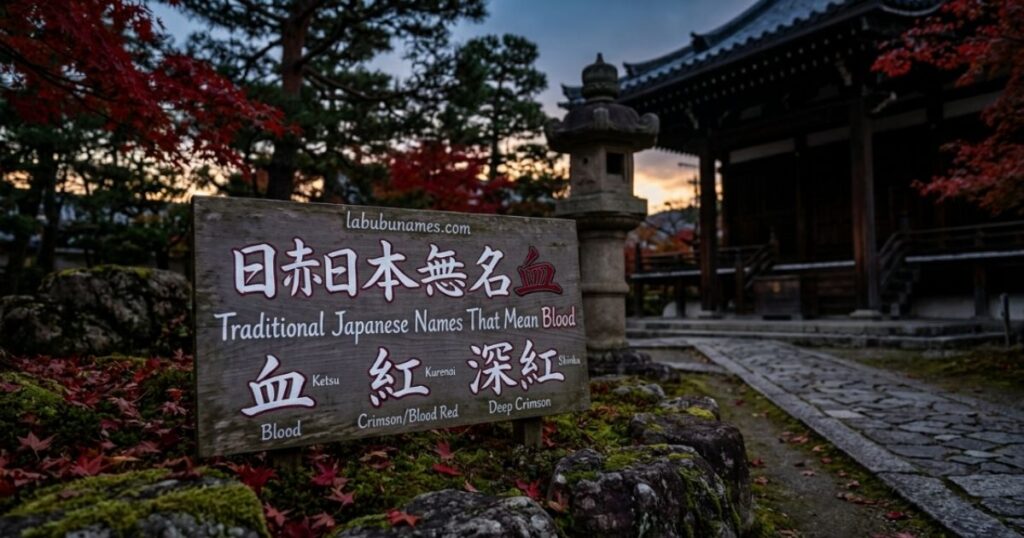
Traditional Japanese personal names that mean blood rarely have a straightforward meaning of “blood.” Instead, names often draw from nature, virtues, seasons, beauty, family hopes, and other positive concepts.
If you want a traditional feel with blood-red symbolism, names associated with red colors may work better. Akane is one useful example because it connects to a deep red dye while remaining an established Japanese given name.
Traditional Japanese Names With Dark Symbolism
Dark symbolism doesn’t always require a dark literal translation. A name can feel mysterious because of its connection to night, shadows, autumn, storms, or deep red colors.
For example, Kurenai means crimson and carries a rich visual quality. Tsukiko contains tsuki, meaning moon, and can create a softer nighttime image. These choices are more culturally grounded than inventing kanji and assigning them meanings they don’t naturally have.
Cool & Modern Japanese Names Inspired by Blood
Modern fictional names that mean blood can mix Japanese words with dramatic imagery. This works especially well for games, anime-inspired stories, fantasy novels, and role-playing characters.
Try concepts such as Chi Kage for “blood shadow,” Kurenai Ryu for a “crimson dragon” concept, or Akai Tsubasa for “red wings.” These are creative combinations, not necessarily everyday Japanese names.
If you want something less obvious, use red symbolism instead of blood itself. Crimson, scarlet, ruby, rose, ember, and moon can all create the same mood.
Feminine Japanese Names That Mean Blood
There are very few conventional Japanese feminine names that literally mean blood. Instead, you can choose names connected with red, crimson, flowers, or moonlight.
Akane is an especially useful choice because it relates to a deep red color and functions as a real Japanese given name. Kurenai also creates a crimson image, although its use as a personal name is more context-dependent.
Elegant Japanese Girl Names With Blood-Inspired Meanings
For an elegant character, subtle symbolism usually works better than an obvious blood reference. Think of a red flower, crimson sunset, or moon glowing against a dark sky.
Names such as Akane, Kurenai, and creative combinations involving tsuki or hana can create that feeling. They’re ideal when you want a character to seem graceful but slightly mysterious.
Masculine Japanese Names That Mean Blood
Masculine blood-themed names that mean blood work well for warriors, villains, supernatural heroes, and antiheroes. Still, authentic Japanese naming conventions should remain the priority if cultural accuracy matters.
Instead of claiming that ordinary names literally mean blood, build the theme around concepts such as crimson, strength, fire, or battle. This gives your character a believable foundation while preserving the dark mood.
Bold Japanese Boy Names With Blood-Inspired Meanings
A fictional warrior could have a name inspired by chi (blood), ryu (dragon), tora (tiger), or kage (shadow).
For example, Chi Ryu creates a “blood dragon” image, while Kurenai Ryu suggests a crimson dragon. These combinations are useful for fiction, but they aren’t presented as traditional Japanese given names.
Anime & Gaming-Inspired Blood Names
Anime and games often use dramatic names that immediately tell you something about a character. Blood-themed characters can lean into warriors, demons, cursed powers, vampires, or supernatural clans.
Try names such as Crimson Reaper, Blood Phantom, Scarlet Fang, Red Oni, Blood Shadow, or Kurenai Ryu. You can also create a more subtle identity by combining a Japanese word with an English fantasy term.
The key is memorability. A name should fit the character without becoming difficult to pronounce.
Mythology & History-Inspired Blood Names
Mythology offers plenty of inspiration for characters connected with battle, sacrifice, fate, death, and supernatural power. Japanese mythology includes many powerful deities and creatures, but their original names shouldn’t be casually translated into blood-related meanings.
For a fictional character, you can borrow broad themes instead. Oni can suggest demons or ogre-like supernatural beings, while tengu, ryu, and kitsune provide recognizable mythological imagery.
Use these references respectfully. A fictional name inspired by mythology should not imply that the original mythological figure literally represented blood unless the source tradition supports that interpretation.
Horror & Dark-Themed Names
Horror names should create tension before the character even appears. Words connected with blood, shadows, curses, ghosts, and night can accomplish that quickly.
Some fictional examples include Chi no Yoru (“night of blood” concept), Akai Kage (“red shadow” concept), Chi no Oni (“blood demon” concept), and Kurenai Yurei (“crimson ghost” concept).
These combinations work best for fictional settings. They should be treated as descriptive Japanese phrases rather than conventional personal names.
Fantasy & Mythical Creature Blood Names
Mythical creatures make blood-inspired names feel larger than life. Dragons, foxes, demons, tigers, phoenixes, and supernatural spirits can all add personality.
Consider ideas such as Chi no Ryu for “blood dragon,” Chi no Kitsune for “blood fox,” or Akai Tora for “red tiger.” These phrases can become excellent character titles or creature names.
For a fantasy world, you can also create entirely original names such as Crimsonwyrm, Bloodfang, Redscale, or Scarletclaw.
Futuristic & Sci-Fi Blood Names
Blood themes don’t have to belong to medieval fantasy. They can work surprisingly well in cyberpunk, space opera, and dystopian settings.
Think about names such as Crimson Core, Blood Vector, Red Nova, Sanguine-9, or Scarlet Pulse. Japanese-inspired concepts can be added through words like aka for red or chi for blood.
A futuristic character could even have a codename such as CHI-X, giving the name a clinical, technological feel while retaining its blood connection.
Seasonal & Nature-Inspired Blood Names
Nature provides softer ways to express a dark theme. Red leaves, autumn skies, flowers, sunsets, and the moon can all suggest blood without using the word directly.
Akane connects strongly with red coloring, while sakura represents cherry blossoms. You can also build fictional combinations around hana (flower), tsuki (moon), yama (mountain), kawa (river), or kaze (wind).
These names are especially useful when your character has a mysterious personality but isn’t meant to seem frightening.
How We Create Japanese Blood-Inspired Names
Creating a good Japanese-inspired name starts with meaning, not just appearance. First, decide what you want the name to communicate.
A simple process looks like this:
- Choose the central idea: Blood, crimson, red, moon, flower, shadow, or strength.
- Find genuine Japanese vocabulary: Check the meaning and natural reading.
- Select suitable kanji: Don’t assign random characters simply because they look attractive.
- Build the concept: Combine words carefully for fictional names.
- Check pronunciation: Say the name aloud several times.
- Match the character: A gentle character may need softer imagery than a villain.
- Verify authenticity: If cultural accuracy matters, confirm the name with a reliable Japanese-language reference.
This process keeps your blood-inspired names creative without confusing fictional constructions with established Japanese names.
Tips for Making Your Team or Character Name Stand Out
A memorable name doesn’t need to be complicated. In fact, shorter names often stick with readers and players more easily.
Try these ideas:
- Use one strong image: Crimson, shadow, moon, or blood can be enough.
- Keep pronunciation simple: Avoid combinations that are difficult to say.
- Create contrast: Pair a beautiful flower with a dark concept.
- Match the personality: A calm character needs a different name than a violent villain.
- Avoid forced kanji: Every character should have a reason for being there.
- Use titles for dramatic effects: A phrase like “Blood Dragon” may work better as a title than a personal name.
- Think about the setting: Anime, horror, fantasy, and sci-fi can each support different naming styles.
A name becomes memorable when it feels connected to the character. The meaning should support the story rather than replace it.
Japanese Names Meaning Blood, Red, or Crimson
There are several Japanese words worth knowing when building a blood-inspired name. The most direct is chi (血), which literally means blood.
For red-related ideas, aka (赤) and akai (赤い) relate to red, while kurenai (紅) refers to crimson or a deep red shade. Akane (茜) is connected with the red dye produced from the madder plant and also appears as a Japanese given name.
These distinctions matter. “Blood,” “red,” and “crimson” may create similar imagery in English, but they aren’t interchangeable Japanese words.
Japanese Words and Meanings Related to Blood and Crimson
Here are useful building blocks for creative names:
- Chi (血): blood
- Ketsueki (血液): blood as a bodily fluid
- Aka (赤): red
- Akai (赤い): red
- Kurenai (紅): crimson or deep red
- Akane (茜): madder/red dye; also a given name
- Tsuki (月): moon
- Hana (花): flower
- Kage (影): shadow
- Ryu (竜/龍): dragon
Using these words correctly gives you a much stronger foundation for fictional naming.
Japanese Names Inspired by Blood, Roses, and Dark Nature
Roses are naturally suited to blood-themed naming because their red petals already create a dramatic visual. Japanese nature vocabulary can make the theme feel more poetic.
For example, hana means flower, while bara means rose. A fictional phrase such as Chi no Bara can evoke the idea of a blood-red rose. It sounds more like a descriptive phrase than a conventional personal name, which makes it better suited to a character title, clan, weapon, or fantasy location.
You can also use nature concepts such as moon, rain, forest, river, wind, and snow. These create interesting contrasts with the darker blood theme.
Dark Nature Names With Red and Blood-Related Symbolism
Consider combinations inspired by:
- Red rose — beauty with danger
- Crimson moon — mystery and transformation
- Blood flower — beauty mixed with darkness
- Red storm — violence and power
- Crimson forest — secrecy and supernatural danger
- Blood rain — horror and tragedy
- Red shadow — mystery and stealth
- Crimson dragon — strength and dominance
These aren’t necessarily traditional Japanese names. They’re creative naming concepts that can add atmosphere to fiction.
How to Choose a Japanese Name With a Blood-Related Meaning

Start by deciding how literal you want the name to be. If you want a direct translation, chi (血) is the clearest Japanese word for blood. If you want something more elegant, consider red or crimson imagery instead.
Next, think about your audience. A fantasy reader may enjoy an unusual phrase, while someone choosing a real Japanese name needs to consider whether the name is actually used by Japanese speakers.
Finally, check the kanji and pronunciation before committing. Japanese names can change meaning dramatically depending on the characters selected. A beautiful-looking combination isn’t automatically a natural or culturally appropriate name.
Meaning, Pronunciation, and Cultural Tips to Check Before Choosing a Name
Before using one of these names, ask yourself:
- Does the Japanese word actually mean what I think it means?
- Is this a real personal name or a creative phrase?
- Does the kanji have the intended meaning?
- Is the pronunciation natural?
- Does the name suit the character?
- Could the phrase sound strange to a Japanese speaker?
- Am I using mythology or cultural symbols respectfully?
These small checks can turn a random dark name into a thoughtful, memorable choice.
FAQ’s
What Japanese word literally means blood?
Chi (血) is the common Japanese word for blood and works as a direct vocabulary term, though it isn’t a typical personal name.
Are there Japanese names that literally mean blood?
Few conventional Japanese given names literally mean blood; blood-inspired names usually rely on red, crimson, or creative symbolism.
What Japanese name means crimson?
Kurenai (紅) refers to crimson or deep red and can inspire elegant, dramatic character names with a darker visual theme.
What are good names that mean blood for characters?
Chi, Crimson, Bloodrose, and Bloodfang work well for fictional characters, especially in fantasy, horror, anime-inspired, or gaming settings.
Is Akane a Japanese name connected with red?
Yes. Akane (茜) is an established Japanese given name associated with madder and its deep reddish coloring.
Can I use blood-inspired names for a baby?
Choose carefully. A name symbolizing red or nature may be more suitable than a literal word meaning blood.
How can I create unique Japanese blood-inspired names?
Start with genuine Japanese words like chi, aka, kurenai, tsuki, or hana, then build a clear fictional concept around them.
Conclusion
Choosing the right names that mean blood can make a character, story, or creative project feel much more memorable. Names that mean blood offer a bold mix of strength, passion, mystery, and symbolism. Whether you prefer a direct meaning or a subtle red-inspired idea, there’s plenty of room to get creative.
If blood feels too intense, you can explore mysterious names, names that mean death, ice names, or names that mean lost for a different mood. Each theme brings its own personality. For example, an ice-inspired name may feel calm and distant, while a darker name can create suspense and power.
Take your time before making your final choice. Check the meaning, pronunciation, and cultural context, especially with dark japanese names. The best name isn’t always the most dramatic one. It’s the name that fits your character, story, and overall feeling naturally.