









Learning Japanese fruit names is a fun way to build your language skills. This guide helps you remember Japanese fruit names with simple words and clear meanings. You will learn fruit names in Japanese, common Japanese names, and each Japanese fruit name that people use every day. If you want to improve your vocabulary, Japanese fruit names make a great place to start. They are easy to practice and useful in daily conversations.
Many learners look for the correct Japanese fruit name before visiting Japan or studying the language. This article shares the most popular Japanese fruit names in a simple format. You will also find fruit names in Japanese with English meanings and easy pronunciation. Each example helps you recognize fruits at markets, restaurants, and grocery stores. That makes learning faster and much more enjoyable.
Whether you are a beginner or already know some Japanese, this guide will help you master Japanese fruit names with confidence. You will explore common vocabulary, seasonal fruits, and unique local favorites. Every Japanese fruit name comes with clear explanations, so you can remember it with ease. By the end, Japanese names will feel familiar and much easier to use in everyday conversations.
Japanese Fruit Names With English Meanings
Learning Japanese fruit names becomes easier when you know their English meanings. These names help you build your Japanese fruit vocabulary, improve your Japanese fruit pronunciation, and understand fruit names in Japanese language. Below are 20 of the most common fruit names with their meanings, pronunciation, and Kanji.
- Ringo
• Meaning: Apple
• Pronunciation: reen-go
• Kanji: 林檎 - Ichigo
• Meaning: Strawberry
• Pronunciation: ee-chee-go
• Kanji: 苺 - Momo
• Meaning: Peach
• Pronunciation: moh-moh
• Kanji: 桃 - Budo
• Meaning: Grape
• Pronunciation: boo-doh
• Kanji: 葡萄 - Mikan
• Meaning: Mandarin Orange
• Pronunciation: mee-kahn
• Kanji: 蜜柑 - Yuzu
• Meaning: Japanese Citrus
• Pronunciation: yoo-zoo
• Kanji: 柚子 - Kaki
• Meaning: Persimmon
• Pronunciation: kah-kee
• Kanji: 柿 - Nashi
• Meaning: Japanese Pear
• Pronunciation: nah-shee
• Kanji: 梨 - Ume
• Meaning: Japanese Plum
• Pronunciation: oo-meh
• Kanji: 梅 - Suika
• Meaning: Watermelon
• Pronunciation: soo-ee-kah
• Kanji: 西瓜 - Meron
• Meaning: Melon
• Pronunciation: meh-ron
• Kanji: メロン - Remon
• Meaning: Lemon
• Pronunciation: reh-mon
• Kanji: レモン - Banana
• Meaning: Banana
• Pronunciation: bah-nah-nah
• Kanji: バナナ - Orenji
• Meaning: Orange
• Pronunciation: oh-ren-jee
• Kanji: オレンジ - Pain
• Meaning: Pineapple
• Pronunciation: pah-een
• Kanji: パイン - Mango
• Meaning: Mango
• Pronunciation: man-go
• Kanji: マンゴー - Kiwi
• Meaning: Kiwi
• Pronunciation: kee-wee
• Kanji: キウイ - Biwa
• Meaning: Loquat
• Pronunciation: bee-wah
• Kanji: 枇杷 - Anzu
• Meaning: Apricot
• Pronunciation: ahn-zoo
• Kanji: 杏 - Kurin
• Meaning: Chestnut
• Pronunciation: koo-reen
• Kanji: 栗
Common Japanese Fruit Names Used Every Day
Many of these Japanese fruit names appear in Japanese homes, supermarkets, and local markets every day. Learning these common Japanese fruits will help you expand your Japanese fruit vocabulary and make everyday conversations much easier.
- Ringo
• Meaning: Apple
• Pronunciation: reen-go
• Kanji: 林檎 - Banana
• Meaning: Banana
• Pronunciation: bah-nah-nah
• Kanji: バナナ - Orenji
• Meaning: Orange
• Pronunciation: oh-ren-jee
• Kanji: オレンジ - Ichigo
• Meaning: Strawberry
• Pronunciation: ee-chee-go
• Kanji: 苺 - Budo
• Meaning: Grape
• Pronunciation: boo-doh
• Kanji: 葡萄 - Suika
• Meaning: Watermelon
• Pronunciation: soo-ee-kah
• Kanji: 西瓜 - Meron
• Meaning: Melon
• Pronunciation: meh-ron
• Kanji: メロン - Momo
• Meaning: Peach
• Pronunciation: moh-moh
• Kanji: 桃 - Nashi
• Meaning: Pear
• Pronunciation: nah-shee
• Kanji: 梨 - Pain
• Meaning: Pineapple
• Pronunciation: pah-een
• Kanji: パイン - Mango
• Meaning: Mango
• Pronunciation: man-go
• Kanji: マンゴー - Kiwi
• Meaning: Kiwi
• Pronunciation: kee-wee
• Kanji: キウイ - Remon
• Meaning: Lemon
• Pronunciation: reh-mon
• Kanji: レモン - Raimu
• Meaning: Lime
• Pronunciation: rah-ee-moo
• Kanji: ライム - Gureepufuruutsu
• Meaning: Grapefruit
• Pronunciation: goo-reh-poo-fu-roo-tsu
• Kanji: グレープフルーツ - Papaiya
• Meaning: Papaya
• Pronunciation: pah-pah-ee-yah
• Kanji: パパイヤ - Raichi
• Meaning: Lychee
• Pronunciation: rah-ee-chee
• Kanji: ライチ - Doragon Furuutsu
• Meaning: Dragon Fruit
• Pronunciation: doh-rah-gon foo-roo-tsu
• Kanji: ドラゴンフルーツ - Kaki
• Meaning: Persimmon
• Pronunciation: kah-kee
• Kanji: 柿 - Yuzu
• Meaning: Japanese Citrus
• Pronunciation: yoo-zoo
• Kanji: 柚子
Popular Japanese Fruit Names You Should Know
Many Japanese fruit names are popular because people enjoy them every day in Japan. These fruits appear in desserts, drinks, snacks, and traditional meals. Learning these names will expand your Japanese fruit vocabulary and make it easier to recognize common fruits in Japan.
- Ringo
• Meaning: Apple
• Pronunciation: reen-go
• Kanji: 林檎 - Ichigo
• Meaning: Strawberry
• Pronunciation: ee-chee-go
• Kanji: 苺 - Momo
• Meaning: Peach
• Pronunciation: moh-moh
• Kanji: 桃 - Mikan
• Meaning: Mandarin Orange
• Pronunciation: mee-kahn
• Kanji: 蜜柑 - Yuzu
• Meaning: Japanese Citrus
• Pronunciation: yoo-zoo
• Kanji: 柚子 - Kaki
• Meaning: Persimmon
• Pronunciation: kah-kee
• Kanji: 柿 - Nashi
• Meaning: Japanese Pear
• Pronunciation: nah-shee
• Kanji: 梨 - Budo
• Meaning: Grape
• Pronunciation: boo-doh
• Kanji: 葡萄 - Ume
• Meaning: Japanese Plum
• Pronunciation: oo-meh
• Kanji: 梅 - Biwa
• Meaning: Loquat
• Pronunciation: bee-wah
• Kanji: 枇杷 - Anzu
• Meaning: Apricot
• Pronunciation: ahn-zoo
• Kanji: 杏 - Sumomo
• Meaning: Japanese Plum
• Pronunciation: soo-moh-moh
• Kanji: 李 - Akebi
• Meaning: Chocolate Vine Fruit
• Pronunciation: ah-keh-bee
• Kanji: 木通 - Karin
• Meaning: Japanese Quince
• Pronunciation: kah-reen
• Kanji: 花梨 - Natsume
• Meaning: Jujube
• Pronunciation: naht-soo-meh
• Kanji: 棗 - Satsuma
• Meaning: Satsuma Mandarin
• Pronunciation: saht-soo-mah
• Kanji: 薩摩 - Meron
• Meaning: Melon
• Pronunciation: meh-ron
• Kanji: メロン - Suika
• Meaning: Watermelon
• Pronunciation: soo-ee-kah
• Kanji: 西瓜 - Pain
• Meaning: Pineapple
• Pronunciation: pah-een
• Kanji: パイン - Kiwi
• Meaning: Kiwi
• Pronunciation: kee-wee
• Kanji: キウイ
Traditional Japanese Fruit Names and Their Origins
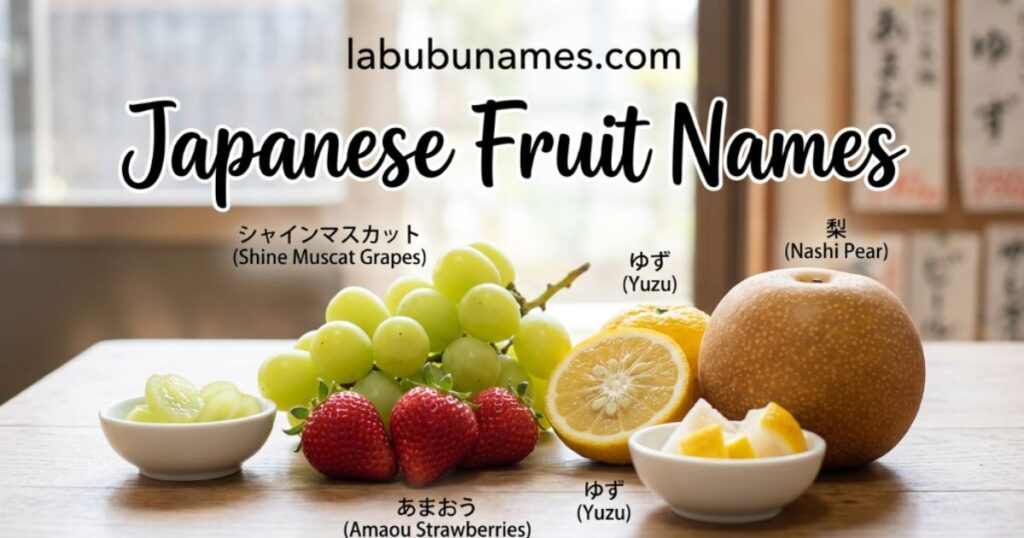
Japan has a rich farming history, and many traditional Japanese fruits have been enjoyed for centuries. These fruits often appear in festivals, family gatherings, and seasonal celebrations. Learning their names also helps you understand Japanese fruit culture and the history behind each fruit.
- Ume
• Meaning: Japanese Plum
• Pronunciation: oo-meh
• Kanji: 梅 - Yuzu
• Meaning: Japanese Citrus
• Pronunciation: yoo-zoo
• Kanji: 柚子 - Mikan
• Meaning: Mandarin Orange
• Pronunciation: mee-kahn
• Kanji: 蜜柑 - Kaki
• Meaning: Persimmon
• Pronunciation: kah-kee
• Kanji: 柿 - Nashi
• Meaning: Japanese Pear
• Pronunciation: nah-shee
• Kanji: 梨 - Biwa
• Meaning: Loquat
• Pronunciation: bee-wah
• Kanji: 枇杷 - Sumomo
• Meaning: Japanese Plum
• Pronunciation: soo-moh-moh
• Kanji: 李 - Anzu
• Meaning: Apricot
• Pronunciation: ahn-zoo
• Kanji: 杏 - Akebi
• Meaning: Chocolate Vine Fruit
• Pronunciation: ah-keh-bee
• Kanji: 木通 - Karin
• Meaning: Japanese Quince
• Pronunciation: kah-reen
• Kanji: 花梨 - Natsume
• Meaning: Jujube
• Pronunciation: naht-soo-meh
• Kanji: 棗 - Yamamomo
• Meaning: Chinese Bayberry
• Pronunciation: yah-mah-moh-moh
• Kanji: 山桃 - Ichii
• Meaning: Japanese Yew Berry
• Pronunciation: ee-chee-ee
• Kanji: 一位 - Kurin
• Meaning: Chestnut
• Pronunciation: koo-reen
• Kanji: 栗 - Himeume
• Meaning: Little Plum
• Pronunciation: hee-meh-oo-meh
• Kanji: 姫梅 - Satsuma
• Meaning: Satsuma Citrus
• Pronunciation: saht-soo-mah
• Kanji: 薩摩 - Momo
• Meaning: Peach
• Pronunciation: moh-moh
• Kanji: 桃 - Budo
• Meaning: Grape
• Pronunciation: boo-doh
• Kanji: 葡萄 - Ringo
• Meaning: Apple
• Pronunciation: reen-go
• Kanji: 林檎 - Ichigo
• Meaning: Strawberry
• Pronunciation: ee-chee-go
• Kanji: 苺
Seasonal Japanese Fruit Names Throughout the Year
Japan enjoys fresh fruit in every season. From sweet strawberries in winter to juicy peaches in summer, every season offers something special. Learning these Japanese fruit names will help you recognize seasonal Japanese fruits and understand when they are commonly harvested.
- Ichigo
• Meaning: Strawberry (Winter–Spring)
• Pronunciation: ee-chee-go
• Kanji: 苺 - Mikan
• Meaning: Mandarin Orange (Winter)
• Pronunciation: mee-kahn
• Kanji: 蜜柑 - Yuzu
• Meaning: Japanese Citrus (Winter)
• Pronunciation: yoo-zoo
• Kanji: 柚子 - Ume
• Meaning: Japanese Plum (Spring)
• Pronunciation: oo-meh
• Kanji: 梅 - Biwa
• Meaning: Loquat (Spring)
• Pronunciation: bee-wah
• Kanji: 枇杷 - Anzu
• Meaning: Apricot (Early Summer)
• Pronunciation: ahn-zoo
• Kanji: 杏 - Momo
• Meaning: Peach (Summer)
• Pronunciation: moh-moh
• Kanji: 桃 - Suika
• Meaning: Watermelon (Summer)
• Pronunciation: soo-ee-kah
• Kanji: 西瓜 - Meron
• Meaning: Melon (Summer)
• Pronunciation: meh-ron
• Kanji: メロン - Budo
• Meaning: Grape (Late Summer)
• Pronunciation: boo-doh
• Kanji: 葡萄 - Nashi
• Meaning: Japanese Pear (Autumn)
• Pronunciation: nah-shee
• Kanji: 梨 - Kaki
• Meaning: Persimmon (Autumn)
• Pronunciation: kah-kee
• Kanji: 柿 - Ringo
• Meaning: Apple (Autumn)
• Pronunciation: reen-go
• Kanji: 林檎 - Kurin
• Meaning: Chestnut (Autumn)
• Pronunciation: koo-reen
• Kanji: 栗 - Sumomo
• Meaning: Japanese Plum (Summer)
• Pronunciation: soo-moh-moh
• Kanji: 李 - Yamamomo
• Meaning: Chinese Bayberry (Early Summer)
• Pronunciation: yah-mah-moh-moh
• Kanji: 山桃 - Akebi
• Meaning: Chocolate Vine Fruit (Autumn)
• Pronunciation: ah-keh-bee
• Kanji: 木通 - Karin
• Meaning: Japanese Quince (Autumn)
• Pronunciation: kah-reen
• Kanji: 花梨 - Natsume
• Meaning: Jujube (Autumn)
• Pronunciation: naht-soo-meh
• Kanji: 棗 - Pain
• Meaning: Pineapple (Available Year-Round)
• Pronunciation: pah-een
• Kanji: パイン
Japanese Fruit Names in Hiragana, Katakana, and Kanji
Japanese fruits can be written in Hiragana, Katakana, or Kanji depending on the fruit and how it is used. Native fruits usually use Kanji, while many imported fruits appear in Katakana. Learning these writing systems will improve your Japanese fruit vocabulary and reading skills.
- Ringo
• Meaning: Apple
• Pronunciation: reen-go
• Hiragana: りんご
• Katakana: リンゴ
• Kanji: 林檎 - Ichigo
• Meaning: Strawberry
• Pronunciation: ee-chee-go
• Hiragana: いちご
• Katakana: イチゴ
• Kanji: 苺 - Momo
• Meaning: Peach
• Pronunciation: moh-moh
• Hiragana: もも
• Katakana: モモ
• Kanji: 桃 - Budo
• Meaning: Grape
• Pronunciation: boo-doh
• Hiragana: ぶどう
• Katakana: ブドウ
• Kanji: 葡萄 - Mikan
• Meaning: Mandarin Orange
• Pronunciation: mee-kahn
• Hiragana: みかん
• Katakana: ミカン
• Kanji: 蜜柑 - Yuzu
• Meaning: Japanese Citrus
• Pronunciation: yoo-zoo
• Hiragana: ゆず
• Katakana: ユズ
• Kanji: 柚子 - Kaki
• Meaning: Persimmon
• Pronunciation: kah-kee
• Hiragana: かき
• Katakana: カキ
• Kanji: 柿 - Nashi
• Meaning: Japanese Pear
• Pronunciation: nah-shee
• Hiragana: なし
• Katakana: ナシ
• Kanji: 梨 - Ume
• Meaning: Japanese Plum
• Pronunciation: oo-meh
• Hiragana: うめ
• Katakana: ウメ
• Kanji: 梅 - Suika
• Meaning: Watermelon
• Pronunciation: soo-ee-kah
• Hiragana: すいか
• Katakana: スイカ
• Kanji: 西瓜 - Meron
• Meaning: Melon
• Pronunciation: meh-ron
• Hiragana: めろん
• Katakana: メロン
• Kanji: メロン - Remon
• Meaning: Lemon
• Pronunciation: reh-mon
• Hiragana: れもん
• Katakana: レモン
• Kanji: レモン - Banana
• Meaning: Banana
• Pronunciation: bah-nah-nah
• Hiragana: ばなな
• Katakana: バナナ
• Kanji: バナナ - Orenji
• Meaning: Orange
• Pronunciation: oh-ren-jee
• Hiragana: おれんじ
• Katakana: オレンジ
• Kanji: オレンジ - Pain
• Meaning: Pineapple
• Pronunciation: pah-een
• Hiragana: ぱいん
• Katakana: パイン
• Kanji: パイン - Mango
• Meaning: Mango
• Pronunciation: man-go
• Hiragana: まんごー
• Katakana: マンゴー
• Kanji: マンゴー - Kiwi
• Meaning: Kiwi
• Pronunciation: kee-wee
• Hiragana: きうい
• Katakana: キウイ
• Kanji: キウイ - Biwa
• Meaning: Loquat
• Pronunciation: bee-wah
• Hiragana: びわ
• Katakana: ビワ
• Kanji: 枇杷 - Anzu
• Meaning: Apricot
• Pronunciation: ahn-zoo
• Hiragana: あんず
• Katakana: アンズ
• Kanji: 杏 - Kurin
• Meaning: Chestnut
• Pronunciation: koo-reen
• Hiragana: くり
• Katakana: クリ
• Kanji: 栗
Japanese Fruit Names With Easy Pronunciation Guide
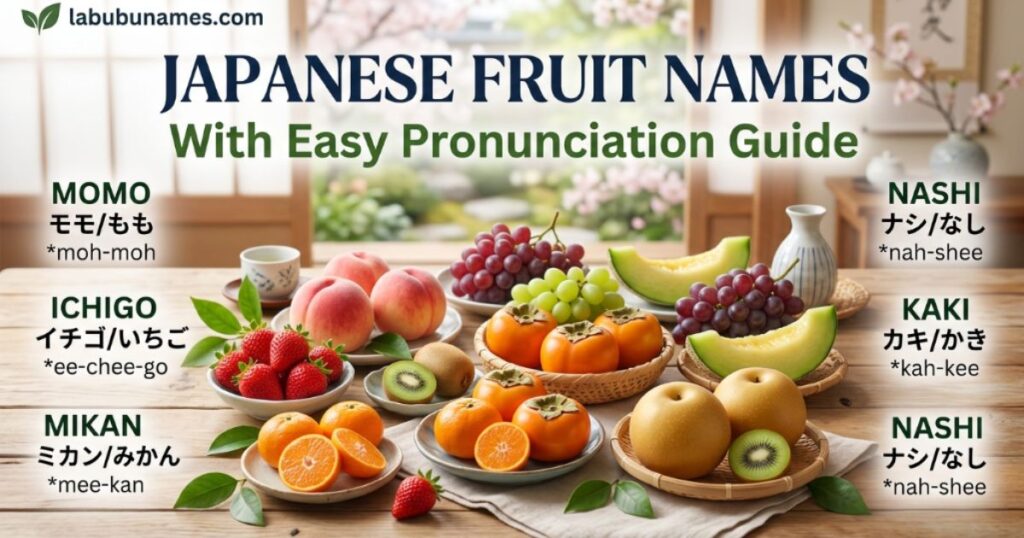
Good pronunciation makes Japanese fruit names easier to remember and speak. The guide below uses simple English sounds so beginners can practice confidently. Repeat each word a few times, and you will quickly improve your Japanese fruit pronunciation.
- Ringo
• Meaning: Apple
• Pronunciation: reen-go
• Kanji: 林檎 - Ichigo
• Meaning: Strawberry
• Pronunciation: ee-chee-go
• Kanji: 苺 - Momo
• Meaning: Peach
• Pronunciation: moh-moh
• Kanji: 桃 - Budo
• Meaning: Grape
• Pronunciation: boo-doh
• Kanji: 葡萄 - Mikan
• Meaning: Mandarin Orange
• Pronunciation: mee-kahn
• Kanji: 蜜柑 - Yuzu
• Meaning: Japanese Citrus
• Pronunciation: yoo-zoo
• Kanji: 柚子 - Kaki
• Meaning: Persimmon
• Pronunciation: kah-kee
• Kanji: 柿 - Nashi
• Meaning: Japanese Pear
• Pronunciation: nah-shee
• Kanji: 梨 - Ume
• Meaning: Japanese Plum
• Pronunciation: oo-meh
• Kanji: 梅 - Suika
• Meaning: Watermelon
• Pronunciation: soo-ee-kah
• Kanji: 西瓜 - Meron
• Meaning: Melon
• Pronunciation: meh-ron
• Kanji: メロン - Remon
• Meaning: Lemon
• Pronunciation: reh-mon
• Kanji: レモン - Banana
• Meaning: Banana
• Pronunciation: bah-nah-nah
• Kanji: バナナ - Orenji
• Meaning: Orange
• Pronunciation: oh-ren-jee
• Kanji: オレンジ - Pain
• Meaning: Pineapple
• Pronunciation: pah-een
• Kanji: パイン - Mango
• Meaning: Mango
• Pronunciation: man-go
• Kanji: マンゴー - Kiwi
• Meaning: Kiwi
• Pronunciation: kee-wee
• Kanji: キウイ - Biwa
• Meaning: Loquat
• Pronunciation: bee-wah
• Kanji: 枇杷 - Anzu
• Meaning: Apricot
• Pronunciation: ahn-zoo
• Kanji: 杏 - Kurin
• Meaning: Chestnut
• Pronunciation: koo-reen
• Kanji: 栗
Japanese Fruit Names for Beginners to Learn Quickly
If you are new to Japanese, start with these easy Japanese fruit names. They are common, simple to pronounce, and useful in everyday conversations. Learning these Japanese fruit words first will help you build a strong Japanese fruit vocabulary.
- Ringo
• Meaning: Apple
• Pronunciation: reen-go
• Kanji: 林檎 - Banana
• Meaning: Banana
• Pronunciation: bah-nah-nah
• Kanji: バナナ - Orenji
• Meaning: Orange
• Pronunciation: oh-ren-jee
• Kanji: オレンジ - Ichigo
• Meaning: Strawberry
• Pronunciation: ee-chee-go
• Kanji: 苺 - Momo
• Meaning: Peach
• Pronunciation: moh-moh
• Kanji: 桃 - Suika
• Meaning: Watermelon
• Pronunciation: soo-ee-kah
• Kanji: 西瓜 - Meron
• Meaning: Melon
• Pronunciation: meh-ron
• Kanji: メロン - Budo
• Meaning: Grape
• Pronunciation: boo-doh
• Kanji: 葡萄 - Mikan
• Meaning: Mandarin Orange
• Pronunciation: mee-kahn
• Kanji: 蜜柑 - Yuzu
• Meaning: Japanese Citrus
• Pronunciation: yoo-zoo
• Kanji: 柚子 - Kaki
• Meaning: Persimmon
• Pronunciation: kah-kee
• Kanji: 柿 - Nashi
• Meaning: Japanese Pear
• Pronunciation: nah-shee
• Kanji: 梨 - Ume
• Meaning: Japanese Plum
• Pronunciation: oo-meh
• Kanji: 梅 - Remon
• Meaning: Lemon
• Pronunciation: reh-mon
• Kanji: レモン - Kiwi
• Meaning: Kiwi
• Pronunciation: kee-wee
• Kanji: キウイ - Mango
• Meaning: Mango
• Pronunciation: man-go
• Kanji: マンゴー - Pain
• Meaning: Pineapple
• Pronunciation: pah-een
• Kanji: パイン - Biwa
• Meaning: Loquat
• Pronunciation: bee-wah
• Kanji: 枇杷 - Anzu
• Meaning: Apricot
• Pronunciation: ahn-zoo
• Kanji: 杏 - Sumomo
• Meaning: Japanese Plum
• Pronunciation: soo-moh-moh
• Kanji: 李
Rare Japanese Fruit Names Worth Knowing
Japan grows many unique fruits that are difficult to find outside the country. These rare Japanese fruit names are famous for their special flavors, rich history, and limited harvests. Learning them will expand your Japanese fruit vocabulary and introduce you to some of the most interesting native Japanese fruits.
- Akebi
• Meaning: Chocolate Vine Fruit
• Pronunciation: ah-keh-bee
• Kanji: 木通 - Yamamomo
• Meaning: Chinese Bayberry
• Pronunciation: yah-mah-moh-moh
• Kanji: 山桃 - Biwa
• Meaning: Loquat
• Pronunciation: bee-wah
• Kanji: 枇杷 - Karin
• Meaning: Japanese Quince
• Pronunciation: kah-reen
• Kanji: 花梨 - Natsume
• Meaning: Jujube
• Pronunciation: naht-soo-meh
• Kanji: 棗 - Hasukappu
• Meaning: Haskap Berry
• Pronunciation: hah-soo-kahp-poo
• Kanji: ハスカップ - Shikuwasa
• Meaning: Okinawan Citrus
• Pronunciation: shee-koo-wah-sah
• Kanji: シークヮーサー - Kabosu
• Meaning: Kabosu Citrus
• Pronunciation: kah-boh-soo
• Kanji: カボス - Sudachi
• Meaning: Sudachi Citrus
• Pronunciation: soo-dah-chee
• Kanji: 酢橘 - Kumquat (Kinkan)
• Meaning: Kumquat
• Pronunciation: keen-kahn
• Kanji: 金柑 - Yuzu
• Meaning: Japanese Citrus
• Pronunciation: yoo-zoo
• Kanji: 柚子 - Ume
• Meaning: Japanese Plum
• Pronunciation: oo-meh
• Kanji: 梅 - Sumomo
• Meaning: Japanese Plum
• Pronunciation: soo-moh-moh
• Kanji: 李 - Muscat of Alexandria
• Meaning: Premium Green Grape
• Pronunciation: muhs-kat ohv ah-lek-zan-dree-ah
• Kanji: マスカット - Kyoho
• Meaning: Giant Purple Grape
• Pronunciation: kyoh-hoh
• Kanji: 巨峰 - Setoka
• Meaning: Sweet Citrus Variety
• Pronunciation: seh-toh-kah
• Kanji: せとか - Dekopon
• Meaning: Seedless Citrus Fruit
• Pronunciation: deh-koh-pon
• Kanji: デコポン - Amaou
• Meaning: Premium Strawberry
• Pronunciation: ah-mah-oh
• Kanji: あまおう - Nijisseiki Nashi
• Meaning: Twentieth Century Pear
• Pronunciation: nee-jee-seh-key nah-shee
• Kanji: 二十世紀梨 - Ruby Roman
• Meaning: Premium Red Grape
• Pronunciation: roo-bee roh-man
• Kanji: ルビーロマン
Japanese Fruit Names Found in Local Markets

Japanese local markets sell a wide variety of fresh fruits throughout the year. Many of these Japanese fruit names are easy to find in supermarkets, roadside stalls, and neighborhood fruit shops. Knowing these names makes shopping in Japan much easier.
- Ringo
• Meaning: Apple
• Pronunciation: reen-go
• Kanji: 林檎 - Mikan
• Meaning: Mandarin Orange
• Pronunciation: mee-kahn
• Kanji: 蜜柑 - Ichigo
• Meaning: Strawberry
• Pronunciation: ee-chee-go
• Kanji: 苺 - Momo
• Meaning: Peach
• Pronunciation: moh-moh
• Kanji: 桃 - Budo
• Meaning: Grape
• Pronunciation: boo-doh
• Kanji: 葡萄 - Nashi
• Meaning: Japanese Pear
• Pronunciation: nah-shee
• Kanji: 梨 - Kaki
• Meaning: Persimmon
• Pronunciation: kah-kee
• Kanji: 柿 - Yuzu
• Meaning: Japanese Citrus
• Pronunciation: yoo-zoo
• Kanji: 柚子 - Ume
• Meaning: Japanese Plum
• Pronunciation: oo-meh
• Kanji: 梅 - Suika
• Meaning: Watermelon
• Pronunciation: soo-ee-kah
• Kanji: 西瓜 - Meron
• Meaning: Melon
• Pronunciation: meh-ron
• Kanji: メロン - Biwa
• Meaning: Loquat
• Pronunciation: bee-wah
• Kanji: 枇杷 - Anzu
• Meaning: Apricot
• Pronunciation: ahn-zoo
• Kanji: 杏 - Kinkan
• Meaning: Kumquat
• Pronunciation: keen-kahn
• Kanji: 金柑 - Kabosu
• Meaning: Kabosu Citrus
• Pronunciation: kah-boh-soo
• Kanji: カボス - Sudachi
• Meaning: Sudachi Citrus
• Pronunciation: soo-dah-chee
• Kanji: 酢橘 - Shikuwasa
• Meaning: Okinawan Citrus
• Pronunciation: shee-koo-wah-sah
• Kanji: シークヮーサー - Kyoho
• Meaning: Giant Grape
• Pronunciation: kyoh-hoh
• Kanji: 巨峰 - Dekopon
• Meaning: Seedless Citrus
• Pronunciation: deh-koh-pon
• Kanji: デコポン - Amaou
• Meaning: Premium Strawberry
• Pronunciation: ah-mah-oh
• Kanji: あまおう
Japanese Fruit Names and Their Health Benefits
Many Japanese fruit names are linked with healthy eating because they are rich in vitamins, minerals, antioxidants, and fiber. These fruits support daily wellness while adding natural sweetness to your meals. Learning their names also helps you build your Japanese fruit vocabulary and recognize healthy choices in Japan.
- Ringo
• Meaning: Apple
• Health Benefit: Rich in fiber and vitamin C. Supports heart health.
• Pronunciation: reen-go
• Kanji: 林檎 - Ichigo
• Meaning: Strawberry
• Health Benefit: High in vitamin C and antioxidants.
• Pronunciation: ee-chee-go
• Kanji: 苺 - Mikan
• Meaning: Mandarin Orange
• Health Benefit: Boosts immunity with vitamin C.
• Pronunciation: mee-kahn
• Kanji: 蜜柑 - Yuzu
• Meaning: Japanese Citrus
• Health Benefit: Rich in antioxidants and vitamin C.
• Pronunciation: yoo-zoo
• Kanji: 柚子 - Kaki
• Meaning: Persimmon
• Health Benefit: Contains fiber and vitamins A and C.
• Pronunciation: kah-kee
• Kanji: 柿 - Nashi
• Meaning: Japanese Pear
• Health Benefit: Helps keep the body hydrated.
• Pronunciation: nah-shee
• Kanji: 梨 - Ume
• Meaning: Japanese Plum
• Health Benefit: Supports digestion and gut health.
• Pronunciation: oo-meh
• Kanji: 梅 - Budo
• Meaning: Grape
• Health Benefit: Packed with antioxidants for heart health.
• Pronunciation: boo-doh
• Kanji: 葡萄 - Momo
• Meaning: Peach
• Health Benefit: Good source of vitamins A and C.
• Pronunciation: moh-moh
• Kanji: 桃 - Suika
• Meaning: Watermelon
• Health Benefit: Keeps the body cool and hydrated.
• Pronunciation: soo-ee-kah
• Kanji: 西瓜 - Meron
• Meaning: Melon
• Health Benefit: High in water and potassium.
• Pronunciation: meh-ron
• Kanji: メロン - Biwa
• Meaning: Loquat
• Health Benefit: Contains vitamin A and dietary fiber.
• Pronunciation: bee-wah
• Kanji: 枇杷 - Anzu
• Meaning: Apricot
• Health Benefit: Supports healthy skin and vision.
• Pronunciation: ahn-zoo
• Kanji: 杏 - Kinkan
• Meaning: Kumquat
• Health Benefit: Rich in fiber and vitamin C.
• Pronunciation: keen-kahn
• Kanji: 金柑 - Kiwi
• Meaning: Kiwi
• Health Benefit: Excellent source of vitamin C and fiber.
• Pronunciation: kee-wee
• Kanji: キウイ - Mango
• Meaning: Mango
• Health Benefit: Provides vitamins A and E.
• Pronunciation: man-go
• Kanji: マンゴー - Banana
• Meaning: Banana
• Health Benefit: High in potassium for muscle health.
• Pronunciation: bah-nah-nah
• Kanji: バナナ - Remon
• Meaning: Lemon
• Health Benefit: Supports immunity and digestion.
• Pronunciation: reh-mon
• Kanji: レモン - Kabosu
• Meaning: Kabosu Citrus
• Health Benefit: Contains refreshing citrus antioxidants.
• Pronunciation: kah-boh-soo
• Kanji: カボス - Sudachi
• Meaning: Sudachi Citrus
• Health Benefit: Rich in vitamin C and natural acids.
• Pronunciation: soo-dah-chee
• Kanji: 酢橘
Sweet Japanese Fruit Names Loved by Everyone
Japan is famous for producing some of the sweetest fruits in the world. These Japanese fruit names are popular because of their rich flavor, juicy texture, and premium quality. Many of them are also given as gifts during special occasions.
- Amaou
• Meaning: Premium Strawberry
• Pronunciation: ah-mah-oh
• Kanji: あまおう - Shine Muscat
• Meaning: Sweet Green Grape
• Pronunciation: shyne muhs-kat
• Kanji: シャインマスカット - Ruby Roman
• Meaning: Premium Red Grape
• Pronunciation: roo-bee roh-man
• Kanji: ルビーロマン - Momo
• Meaning: Peach
• Pronunciation: moh-moh
• Kanji: 桃 - Ringo
• Meaning: Apple
• Pronunciation: reen-go
• Kanji: 林檎 - Ichigo
• Meaning: Strawberry
• Pronunciation: ee-chee-go
• Kanji: 苺 - Mikan
• Meaning: Mandarin Orange
• Pronunciation: mee-kahn
• Kanji: 蜜柑 - Nashi
• Meaning: Japanese Pear
• Pronunciation: nah-shee
• Kanji: 梨 - Meron
• Meaning: Melon
• Pronunciation: meh-ron
• Kanji: メロン - Suika
• Meaning: Watermelon
• Pronunciation: soo-ee-kah
• Kanji: 西瓜 - Kyoho
• Meaning: Giant Purple Grape
• Pronunciation: kyoh-hoh
• Kanji: 巨峰 - Biwa
• Meaning: Loquat
• Pronunciation: bee-wah
• Kanji: 枇杷 - Anzu
• Meaning: Apricot
• Pronunciation: ahn-zoo
• Kanji: 杏 - Yubari Meron
• Meaning: Yubari Melon
• Pronunciation: yoo-bah-ree meh-ron
• Kanji: 夕張メロン - Dekopon
• Meaning: Sweet Seedless Citrus
• Pronunciation: deh-koh-pon
• Kanji: デコポン - Setoka
• Meaning: Premium Mandarin Citrus
• Pronunciation: seh-toh-kah
• Kanji: せとか - Kiwi
• Meaning: Kiwi
• Pronunciation: kee-wee
• Kanji: キウイ - Mango
• Meaning: Mango
• Pronunciation: man-go
• Kanji: マンゴー - Pain
• Meaning: Pineapple
• Pronunciation: pah-een
• Kanji: パイン - Yuzu
• Meaning: Japanese Citrus
• Pronunciation: yoo-zoo
• Kanji: 柚子
Japanese Fruit Names for Language Learners
Learning Japanese fruit names is a great way to improve your Japanese vocabulary. These words are easy to remember because you can use them in daily conversations, shopping, and restaurants. Start with these common fruits to build a strong foundation in the Japanese language.
- Ringo
• Meaning: Apple
• Pronunciation: reen-go
• Kanji: 林檎 - Ichigo
• Meaning: Strawberry
• Pronunciation: ee-chee-go
• Kanji: 苺 - Banana
• Meaning: Banana
• Pronunciation: bah-nah-nah
• Kanji: バナナ - Orenji
• Meaning: Orange
• Pronunciation: oh-ren-jee
• Kanji: オレンジ - Budo
• Meaning: Grape
• Pronunciation: boo-doh
• Kanji: 葡萄 - Momo
• Meaning: Peach
• Pronunciation: moh-moh
• Kanji: 桃 - Suika
• Meaning: Watermelon
• Pronunciation: soo-ee-kah
• Kanji: 西瓜 - Meron
• Meaning: Melon
• Pronunciation: meh-ron
• Kanji: メロン - Nashi
• Meaning: Japanese Pear
• Pronunciation: nah-shee
• Kanji: 梨 - Kaki
• Meaning: Persimmon
• Pronunciation: kah-kee
• Kanji: 柿 - Mikan
• Meaning: Mandarin Orange
• Pronunciation: mee-kahn
• Kanji: 蜜柑 - Yuzu
• Meaning: Japanese Citrus
• Pronunciation: yoo-zoo
• Kanji: 柚子 - Ume
• Meaning: Japanese Plum
• Pronunciation: oo-meh
• Kanji: 梅 - Remon
• Meaning: Lemon
• Pronunciation: reh-mon
• Kanji: レモン - Kiwi
• Meaning: Kiwi
• Pronunciation: kee-wee
• Kanji: キウイ - Pain
• Meaning: Pineapple
• Pronunciation: pah-een
• Kanji: パイン - Mango
• Meaning: Mango
• Pronunciation: man-go
• Kanji: マンゴー - Biwa
• Meaning: Loquat
• Pronunciation: bee-wah
• Kanji: 枇杷 - Anzu
• Meaning: Apricot
• Pronunciation: ahn-zoo
• Kanji: 杏 - Kinkan
• Meaning: Kumquat
• Pronunciation: keen-kahn
• Kanji: 金柑
Japanese Fruit Names Compared With English Fruit Names
Comparing Japanese fruit names with their English names makes learning much easier. You can quickly recognize familiar fruits while expanding your Japanese fruit vocabulary. This simple comparison helps beginners remember both languages together.
- Ringo
• English Name: Apple
• Pronunciation: reen-go
• Kanji: 林檎 - Ichigo
• English Name: Strawberry
• Pronunciation: ee-chee-go
• Kanji: 苺 - Banana
• English Name: Banana
• Pronunciation: bah-nah-nah
• Kanji: バナナ - Orenji
• English Name: Orange
• Pronunciation: oh-ren-jee
• Kanji: オレンジ - Budo
• English Name: Grape
• Pronunciation: boo-doh
• Kanji: 葡萄 - Momo
• English Name: Peach
• Pronunciation: moh-moh
• Kanji: 桃 - Suika
• English Name: Watermelon
• Pronunciation: soo-ee-kah
• Kanji: 西瓜 - Meron
• English Name: Melon
• Pronunciation: meh-ron
• Kanji: メロン - Nashi
• English Name: Japanese Pear
• Pronunciation: nah-shee
• Kanji: 梨 - Kaki
• English Name: Persimmon
• Pronunciation: kah-kee
• Kanji: 柿 - Mikan
• English Name: Mandarin Orange
• Pronunciation: mee-kahn
• Kanji: 蜜柑 - Yuzu
• English Name: Japanese Citrus
• Pronunciation: yoo-zoo
• Kanji: 柚子 - Ume
• English Name: Japanese Plum
• Pronunciation: oo-meh
• Kanji: 梅 - Remon
• English Name: Lemon
• Pronunciation: reh-mon
• Kanji: レモン - Kiwi
• English Name: Kiwi
• Pronunciation: kee-wee
• Kanji: キウイ - Pain
• English Name: Pineapple
• Pronunciation: pah-een
• Kanji: パイン - Mango
• English Name: Mango
• Pronunciation: man-go
• Kanji: マンゴー - Biwa
• English Name: Loquat
• Pronunciation: bee-wah
• Kanji: 枇杷 - Anzu
• English Name: Apricot
• Pronunciation: ahn-zoo
• Kanji: 杏 - Kinkan
• English Name: Kumquat
• Pronunciation: keen-kahn
• Kanji: 金柑
Japanese Fruit Names Used in Japanese Culture
Many Japanese fruit names have deep cultural meaning in Japan. Some fruits symbolize good luck, health, happiness, and prosperity. They are often given as gifts during festivals, weddings, and New Year celebrations. Learning these names also helps you understand Japanese fruit culture and local traditions.
- Mikan
• Meaning: Mandarin Orange
• Cultural Significance: A popular winter fruit and New Year gift.
• Pronunciation: mee-kahn
• Kanji: 蜜柑 - Yuzu
• Meaning: Japanese Citrus
• Cultural Significance: Used in traditional winter baths and seasonal dishes.
• Pronunciation: yoo-zoo
• Kanji: 柚子 - Ume
• Meaning: Japanese Plum
• Cultural Significance: Represents good fortune and the arrival of spring.
• Pronunciation: oo-meh
• Kanji: 梅 - Kaki
• Meaning: Persimmon
• Cultural Significance: Symbolizes a rich autumn harvest.
• Pronunciation: kah-kee
• Kanji: 柿 - Nashi
• Meaning: Japanese Pear
• Cultural Significance: Often shared with family during autumn festivals.
• Pronunciation: nah-shee
• Kanji: 梨 - Ringo
• Meaning: Apple
• Cultural Significance: A common premium gift fruit.
• Pronunciation: reen-go
• Kanji: 林檎 - Ichigo
• Meaning: Strawberry
• Cultural Significance: Popular in Japanese desserts and celebrations.
• Pronunciation: ee-chee-go
• Kanji: 苺 - Momo
• Meaning: Peach
• Cultural Significance: Represents long life and protection.
• Pronunciation: moh-moh
• Kanji: 桃 - Budo
• Meaning: Grape
• Cultural Significance: Used for fresh eating and local wines.
• Pronunciation: boo-doh
• Kanji: 葡萄 - Biwa
• Meaning: Loquat
• Cultural Significance: Grown in traditional Japanese gardens.
• Pronunciation: bee-wah
• Kanji: 枇杷 - Anzu
• Meaning: Apricot
• Cultural Significance: Used in homemade preserves.
• Pronunciation: ahn-zoo
• Kanji: 杏 - Kinkan
• Meaning: Kumquat
• Cultural Significance: Believed to bring good luck.
• Pronunciation: keen-kahn
• Kanji: 金柑 - Sudachi
• Meaning: Sudachi Citrus
• Cultural Significance: Common in traditional Japanese cuisine.
• Pronunciation: soo-dah-chee
• Kanji: 酢橘 - Kabosu
• Meaning: Kabosu Citrus
• Cultural Significance: Used to flavor seafood dishes.
• Pronunciation: kah-boh-soo
• Kanji: カボス - Shikuwasa
• Meaning: Okinawan Citrus
• Cultural Significance: Popular in Okinawan food and drinks.
• Pronunciation: shee-koo-wah-sah
• Kanji: シークヮーサー - Kyoho
• Meaning: Giant Grape
• Cultural Significance: A luxury fruit gift.
• Pronunciation: kyoh-hoh
• Kanji: 巨峰 - Amaou
• Meaning: Premium Strawberry
• Cultural Significance: Famous as a high-end seasonal fruit.
• Pronunciation: ah-mah-oh
• Kanji: あまおう - Yubari Meron
• Meaning: Premium Melon
• Cultural Significance: One of Japan’s most expensive gift fruits.
• Pronunciation: yoo-bah-ree meh-ron
• Kanji: 夕張メロン - Dekopon
• Meaning: Seedless Citrus
• Cultural Significance: A favorite family fruit.
• Pronunciation: deh-koh-pon
• Kanji: デコポン - Ruby Roman
• Meaning: Premium Red Grape
• Cultural Significance: Famous luxury fruit served on special occasions.
• Pronunciation: roo-bee roh-man
• Kanji: ルビーロマン
Japanese Fruit Names Quiz to Test Your Knowledge
Now it’s time to test what you’ve learned. Read each Japanese fruit name, then try to remember its English meaning before checking the answer. This quick quiz is a fun way to improve your Japanese fruit vocabulary and build confidence.
- Ringo
• Answer: Apple
• Pronunciation: reen-go
• Kanji: 林檎 - Ichigo
• Answer: Strawberry
• Pronunciation: ee-chee-go
• Kanji: 苺 - Momo
• Answer: Peach
• Pronunciation: moh-moh
• Kanji: 桃 - Budo
• Answer: Grape
• Pronunciation: boo-doh
• Kanji: 葡萄 - Mikan
• Answer: Mandarin Orange
• Pronunciation: mee-kahn
• Kanji: 蜜柑 - Yuzu
• Answer: Japanese Citrus
• Pronunciation: yoo-zoo
• Kanji: 柚子 - Kaki
• Answer: Persimmon
• Pronunciation: kah-kee
• Kanji: 柿 - Nashi
• Answer: Japanese Pear
• Pronunciation: nah-shee
• Kanji: 梨 - Ume
• Answer: Japanese Plum
• Pronunciation: oo-meh
• Kanji: 梅 - Suika
• Answer: Watermelon
• Pronunciation: soo-ee-kah
• Kanji: 西瓜 - Meron
• Answer: Melon
• Pronunciation: meh-ron
• Kanji: メロン - Remon
• Answer: Lemon
• Pronunciation: reh-mon
• Kanji: レモン - Banana
• Answer: Banana
• Pronunciation: bah-nah-nah
• Kanji: バナナ - Orenji
• Answer: Orange
• Pronunciation: oh-ren-jee
• Kanji: オレンジ - Pain
• Answer: Pineapple
• Pronunciation: pah-een
• Kanji: パイン - Kiwi
• Answer: Kiwi
• Pronunciation: kee-wee
• Kanji: キウイ - Biwa
• Answer: Loquat
• Pronunciation: bee-wah
• Kanji: 枇杷 - Anzu
• Answer: Apricot
• Pronunciation: ahn-zoo
• Kanji: 杏 - Kinkan
• Answer: Kumquat
• Pronunciation: keen-kahn
• Kanji: 金柑 - Amaou
• Answer: Premium Strawberry
• Pronunciation: ah-mah-oh
• Kanji: あまおう
Japanese Fruit Names Vocabulary for Students
Learning Japanese fruit names is an excellent way for students to build everyday vocabulary. These fruit names appear in textbooks, classroom activities, and daily conversations. Practice these words regularly to improve your Japanese language vocabulary and remember them with ease.
- Ringo
• Meaning: Apple
• Pronunciation: reen-go
• Kanji: 林檎 - Ichigo
• Meaning: Strawberry
• Pronunciation: ee-chee-go
• Kanji: 苺 - Banana
• Meaning: Banana
• Pronunciation: bah-nah-nah
• Kanji: バナナ - Orenji
• Meaning: Orange
• Pronunciation: oh-ren-jee
• Kanji: オレンジ - Budo
• Meaning: Grape
• Pronunciation: boo-doh
• Kanji: 葡萄 - Momo
• Meaning: Peach
• Pronunciation: moh-moh
• Kanji: 桃 - Suika
• Meaning: Watermelon
• Pronunciation: soo-ee-kah
• Kanji: 西瓜 - Meron
• Meaning: Melon
• Pronunciation: meh-ron
• Kanji: メロン - Nashi
• Meaning: Japanese Pear
• Pronunciation: nah-shee
• Kanji: 梨 - Kaki
• Meaning: Persimmon
• Pronunciation: kah-kee
• Kanji: 柿 - Mikan
• Meaning: Mandarin Orange
• Pronunciation: mee-kahn
• Kanji: 蜜柑 - Yuzu
• Meaning: Japanese Citrus
• Pronunciation: yoo-zoo
• Kanji: 柚子 - Ume
• Meaning: Japanese Plum
• Pronunciation: oo-meh
• Kanji: 梅 - Remon
• Meaning: Lemon
• Pronunciation: reh-mon
• Kanji: レモン - Kiwi
• Meaning: Kiwi
• Pronunciation: kee-wee
• Kanji: キウイ - Pain
• Meaning: Pineapple
• Pronunciation: pah-een
• Kanji: パイン - Mango
• Meaning: Mango
• Pronunciation: man-go
• Kanji: マンゴー - Biwa
• Meaning: Loquat
• Pronunciation: bee-wah
• Kanji: 枇杷 - Anzu
• Meaning: Apricot
• Pronunciation: ahn-zoo
• Kanji: 杏 - Kinkan
• Meaning: Kumquat
• Pronunciation: keen-kahn
• Kanji: 金柑
Japanese Fruit Names With Pictures and Descriptions
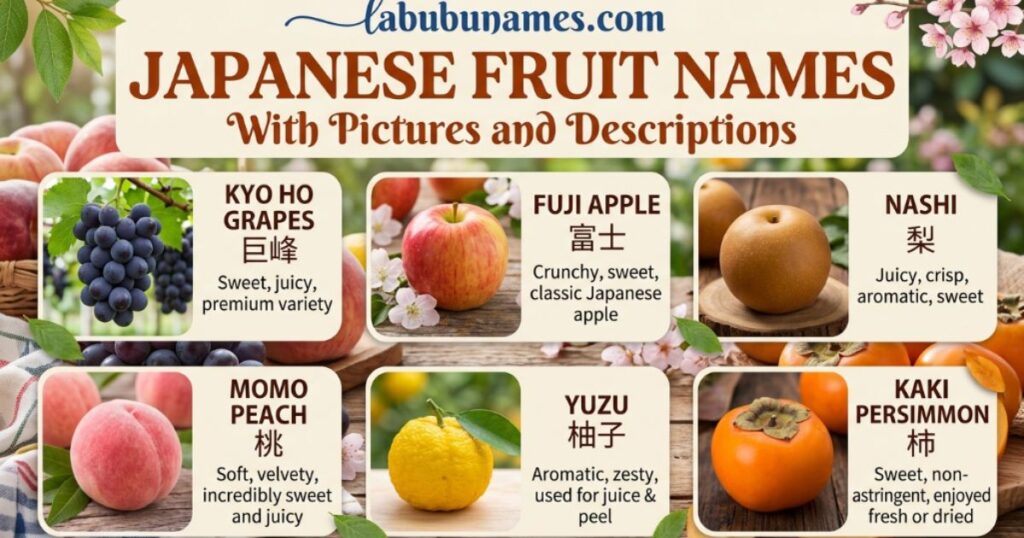
Pictures make Japanese fruit names much easier to remember. When you see the fruit along with its name and description, learning becomes faster and more enjoyable. Add real fruit images beside each name when publishing this article for the best learning experience.
- Ringo
• Meaning: Apple
• Description: A crisp, sweet fruit available in many Japanese varieties.
• Pronunciation: reen-go
• Kanji: 林檎 - Ichigo
• Meaning: Strawberry
• Description: Bright red, juicy berries loved across Japan.
• Pronunciation: ee-chee-go
• Kanji: 苺 - Momo
• Meaning: Peach
• Description: Soft, fragrant fruit with sweet white or pink flesh.
• Pronunciation: moh-moh
• Kanji: 桃 - Budo
• Meaning: Grape
• Description: Round, juicy grapes eaten fresh or used for juice.
• Pronunciation: boo-doh
• Kanji: 葡萄 - Mikan
• Meaning: Mandarin Orange
• Description: Easy-to-peel citrus with a sweet flavor.
• Pronunciation: mee-kahn
• Kanji: 蜜柑 - Yuzu
• Meaning: Japanese Citrus
• Description: Aromatic citrus used in cooking and drinks.
• Pronunciation: yoo-zoo
• Kanji: 柚子 - Kaki
• Meaning: Persimmon
• Description: Sweet orange fruit enjoyed during autumn.
• Pronunciation: kah-kee
• Kanji: 柿 - Nashi
• Meaning: Japanese Pear
• Description: Round pear with crisp, juicy flesh.
• Pronunciation: nah-shee
• Kanji: 梨 - Ume
• Meaning: Japanese Plum
• Description: Sour fruit used for pickles and plum wine.
• Pronunciation: oo-meh
• Kanji: 梅 - Suika
• Meaning: Watermelon
• Description: Large summer fruit with refreshing red flesh.
• Pronunciation: soo-ee-kah
• Kanji: 西瓜 - Meron
• Meaning: Melon
• Description: Premium melon known for its sweet aroma.
• Pronunciation: meh-ron
• Kanji: メロン - Remon
• Meaning: Lemon
• Description: Yellow citrus fruit with a tangy flavor.
• Pronunciation: reh-mon
• Kanji: レモン - Banana
• Meaning: Banana
• Description: Soft, sweet fruit enjoyed as a daily snack.
• Pronunciation: bah-nah-nah
• Kanji: バナナ - Orenji
• Meaning: Orange
• Description: Juicy citrus fruit rich in vitamin C.
• Pronunciation: oh-ren-jee
• Kanji: オレンジ - Pain
• Meaning: Pineapple
• Description: Tropical fruit with sweet and juicy flesh.
• Pronunciation: pah-een
• Kanji: パイン - Mango
• Meaning: Mango
• Description: Tropical fruit with rich, creamy sweetness.
• Pronunciation: man-go
• Kanji: マンゴー - Kiwi
• Meaning: Kiwi
• Description: Small fruit with green flesh and tiny black seeds.
• Pronunciation: kee-wee
• Kanji: キウイ - Biwa
• Meaning: Loquat
• Description: Small orange fruit with a mild sweet flavor.
• Pronunciation: bee-wah
• Kanji: 枇杷 - Anzu
• Meaning: Apricot
• Description: Soft fruit with a sweet and slightly tart taste.
• Pronunciation: ahn-zoo
• Kanji: 杏 - Kinkan
• Meaning: Kumquat
• Description: Tiny citrus fruit eaten with its edible peel.
• Pronunciation: keen-kahn
• Kanji: 金柑
FAQ’s
What is the easiest way to learn fruit names in Japanese?
Start with common fruits and practice a few words daily. Reading Japanese fruit names with pronunciation helps improve memory and speaking skills quickly.
Why should I learn fruit vocabulary before visiting Japan?
Knowing Japanese names makes shopping easier and helps you understand food labels, markets, restaurants, and everyday conversations with confidence.
Are Japanese fruit words difficult for beginners?
No. Most Japanese fruit names are short, easy to pronounce, and simple to remember when you practice them with English meanings regularly.
Which fruits are the most common in Japan?
Apples, strawberries, mandarins, grapes, peaches, and pears are popular. Learning these Japanese names covers many everyday situations in Japan.
Can children learn these words easily?
Yes. Simple lessons, flashcards, and pictures make Japanese fruit names fun for children while building useful Japanese vocabulary from an early age.
Do I need to learn Kanji for fruit names?
No. Begin with pronunciation and English meanings first. Later, add Kanji to understand Japanese names more naturally while reading Japanese.
How can I remember fruit names faster?
Practice every day, use pictures, and say each word aloud. Repeating Japanese fruit names during daily study makes them easier to remember.
Conclusion
Japanese fruit names are fun to learn and easy to remember. Many people enjoy knowing the fruits name in Japanese before visiting Japan. Learning Japanese fruit names also helps while shopping, reading menus, or studying the language. Every Japanese fruit name has its own sound and meaning, making learning more interesting.
This guide shares many Japanese fruit names with English meanings. You will also see the correct fruit name in Japanese for popular fruits. If you want the complete Japanese fruits name list, this guide makes everything simple. Knowing a Japan fruit name can also help you talk with local people and understand Japanese food better.
Keep this Japanese fruit names list for quick practice every day. The more Japanese fruit names you learn, the easier they become to remember. A good Japanese fruit name list improves vocabulary and builds confidence. Soon, every fruit name in Japanese will feel familiar, and you will easily recognize many Japanese fruits name while reading, traveling, or enjoying Japanese culture.