








If you enjoy discovering unique names, you’ll love exploring rare Japanese surnames. These family names carry deep history and beautiful meanings. Some come from nature while others reflect old villages or ancient traditions. Many people search for rare Japanese surnames to learn about Japanese culture, create memorable characters, or find meaningful family names. You may also come across uncommon Japanese last names that are rarely seen today yet still hold fascinating stories.
Many rare Japanese surnames have survived for centuries. Others appear only in certain parts of Japan. That’s why they stand out from more common family names. If you’re looking for unique Japanese surnames, you’ll find plenty of interesting choices. Some people also search for uncommon Japanese last names because they want names that feel authentic and different.
This guide shares a carefully selected collection of rare Japanese surnames with meanings and origins. You’ll also discover Japanese last names unique enough for stories, games, family research, or personal interest. Whether you love Japanese culture or simply enjoy unusual names, this list makes it easy to explore Japanese surnames with confidence.
What Are Rare Japanese Surnames?
Rare Japanese surnames belong to only a small number of families in Japan. Unlike common family names, these surnames often have deep historical roots and unique stories. Many come from ancient villages, mountains, rivers, seasonal traditions, or old occupations. Some are so uncommon that only a handful of households still use them today. If you’re exploring rare Japanese surnames, you’ll discover fascinating examples of unique Japanese surnames, Japanese surname meanings, and authentic Japanese surnames that reflect Japan’s rich cultural heritage. Below are 25 remarkable names along with their meanings, pronunciations, and kanji.
1. Takanashi
- Meaning: No hawks, so little birds can play freely
- Pronunciation: Tah-kah-nah-shee
- Kanji: 小鳥遊
2. Yamanashi
- Meaning: Village with a clear moon view
- Pronunciation: Yah-mah-nah-shee
- Kanji: 月見里
3. Tsuyuri
- Meaning: Chestnut flowers fall
- Pronunciation: Tsoo-yoo-ree
- Kanji: 栗花落
4. Kadenokoji
- Meaning: Court office lane
- Pronunciation: Kah-deh-noh-koh-jee
- Kanji: 勘解由小路
5. Saemonsaburo
- Meaning: Left Gate Guard, Third Son
- Pronunciation: Sah-eh-mon-sah-boo-roh
- Kanji: 左衛門三郎
6. Watanuki
- Meaning: Cotton removed from clothing
- Pronunciation: Wah-tah-noo-kee
- Kanji: 四月一日
7. Hozumi
- Meaning: First rice harvest
- Pronunciation: Hoh-zoo-mee
- Kanji: 八月一日
8. Mitarai
- Meaning: Purification basin
- Pronunciation: Mee-tah-rah-ee
- Kanji: 御手洗
9. Ioroi
- Meaning: Five hundred storehouses
- Pronunciation: Ee-oh-roh-ee
- Kanji: 五百蔵
10. Kanemochi
- Meaning: Wealth holder
- Pronunciation: Kah-neh-moh-chee
- Kanji: 金持
11. Otori
- Meaning: Phoenix
- Pronunciation: Oh-toh-ree
- Kanji: 鳳
12. Takara
- Meaning: Treasure
- Pronunciation: Tah-kah-rah
- Kanji: 宝
13. Kohiruimaki
- Meaning: Small winding plain
- Pronunciation: Koh-hee-roo-ee-mah-kee
- Kanji: 小比類巻
14. Higashiyotsuyanagi
- Meaning: East four willows
- Pronunciation: Hee-gah-shee-yoh-tsoo-yah-nah-gee
- Kanji: 東四柳
15. Busujima
- Meaning: Poison island
- Pronunciation: Boo-soo-jee-mah
- Kanji: 毒島
16. Kito
- Meaning: Demon head
- Pronunciation: Kee-toh
- Kanji: 鬼頭
17. Yoboro
- Meaning: District block
- Pronunciation: Yoh-boh-roh
- Kanji: 丁
18. Momo
- Meaning: Hundred
- Pronunciation: Moh-moh
- Kanji: 百
19. Ichi
- Meaning: One
- Pronunciation: Ee-chee
- Kanji: 一
20. Higashi
- Meaning: East
- Pronunciation: Hee-gah-shee
- Kanji: 東
21. Minami
- Meaning: South
- Pronunciation: Mee-nah-mee
- Kanji: 南
22. Tsuji
- Meaning: Crossroads
- Pronunciation: Tsoo-jee
- Kanji: 辻
23. Chiaki
- Meaning: Thousand autumns
- Pronunciation: Chee-ah-kee
- Kanji: 千秋
24. Tsuyuri
- Meaning: Rainy season begins
- Pronunciation: Tsoo-yoo-ree
- Kanji: 五月七日
25. Hozumi
- Meaning: First day of August
- Pronunciation: Hoh-zoo-mee
- Kanji: 八月朔日
Why Are Some Rare Japanese Surnames So Uncommon?
Many rare Japanese surnames have remained uncommon because they originated in small villages, remote mountains, or isolated islands. In the past, families rarely moved far from their hometowns. As a result, many uncommon Japanese family names stayed within a single community for generations. Some names also belonged to only one family line, making them extremely rare today. Over time, population changes, marriage, and migration caused several old Japanese surnames to disappear. Even so, these authentic Japanese surnames continue to preserve Japan’s history and local traditions.
1. Ganaha
- Meaning: Inner river plain
- Pronunciation: Gah-nah-hah
- Kanji: 我那覇
2. Kyan
- Meaning: Okinawan place name
- Pronunciation: Kee-yahn
- Kanji: 喜屋武
3. Nakandakari
- Meaning: Middle village canal
- Pronunciation: Nah-kahn-dah-kah-ree
- Kanji: 仲村渠
4. Amemiya
- Meaning: Rain shrine
- Pronunciation: Ah-meh-mee-yah
- Kanji: 雨宮
5. Kanzaki
- Meaning: Divine cape
- Pronunciation: Kahn-zah-kee
- Kanji: 神崎
6. Kumoi
- Meaning: Above the clouds
- Pronunciation: Koo-moh-ee
- Kanji: 雲井
7. Asagiri
- Meaning: Morning mist
- Pronunciation: Ah-sah-gee-ree
- Kanji: 朝霧
8. Yukimura
- Meaning: Snow village
- Pronunciation: Yoo-kee-moo-rah
- Kanji: 雪村
9. Miyama
- Meaning: Deep mountain
- Pronunciation: Mee-yah-mah
- Kanji: 深山
10. Kagura
- Meaning: Sacred dance
- Pronunciation: Kah-goo-rah
- Kanji: 神楽
11. Aoyagi
- Meaning: Green willow
- Pronunciation: Ah-oh-yah-gee
- Kanji: 青柳
12. Shiramine
- Meaning: White peak
- Pronunciation: Shee-rah-mee-neh
- Kanji: 白峰
13. Kuroiwa
- Meaning: Black rock
- Pronunciation: Koo-roh-ee-wah
- Kanji: 黒岩
14. Otowa
- Meaning: Sound of feathers
- Pronunciation: Oh-toh-wah
- Kanji: 音羽
15. Sakuraba
- Meaning: Cherry garden
- Pronunciation: Sah-koo-rah-bah
- Kanji: 桜庭
16. Isobe
- Meaning: Seashore
- Pronunciation: Ee-soh-beh
- Kanji: 磯部
17. Makabe
- Meaning: True wall
- Pronunciation: Mah-kah-beh
- Kanji: 真壁
18. Soma
- Meaning: Mutual horse
- Pronunciation: Soh-mah
- Kanji: 相馬
19. Takano
- Meaning: Hawk field
- Pronunciation: Tah-kah-noh
- Kanji: 鷹野
20. Kandori
- Meaning: Sacred bird
- Pronunciation: Kahn-doh-ree
- Kanji: 神鳥
21. Hanyu
- Meaning: Feather field
- Pronunciation: Hah-nyoo
- Kanji: 羽生
22. Hoshikawa
- Meaning: Star river
- Pronunciation: Hoh-shee-kah-wah
- Kanji: 星川
23. Shindo
- Meaning: New wisteria
- Pronunciation: Sheen-doh
- Kanji: 新藤
24. Kiyohara
- Meaning: Pure field
- Pronunciation: Kee-yoh-hah-rah
- Kanji: 清原
25. Minegishi
- Meaning: Mountain ridge
- Pronunciation: Mee-neh-gee-shee
- Kanji: 峰岸
The History Behind Rare Japanese Surnames
The story of rare Japanese surnames goes back hundreds of years. Before the late 1800s, only samurai, nobles, and a few wealthy families officially used surnames. During the Meiji Era, the Japanese government required every family to register a surname. Many people chose names based on nearby mountains, rivers, forests, temples, or villages. Others created names inspired by nature or local traditions. This is why many historical Japanese surnames, ancient Japanese surnames, and traditional Japanese surnames remain unique today. Below are 25 surnames that reflect Japan’s rich history.
1. Tokugawa
- Meaning: Virtuous river
- Pronunciation: Toh-koo-gah-wah
- Kanji: 徳川
2. Fujiwara
- Meaning: Wisteria field
- Pronunciation: Foo-jee-wah-rah
- Kanji: 藤原
3. Minamoto
- Meaning: Source or origin
- Pronunciation: Mee-nah-moh-toh
- Kanji: 源
4. Taira
- Meaning: Peaceful
- Pronunciation: Tie-rah
- Kanji: 平
5. Tachibana
- Meaning: Wild orange tree
- Pronunciation: Tah-chee-bah-nah
- Kanji: 橘
6. Oe
- Meaning: Large inlet
- Pronunciation: Oh-eh
- Kanji: 大江
7. Sugawara
- Meaning: Sedge field
- Pronunciation: Soo-gah-wah-rah
- Kanji: 菅原
8. Nakatomi
- Meaning: Central wealth
- Pronunciation: Nah-kah-toh-mee
- Kanji: 中臣
9. Koga
- Meaning: Ancient river
- Pronunciation: Koh-gah
- Kanji: 古賀
10. Chiba
- Meaning: Thousand leaves
- Pronunciation: Chee-bah
- Kanji: 千葉
11. Ashikaga
- Meaning: Reed deer
- Pronunciation: Ah-shee-kah-gah
- Kanji: 足利
12. Imagawa
- Meaning: Present river
- Pronunciation: Ee-mah-gah-wah
- Kanji: 今川
13. Hosokawa
- Meaning: Narrow river
- Pronunciation: Hoh-soh-kah-wah
- Kanji: 細川
14. Shimazu
- Meaning: Island ford
- Pronunciation: Shee-mah-zoo
- Kanji: 島津
15. Date
- Meaning: Historical clan name
- Pronunciation: Dah-teh
- Kanji: 伊達
16. Uesugi
- Meaning: Upper cedar
- Pronunciation: Oo-eh-soo-gee
- Kanji: 上杉
17. Mori
- Meaning: Forest
- Pronunciation: Moh-ree
- Kanji: 毛利
18. Takeda
- Meaning: Martial rice field
- Pronunciation: Tah-keh-dah
- Kanji: 武田
19. Sanada
- Meaning: True rice field
- Pronunciation: Sah-nah-dah
- Kanji: 真田
20. Ogasawara
- Meaning: Small bamboo plain
- Pronunciation: Oh-gah-sah-wah-rah
- Kanji: 小笠原
21. Ii
- Meaning: Historical clan name
- Pronunciation: Ee-ee
- Kanji: 井伊
22. Hojo
- Meaning: North castle
- Pronunciation: Hoh-joh
- Kanji: 北条
23. Akechi
- Meaning: Bright wisdom
- Pronunciation: Ah-keh-chee
- Kanji: 明智
24. Satake
- Meaning: Assistant warrior
- Pronunciation: Sah-tah-keh
- Kanji: 佐竹
25. Nanbu
- Meaning: Southern region
- Pronunciation: Nahn-boo
- Kanji: 南部
How Rare Japanese Surnames Are Created
Many rare Japanese surnames began with the land where families lived. Others came from occupations, local landmarks, religious sites, or seasonal events. During the Meiji period, millions of families selected new surnames for official records. Since villages often created their own names, many became unique Japanese surnames that existed in only one area. Some Japanese surnames inspired by nature describe rivers, mountains, flowers, or forests. Others preserve old customs that are still remembered through family names today.
1. Amemiya
- Meaning: Rain shrine
- Pronunciation: Ah-meh-mee-yah
- Kanji: 雨宮
2. Sakuraba
- Meaning: Cherry blossom garden
- Pronunciation: Sah-koo-rah-bah
- Kanji: 桜庭
3. Hoshikawa
- Meaning: Star river
- Pronunciation: Hoh-shee-kah-wah
- Kanji: 星川
4. Yukimura
- Meaning: Snow village
- Pronunciation: Yoo-kee-moo-rah
- Kanji: 雪村
5. Asagiri
- Meaning: Morning mist
- Pronunciation: Ah-sah-gee-ree
- Kanji: 朝霧
6. Miyama
- Meaning: Deep mountain
- Pronunciation: Mee-yah-mah
- Kanji: 深山
7. Shiramine
- Meaning: White peak
- Pronunciation: Shee-rah-mee-neh
- Kanji: 白峰
8. Aoyagi
- Meaning: Green willow
- Pronunciation: Ah-oh-yah-gee
- Kanji: 青柳
9. Otowa
- Meaning: Sound of feathers
- Pronunciation: Oh-toh-wah
- Kanji: 音羽
10. Kanzaki
- Meaning: Divine cape
- Pronunciation: Kahn-zah-kee
- Kanji: 神崎
11. Kumoi
- Meaning: Above the clouds
- Pronunciation: Koo-moh-ee
- Kanji: 雲井
12. Makabe
- Meaning: True wall
- Pronunciation: Mah-kah-beh
- Kanji: 真壁
13. Isobe
- Meaning: Seashore
- Pronunciation: Ee-soh-beh
- Kanji: 磯部
14. Soma
- Meaning: Horse meadow
- Pronunciation: Soh-mah
- Kanji: 相馬
15. Takano
- Meaning: Hawk field
- Pronunciation: Tah-kah-noh
- Kanji: 鷹野
16. Kagura
- Meaning: Sacred dance
- Pronunciation: Kah-goo-rah
- Kanji: 神楽
17. Kuroiwa
- Meaning: Black rock
- Pronunciation: Koo-roh-ee-wah
- Kanji: 黒岩
18. Hanazono
- Meaning: Flower garden
- Pronunciation: Hah-nah-zoh-noh
- Kanji: 花園
19. Mizutani
- Meaning: Water valley
- Pronunciation: Mee-zoo-tah-nee
- Kanji: 水谷
20. Kiriyama
- Meaning: Misty mountain
- Pronunciation: Kee-ree-yah-mah
- Kanji: 霧山
21. Akiyama
- Meaning: Autumn mountain
- Pronunciation: Ah-kee-yah-mah
- Kanji: 秋山
22. Fujimori
- Meaning: Wisteria forest
- Pronunciation: Foo-jee-moh-ree
- Kanji: 藤森
23. Umino
- Meaning: Sea field
- Pronunciation: Oo-mee-noh
- Kanji: 海野
24. Hayashida
- Meaning: Forest rice field
- Pronunciation: Hah-yah-shee-dah
- Kanji: 林田
25. Morinaga
- Meaning: Long forest
- Pronunciation: Moh-ree-nah-gah
- Kanji: 森永
Rare Japanese Surnames and Their Meanings
Many rare Japanese surnames carry meanings that reflect Japan’s landscapes, beliefs, and traditions. Some describe mountains, rivers, forests, or flowers while others honor ancient occupations or family heritage. Unlike common surnames, these names often tell a unique story that has been preserved for generations. Exploring Japanese surname meanings helps you appreciate the history behind each family name and understand why these unique Japanese surnames remain so special today.
1. Mizunoe
- Meaning: Water inlet
- Pronunciation: Mee-zoo-noh-eh
- Kanji: 水ノ江
2. Kamitani
- Meaning: Upper valley
- Pronunciation: Kah-mee-tah-nee
- Kanji: 上谷
3. Shiratori
- Meaning: White bird
- Pronunciation: Shee-rah-toh-ree
- Kanji: 白鳥
4. Aonuma
- Meaning: Blue marsh
- Pronunciation: Ah-oh-noo-mah
- Kanji: 青沼
5. Takamine
- Meaning: High peak
- Pronunciation: Tah-kah-mee-neh
- Kanji: 高峰
6. Kogure
- Meaning: Small dusk
- Pronunciation: Koh-goo-reh
- Kanji: 木暮
7. Mizushima
- Meaning: Water island
- Pronunciation: Mee-zoo-shee-mah
- Kanji: 水島
8. Arisawa
- Meaning: Existing marsh
- Pronunciation: Ah-ree-sah-wah
- Kanji: 有沢
9. Hoshino
- Meaning: Star field
- Pronunciation: Hoh-shee-noh
- Kanji: 星野
10. Kiyomizu
- Meaning: Pure water
- Pronunciation: Kee-yoh-mee-zoo
- Kanji: 清水
11. Ishibashi
- Meaning: Stone bridge
- Pronunciation: Ee-shee-bah-shee
- Kanji: 石橋
12. Yamabe
- Meaning: Mountain side
- Pronunciation: Yah-mah-beh
- Kanji: 山辺
13. Tanimoto
- Meaning: Base of the valley
- Pronunciation: Tah-nee-moh-toh
- Kanji: 谷本
14. Shinozaki
- Meaning: Bamboo grass cape
- Pronunciation: Shee-noh-zah-kee
- Kanji: 篠崎
15. Kisaragi
- Meaning: Second lunar month
- Pronunciation: Kee-sah-rah-gee
- Kanji: 如月
16. Fujikawa
- Meaning: Wisteria river
- Pronunciation: Foo-jee-kah-wah
- Kanji: 藤川
17. Umehara
- Meaning: Plum field
- Pronunciation: Oo-meh-hah-rah
- Kanji: 梅原
18. Nishiyama
- Meaning: Western mountain
- Pronunciation: Nee-shee-yah-mah
- Kanji: 西山
19. Matsukawa
- Meaning: Pine river
- Pronunciation: Maht-soo-kah-wah
- Kanji: 松川
20. Kawanabe
- Meaning: Riverside
- Pronunciation: Kah-wah-nah-beh
- Kanji: 川辺
21. Oshima
- Meaning: Large island
- Pronunciation: Oh-shee-mah
- Kanji: 大島
22. Hayakawa
- Meaning: Fast river
- Pronunciation: Hah-yah-kah-wah
- Kanji: 早川
23. Kitayama
- Meaning: Northern mountain
- Pronunciation: Kee-tah-yah-mah
- Kanji: 北山
24. Inoue
- Meaning: Above the well
- Pronunciation: Ee-noh-oo-eh
- Kanji: 井上
25. Tachikawa
- Meaning: Standing river
- Pronunciation: Tah-chee-kah-wah
- Kanji: 立川
Rare Japanese Surnames Inspired by Nature
Nature has always shaped Japanese culture and naming traditions. Many rare Japanese surnames come from mountains, rivers, forests, flowers, birds, and changing seasons. These Japanese surnames inspired by nature often describe the place where a family lived or the landscape that surrounded them. Their beautiful meanings make them popular choices for writers, artists, and anyone searching for meaningful Japanese surnames with a strong connection to nature.
1. Hanamura
- Meaning: Flower village
- Pronunciation: Hah-nah-moo-rah
- Kanji: 花村
2. Sakurai
- Meaning: Cherry blossom well
- Pronunciation: Sah-koo-rah-ee
- Kanji: 桜井
3. Morikawa
- Meaning: Forest river
- Pronunciation: Moh-ree-kah-wah
- Kanji: 森川
4. Kawashima
- Meaning: River island
- Pronunciation: Kah-wah-shee-mah
- Kanji: 川島
5. Aoki
- Meaning: Green tree
- Pronunciation: Ah-oh-kee
- Kanji: 青木
6. Yanagida
- Meaning: Willow field
- Pronunciation: Yah-nah-gee-dah
- Kanji: 柳田
7. Umino
- Meaning: Sea field
- Pronunciation: Oo-mee-noh
- Kanji: 海野
8. Fujimoto
- Meaning: Base of the wisteria
- Pronunciation: Foo-jee-moh-toh
- Kanji: 藤本
9. Mizuhara
- Meaning: Water plain
- Pronunciation: Mee-zoo-hah-rah
- Kanji: 水原
10. Kinoshita
- Meaning: Beneath the tree
- Pronunciation: Kee-noh-shee-tah
- Kanji: 木下
11. Uematsu
- Meaning: Upper pine tree
- Pronunciation: Oo-eh-maht-soo
- Kanji: 植松
12. Shirakawa
- Meaning: White river
- Pronunciation: Shee-rah-kah-wah
- Kanji: 白川
13. Yamazaki
- Meaning: Mountain cape
- Pronunciation: Yah-mah-zah-kee
- Kanji: 山崎
14. Takamori
- Meaning: High forest
- Pronunciation: Tah-kah-moh-ree
- Kanji: 高森
15. Kurokawa
- Meaning: Black river
- Pronunciation: Koo-roh-kah-wah
- Kanji: 黒川
16. Tachibana
- Meaning: Wild orange tree
- Pronunciation: Tah-chee-bah-nah
- Kanji: 橘
17. Fujinami
- Meaning: Wisteria wave
- Pronunciation: Foo-jee-nah-mee
- Kanji: 藤波
18. Matsubara
- Meaning: Pine field
- Pronunciation: Maht-soo-bah-rah
- Kanji: 松原
19. Iwashita
- Meaning: Below the rock
- Pronunciation: Ee-wah-shee-tah
- Kanji: 岩下
20. Tsurumi
- Meaning: Crane viewing
- Pronunciation: Tsoo-roo-mee
- Kanji: 鶴見
21. Uozumi
- Meaning: Fish dwelling
- Pronunciation: Oo-oh-zoo-mee
- Kanji: 魚住
22. Natsume
- Meaning: Jujube tree
- Pronunciation: Naht-soo-meh
- Kanji: 夏目
23. Kiyono
- Meaning: Pure field
- Pronunciation: Kee-yoh-noh
- Kanji: 清野
24. Toriyama
- Meaning: Bird mountain
- Pronunciation: Toh-ree-yah-mah
- Kanji: 鳥山
25. Umemoto
- Meaning: Base of the plum tree
- Pronunciation: Oo-meh-moh-toh
- Kanji: 梅本
Rare Japanese Surnames With Beautiful Kanji
Many rare Japanese surnames stand out because of their elegant kanji. These characters often symbolize flowers, birds, rivers, stars, and other beautiful parts of nature. Some Japanese kanji surnames also reflect good fortune, peace, or family values. Their artistic appearance and meaningful symbolism make them popular among people looking for beautiful Japanese surnames and aesthetic Japanese surnames.
1. Ayase
- Meaning: Colorful rapids
- Pronunciation: Ah-yah-seh
- Kanji: 綾瀬
2. Kisaragi
- Meaning: Second lunar month
- Pronunciation: Kee-sah-rah-gee
- Kanji: 如月
3. Hoshizora
- Meaning: Starry sky
- Pronunciation: Hoh-shee-zoh-rah
- Kanji: 星空
4. Shiranui
- Meaning: Unknown fire
- Pronunciation: Shee-rah-noo-ee
- Kanji: 不知火
5. Akizuki
- Meaning: Autumn moon
- Pronunciation: Ah-kee-zoo-kee
- Kanji: 秋月
6. Hanazono
- Meaning: Flower garden
- Pronunciation: Hah-nah-zoh-noh
- Kanji: 花園
7. Amane
- Meaning: Heavenly sound
- Pronunciation: Ah-mah-neh
- Kanji: 天音
8. Yukishiro
- Meaning: Snow white
- Pronunciation: Yoo-kee-shee-roh
- Kanji: 雪代
9. Tsukikage
- Meaning: Moon shadow
- Pronunciation: Tsoo-kee-kah-geh
- Kanji: 月影
10. Suzushiro
- Meaning: White radish flower
- Pronunciation: Soo-zoo-shee-roh
- Kanji: 鈴代
11. Kiyosumi
- Meaning: Pure clarity
- Pronunciation: Kee-yoh-soo-mee
- Kanji: 清澄
12. Hanasaki
- Meaning: Blooming flower
- Pronunciation: Hah-nah-sah-kee
- Kanji: 花咲
13. Asahina
- Meaning: Morning sun
- Pronunciation: Ah-sah-hee-nah
- Kanji: 朝比奈
14. Mizuki
- Meaning: Beautiful moon
- Pronunciation: Mee-zoo-kee
- Kanji: 瑞希
15. Shinonome
- Meaning: Dawn
- Pronunciation: Shee-noh-noh-meh
- Kanji: 東雲
16. Kaedehara
- Meaning: Maple field
- Pronunciation: Kah-eh-deh-hah-rah
- Kanji: 楓原
17. Ayanokoji
- Meaning: Silk avenue
- Pronunciation: Ah-yah-noh-koh-jee
- Kanji: 綾小路
18. Hazuki
- Meaning: Leaf month
- Pronunciation: Hah-zoo-kee
- Kanji: 葉月
19. Minazuki
- Meaning: Water month
- Pronunciation: Mee-nah-zoo-kee
- Kanji: 水無月
20. Kazehaya
- Meaning: Gentle wind
- Pronunciation: Kah-zeh-hah-yah
- Kanji: 風早
21. Kirisaki
- Meaning: Mist cape
- Pronunciation: Kee-ree-sah-kee
- Kanji: 霧崎
22. Shirayuki
- Meaning: White snow
- Pronunciation: Shee-rah-yoo-kee
- Kanji: 白雪
23. Hoshikawa
- Meaning: Star river
- Pronunciation: Hoh-shee-kah-wah
- Kanji: 星川
24. Fujisora
- Meaning: Wisteria sky
- Pronunciation: Foo-jee-soh-rah
- Kanji: 藤空
25. Aozora
- Meaning: Blue sky
- Pronunciation: Ah-oh-zoh-rah
- Kanji: 青空
Rare Japanese Surnames Based on Mountains and Rivers
Many rare Japanese surnames come directly from Japan’s mountains, rivers, valleys, and waterfalls. Families often named themselves after the landscapes around their homes. As a result, these Japanese surnames based on nature preserve the country’s geography and local history. Many of these names remain rare because they originated in small villages or remote regions.
1. Takayama
- Meaning: High mountain
- Pronunciation: Tah-kah-yah-mah
- Kanji: 高山
2. Fukagawa
- Meaning: Deep river
- Pronunciation: Foo-kah-gah-wah
- Kanji: 深川
3. Ishiyama
- Meaning: Stone mountain
- Pronunciation: Ee-shee-yah-mah
- Kanji: 石山
4. Kawahara
- Meaning: River plain
- Pronunciation: Kah-wah-hah-rah
- Kanji: 川原
5. Okuyama
- Meaning: Inner mountain
- Pronunciation: Oh-koo-yah-mah
- Kanji: 奥山
6. Tanigawa
- Meaning: Valley river
- Pronunciation: Tah-nee-gah-wah
- Kanji: 谷川
7. Iwayama
- Meaning: Rock mountain
- Pronunciation: Ee-wah-yah-mah
- Kanji: 岩山
8. Shirataki
- Meaning: White waterfall
- Pronunciation: Shee-rah-tah-kee
- Kanji: 白滝
9. Kawanishi
- Meaning: West of the river
- Pronunciation: Kah-wah-nee-shee
- Kanji: 川西
10. Minegishi
- Meaning: Mountain peak shore
- Pronunciation: Mee-neh-gee-shee
- Kanji: 峰岸
11. Kawakami
- Meaning: Upper river
- Pronunciation: Kah-wah-kah-mee
- Kanji: 川上
12. Yamagishi
- Meaning: Mountain bank
- Pronunciation: Yah-mah-gee-shee
- Kanji: 山岸
13. Takiuchi
- Meaning: Inside the waterfall
- Pronunciation: Tah-kee-oo-chee
- Kanji: 滝内
14. Mineyama
- Meaning: Mountain peak
- Pronunciation: Mee-neh-yah-mah
- Kanji: 峰山
15. Oikawa
- Meaning: Flowing river
- Pronunciation: Oh-ee-kah-wah
- Kanji: 及川
16. Yamagata
- Meaning: Mountain shape
- Pronunciation: Yah-mah-gah-tah
- Kanji: 山形
17. Takiguchi
- Meaning: Waterfall entrance
- Pronunciation: Tah-kee-goo-chee
- Kanji: 滝口
18. Kawase
- Meaning: River rapids
- Pronunciation: Kah-wah-seh
- Kanji: 川瀬
19. Mineoka
- Meaning: Mountain ridge
- Pronunciation: Mee-neh-oh-kah
- Kanji: 峰岡
20. Iwakawa
- Meaning: Rock river
- Pronunciation: Ee-wah-kah-wah
- Kanji: 岩川
21. Yamanaka
- Meaning: Middle of the mountain
- Pronunciation: Yah-mah-nah-kah
- Kanji: 山中
22. Tanimura
- Meaning: Valley village
- Pronunciation: Tah-nee-moo-rah
- Kanji: 谷村
23. Kurotaki
- Meaning: Black waterfall
- Pronunciation: Koo-roh-tah-kee
- Kanji: 黒滝
24. Mizuguchi
- Meaning: Water entrance
- Pronunciation: Mee-zoo-goo-chee
- Kanji: 水口
25. Yamaguchi
- Meaning: Mountain entrance
- Pronunciation: Yah-mah-goo-chee
- Kanji: 山口
Rare Japanese Surnames Linked to Ancient Clans
Some rare Japanese surnames trace their roots to powerful clans that shaped Japan’s history. These families served emperors, ruled provinces, or became famous samurai. Many Japanese clan names and Japanese samurai surnames remain rare today because they stayed within a single bloodline. Their legacy continues through these distinctive family names.
1. Abe
- Meaning: Peaceful clan
- Pronunciation: Ah-beh
- Kanji: 安倍
2. Mononobe
- Meaning: Clan of military supplies
- Pronunciation: Moh-noh-noh-beh
- Kanji: 物部
3. Soga
- Meaning: Ancient clan name
- Pronunciation: Soh-gah
- Kanji: 蘇我
4. Kibi
- Meaning: Historic province
- Pronunciation: Kee-bee
- Kanji: 吉備
5. Otomo
- Meaning: Great companion
- Pronunciation: Oh-toh-moh
- Kanji: 大伴
6. Ki
- Meaning: Noble lineage
- Pronunciation: Kee
- Kanji: 紀
7. Inbe
- Meaning: Sacred weaving clan
- Pronunciation: Een-beh
- Kanji: 忌部
8. Hata
- Meaning: Weaver clan
- Pronunciation: Hah-tah
- Kanji: 秦
9. Nakatomi
- Meaning: Central minister
- Pronunciation: Nah-kah-toh-mee
- Kanji: 中臣
10. Urabe
- Meaning: Court diviner
- Pronunciation: Oo-rah-beh
- Kanji: 卜部
11. Fujiwara
- Meaning: Wisteria field
- Pronunciation: Foo-jee-wah-rah
- Kanji: 藤原
12. Tachibana
- Meaning: Wild orange tree
- Pronunciation: Tah-chee-bah-nah
- Kanji: 橘
13. Minamoto
- Meaning: Source
- Pronunciation: Mee-nah-moh-toh
- Kanji: 源
14. Taira
- Meaning: Peace
- Pronunciation: Tie-rah
- Kanji: 平
15. Tokugawa
- Meaning: Virtuous river
- Pronunciation: Toh-koo-gah-wah
- Kanji: 徳川
16. Hosokawa
- Meaning: Narrow river
- Pronunciation: Hoh-soh-kah-wah
- Kanji: 細川
17. Uesugi
- Meaning: Upper cedar
- Pronunciation: Oo-eh-soo-gee
- Kanji: 上杉
18. Takeda
- Meaning: Martial rice field
- Pronunciation: Tah-keh-dah
- Kanji: 武田
19. Date
- Meaning: Historical clan name
- Pronunciation: Dah-teh
- Kanji: 伊達
20. Shimazu
- Meaning: Island ford
- Pronunciation: Shee-mah-zoo
- Kanji: 島津
21. Mori
- Meaning: Forest
- Pronunciation: Moh-ree
- Kanji: 毛利
22. Sanada
- Meaning: True rice field
- Pronunciation: Sah-nah-dah
- Kanji: 真田
23. Ii
- Meaning: Historic family name
- Pronunciation: Ee-ee
- Kanji: 井伊
24. Hojo
- Meaning: North castle
- Pronunciation: Hoh-joh
- Kanji: 北条
25. Asakura
- Meaning: Morning storehouse
- Pronunciation: Ah-sah-koo-rah
- Kanji: 朝倉
Rare Japanese Surnames Found in Rural Japan
Many rare Japanese surnames have survived because families stayed in small villages for generations. Remote mountain towns, farming communities, and coastal villages often developed their own regional Japanese surnames that never became common across the country. These uncommon Japanese family names preserve local history and reflect the natural landscapes where families once lived.
1. Satomura
- Meaning: Village settlement
- Pronunciation: Sah-toh-moo-rah
- Kanji: 里村
2. Yamanoue
- Meaning: Above the mountain
- Pronunciation: Yah-mah-noh-oo-eh
- Kanji: 山上
3. Tanihara
- Meaning: Valley plain
- Pronunciation: Tah-nee-hah-rah
- Kanji: 谷原
4. Inamura
- Meaning: Rice village
- Pronunciation: Ee-nah-moo-rah
- Kanji: 稲村
5. Kawado
- Meaning: River gate
- Pronunciation: Kah-wah-doh
- Kanji: 川戸
6. Shimomura
- Meaning: Lower village
- Pronunciation: Shee-moh-moo-rah
- Kanji: 下村
7. Uemura
- Meaning: Upper village
- Pronunciation: Oo-eh-moo-rah
- Kanji: 上村
8. Hayashioka
- Meaning: Forest hill
- Pronunciation: Hah-yah-shee-oh-kah
- Kanji: 林岡
9. Nakanishi
- Meaning: Central west
- Pronunciation: Nah-kah-nee-shee
- Kanji: 中西
10. Okumura
- Meaning: Inner village
- Pronunciation: Oh-koo-moo-rah
- Kanji: 奥村
11. Furusato
- Meaning: Old village
- Pronunciation: Foo-roo-sah-toh
- Kanji: 古里
12. Takamura
- Meaning: High village
- Pronunciation: Tah-kah-moo-rah
- Kanji: 高村
13. Nozaki
- Meaning: Field cape
- Pronunciation: Noh-zah-kee
- Kanji: 野崎
14. Tsuchiya
- Meaning: Earth house
- Pronunciation: Tsoo-chee-yah
- Kanji: 土屋
15. Hiramatsu
- Meaning: Flat pine
- Pronunciation: Hee-rah-maht-soo
- Kanji: 平松
16. Nishino
- Meaning: Western field
- Pronunciation: Nee-shee-noh
- Kanji: 西野
17. Higashino
- Meaning: Eastern field
- Pronunciation: Hee-gah-shee-noh
- Kanji: 東野
18. Kitamura
- Meaning: Northern village
- Pronunciation: Kee-tah-moo-rah
- Kanji: 北村
19. Minamino
- Meaning: Southern field
- Pronunciation: Mee-nah-mee-noh
- Kanji: 南野
20. Araya
- Meaning: New valley
- Pronunciation: Ah-rah-yah
- Kanji: 新谷
21. Odagiri
- Meaning: Small valley
- Pronunciation: Oh-dah-gee-ree
- Kanji: 小田切
22. Matsuno
- Meaning: Pine field
- Pronunciation: Maht-soo-noh
- Kanji: 松野
23. Fujino
- Meaning: Wisteria field
- Pronunciation: Foo-jee-noh
- Kanji: 藤野
24. Kurihara
- Meaning: Chestnut plain
- Pronunciation: Koo-ree-hah-rah
- Kanji: 栗原
25. Moriyama
- Meaning: Forest mountain
- Pronunciation: Moh-ree-yah-mah
- Kanji: 森山
Rare Japanese Surnames From Different Japanese Regions
Japan’s geography has influenced family names for centuries. Every region has developed its own naming traditions, resulting in many rare Japanese surnames that are strongly tied to local culture. These Japanese surnames by region often reflect dialects, landmarks, and historical communities that are unique to specific prefectures.
1. Ganaha
- Meaning: Okinawan family name
- Pronunciation: Gah-nah-hah
- Kanji: 我那覇
2. Kyan
- Meaning: Historic Okinawan surname
- Pronunciation: Kee-yahn
- Kanji: 喜屋武
3. Nakandakari
- Meaning: Central canal
- Pronunciation: Nah-kahn-dah-kah-ree
- Kanji: 仲村渠
4. Chinen
- Meaning: Thousand years
- Pronunciation: Chee-nehn
- Kanji: 知念
5. Higa
- Meaning: Eastern village
- Pronunciation: Hee-gah
- Kanji: 比嘉
6. Aragaki
- Meaning: Rough fence
- Pronunciation: Ah-rah-gah-kee
- Kanji: 新垣
7. Tamashiro
- Meaning: Jewel castle
- Pronunciation: Tah-mah-shee-roh
- Kanji: 玉城
8. Shimabukuro
- Meaning: Island pouch
- Pronunciation: Shee-mah-boo-koo-roh
- Kanji: 島袋
9. Sunagawa
- Meaning: Sand river
- Pronunciation: Soo-nah-gah-wah
- Kanji: 砂川
10. Teruya
- Meaning: Shining valley
- Pronunciation: Teh-roo-yah
- Kanji: 照屋
11. Aisaka
- Meaning: Meeting hill
- Pronunciation: Eye-sah-kah
- Kanji: 相坂
12. Sumikawa
- Meaning: Clear river
- Pronunciation: Soo-mee-kah-wah
- Kanji: 澄川
13. Nambu
- Meaning: Southern region
- Pronunciation: Nahm-boo
- Kanji: 南部
14. Tsugaru
- Meaning: Historic northern region
- Pronunciation: Tsoo-gah-roo
- Kanji: 津軽
15. Ogasawara
- Meaning: Small bamboo plain
- Pronunciation: Oh-gah-sah-wah-rah
- Kanji: 小笠原
16. Satsuma
- Meaning: Historic province
- Pronunciation: Saht-soo-mah
- Kanji: 薩摩
17. Kaga
- Meaning: Historic province
- Pronunciation: Kah-gah
- Kanji: 加賀
18. Echigo
- Meaning: Ancient province
- Pronunciation: Eh-chee-goh
- Kanji: 越後
19. Awa
- Meaning: Historic province
- Pronunciation: Ah-wah
- Kanji: 阿波
20. Bizen
- Meaning: Historic province
- Pronunciation: Bee-zehn
- Kanji: 備前
21. Tosa
- Meaning: Historic province
- Pronunciation: Toh-sah
- Kanji: 土佐
22. Hyuga
- Meaning: Facing the sun
- Pronunciation: Hyoo-gah
- Kanji: 日向
23. Mikawa
- Meaning: Three rivers
- Pronunciation: Mee-kah-wah
- Kanji: 三河
24. Iyo
- Meaning: Historic province
- Pronunciation: Ee-yoh
- Kanji: 伊予
25. Hizen
- Meaning: Fertile province
- Pronunciation: Hee-zehn
- Kanji: 肥前
Rare Japanese Surnames That Sound Elegant
Some rare Japanese surnames are admired for their graceful pronunciation as much as their meanings. These elegant Japanese surnames often feature flowing sounds and beautiful kanji that evoke flowers, seasons, the moon, or gentle landscapes. They’re also popular choices for novels, games, and anime because they sound refined and memorable.
1. Ayanokoji
- Meaning: Silk avenue
- Pronunciation: Ah-yah-noh-koh-jee
- Kanji: 綾小路
2. Shinonome
- Meaning: Dawn
- Pronunciation: Shee-noh-noh-meh
- Kanji: 東雲
3. Akizuki
- Meaning: Autumn moon
- Pronunciation: Ah-kee-zoo-kee
- Kanji: 秋月
4. Hazuki
- Meaning: Leaf month
- Pronunciation: Hah-zoo-kee
- Kanji: 葉月
5. Tsukikage
- Meaning: Moon shadow
- Pronunciation: Tsoo-kee-kah-geh
- Kanji: 月影
6. Kazehaya
- Meaning: Gentle wind
- Pronunciation: Kah-zeh-hah-yah
- Kanji: 風早
7. Fujinami
- Meaning: Wisteria wave
- Pronunciation: Foo-jee-nah-mee
- Kanji: 藤波
8. Shirayuki
- Meaning: White snow
- Pronunciation: Shee-rah-yoo-kee
- Kanji: 白雪
9. Kaedehara
- Meaning: Maple field
- Pronunciation: Kah-eh-deh-hah-rah
- Kanji: 楓原
10. Kiyosumi
- Meaning: Pure clarity
- Pronunciation: Kee-yoh-soo-mee
- Kanji: 清澄
11. Asahina
- Meaning: Morning sun
- Pronunciation: Ah-sah-hee-nah
- Kanji: 朝比奈
12. Hoshizora
- Meaning: Starry sky
- Pronunciation: Hoh-shee-zoh-rah
- Kanji: 星空
13. Suzushiro
- Meaning: White radish flower
- Pronunciation: Soo-zoo-shee-roh
- Kanji: 鈴代
14. Yukishiro
- Meaning: Snow white
- Pronunciation: Yoo-kee-shee-roh
- Kanji: 雪代
15. Aozora
- Meaning: Blue sky
- Pronunciation: Ah-oh-zoh-rah
- Kanji: 青空
16. Hanasaki
- Meaning: Blooming flower
- Pronunciation: Hah-nah-sah-kee
- Kanji: 花咲
17. Amane
- Meaning: Heavenly sound
- Pronunciation: Ah-mah-neh
- Kanji: 天音
18. Mizuki
- Meaning: Beautiful hope
- Pronunciation: Mee-zoo-kee
- Kanji: 瑞希
19. Kisaragi
- Meaning: Second lunar month
- Pronunciation: Kee-sah-rah-gee
- Kanji: 如月
20. Fujisora
- Meaning: Wisteria sky
- Pronunciation: Foo-jee-soh-rah
- Kanji: 藤空
21. Kirisaki
- Meaning: Mist cape
- Pronunciation: Kee-ree-sah-kee
- Kanji: 霧崎
22. Shiranui
- Meaning: Mysterious fire
- Pronunciation: Shee-rah-noo-ee
- Kanji: 不知火
23. Minazuki
- Meaning: Water month
- Pronunciation: Mee-nah-zoo-kee
- Kanji: 水無月
24. Hanazono
- Meaning: Flower garden
- Pronunciation: Hah-nah-zoh-noh
- Kanji: 花園
25. Ayase
- Meaning: Colorful rapids
- Pronunciation: Ah-yah-seh
- Kanji: 綾瀬
Rare Japanese Surnames With Powerful Meanings
Some rare Japanese surnames symbolize strength, courage, wisdom, and honor. Many originated from respected warrior families or were inspired by powerful natural elements such as mountains, dragons, and strong rivers. These Japanese surnames with powerful meanings continue to represent resilience and leadership. They are also popular choices for novels, games, and characters because they leave a lasting impression.
1. Takeda
- Meaning: Martial rice field
- Pronunciation: Tah-keh-dah
- Kanji: 武田
2. Uesugi
- Meaning: Upper cedar
- Pronunciation: Oo-eh-soo-gee
- Kanji: 上杉
3. Sanada
- Meaning: True rice field
- Pronunciation: Sah-nah-dah
- Kanji: 真田
4. Date
- Meaning: Historic warrior clan
- Pronunciation: Dah-teh
- Kanji: 伊達
5. Tokugawa
- Meaning: Virtuous river
- Pronunciation: Toh-koo-gah-wah
- Kanji: 徳川
6. Shimazu
- Meaning: Island ford
- Pronunciation: Shee-mah-zoo
- Kanji: 島津
7. Hojo
- Meaning: Northern castle
- Pronunciation: Hoh-joh
- Kanji: 北条
8. Mori
- Meaning: Forest
- Pronunciation: Moh-ree
- Kanji: 毛利
9. Ashikaga
- Meaning: Reed deer
- Pronunciation: Ah-shee-kah-gah
- Kanji: 足利
10. Akechi
- Meaning: Bright wisdom
- Pronunciation: Ah-keh-chee
- Kanji: 明智
11. Ii
- Meaning: Historic warrior family
- Pronunciation: Ee-ee
- Kanji: 井伊
12. Hosokawa
- Meaning: Narrow river
- Pronunciation: Hoh-soh-kah-wah
- Kanji: 細川
13. Ogasawara
- Meaning: Small bamboo plain
- Pronunciation: Oh-gah-sah-wah-rah
- Kanji: 小笠原
14. Satake
- Meaning: Assistant warrior
- Pronunciation: Sah-tah-keh
- Kanji: 佐竹
15. Imagawa
- Meaning: Present river
- Pronunciation: Ee-mah-gah-wah
- Kanji: 今川
16. Ryuzaki
- Meaning: Dragon cape
- Pronunciation: Ryoo-zah-kee
- Kanji: 竜崎
17. Toriyama
- Meaning: Bird mountain
- Pronunciation: Toh-ree-yah-mah
- Kanji: 鳥山
18. Kurogane
- Meaning: Iron steel
- Pronunciation: Koo-roh-gah-neh
- Kanji: 鉄
19. Iwagami
- Meaning: Sacred rock
- Pronunciation: Ee-wah-gah-mee
- Kanji: 岩神
20. Hayabusa
- Meaning: Peregrine falcon
- Pronunciation: Hah-yah-boo-sah
- Kanji: 隼
21. Aragami
- Meaning: Wild deity
- Pronunciation: Ah-rah-gah-mee
- Kanji: 荒神
22. Kamijo
- Meaning: Upper castle
- Pronunciation: Kah-mee-joh
- Kanji: 上城
23. Kurogawa
- Meaning: Black river
- Pronunciation: Koo-roh-gah-wah
- Kanji: 黒川
24. Onizuka
- Meaning: Demon hill
- Pronunciation: Oh-nee-zoo-kah
- Kanji: 鬼塚
25. Tatsumi
- Meaning: Dragon direction (southeast)
- Pronunciation: Taht-soo-mee
- Kanji: 辰巳
Rare Japanese Surnames Associated With Samurai Heritage
Many rare Japanese surnames are closely connected to Japan’s samurai era. Powerful clans earned these names through military service, political influence, and loyalty to feudal lords. Today, these Japanese samurai surnames and Japanese clan surnames preserve centuries of history. Although many are uncommon, they remain symbols of honor, bravery, and noble heritage.
1. Minamoto
- Meaning: Source
- Pronunciation: Mee-nah-moh-toh
- Kanji: 源
2. Taira
- Meaning: Peace
- Pronunciation: Tie-rah
- Kanji: 平
3. Fujiwara
- Meaning: Wisteria field
- Pronunciation: Foo-jee-wah-rah
- Kanji: 藤原
4. Tachibana
- Meaning: Wild orange tree
- Pronunciation: Tah-chee-bah-nah
- Kanji: 橘
5. Tokugawa
- Meaning: Virtuous river
- Pronunciation: Toh-koo-gah-wah
- Kanji: 徳川
6. Takeda
- Meaning: Martial rice field
- Pronunciation: Tah-keh-dah
- Kanji: 武田
7. Uesugi
- Meaning: Upper cedar
- Pronunciation: Oo-eh-soo-gee
- Kanji: 上杉
8. Shimazu
- Meaning: Island ford
- Pronunciation: Shee-mah-zoo
- Kanji: 島津
9. Mori
- Meaning: Forest
- Pronunciation: Moh-ree
- Kanji: 毛利
10. Date
- Meaning: Historic clan name
- Pronunciation: Dah-teh
- Kanji: 伊達
11. Sanada
- Meaning: True rice field
- Pronunciation: Sah-nah-dah
- Kanji: 真田
12. Hojo
- Meaning: Northern castle
- Pronunciation: Hoh-joh
- Kanji: 北条
13. Ii
- Meaning: Historic warrior family
- Pronunciation: Ee-ee
- Kanji: 井伊
14. Hosokawa
- Meaning: Narrow river
- Pronunciation: Hoh-soh-kah-wah
- Kanji: 細川
15. Ogasawara
- Meaning: Small bamboo plain
- Pronunciation: Oh-gah-sah-wah-rah
- Kanji: 小笠原
16. Imagawa
- Meaning: Present river
- Pronunciation: Ee-mah-gah-wah
- Kanji: 今川
17. Satake
- Meaning: Assistant warrior
- Pronunciation: Sah-tah-keh
- Kanji: 佐竹
18. Ashikaga
- Meaning: Reed deer
- Pronunciation: Ah-shee-kah-gah
- Kanji: 足利
19. Chosokabe
- Meaning: Long clan wall
- Pronunciation: Choh-soh-kah-beh
- Kanji: 長宗我部
20. Nanbu
- Meaning: Southern region
- Pronunciation: Nahn-boo
- Kanji: 南部
21. Asakura
- Meaning: Morning storehouse
- Pronunciation: Ah-sah-koo-rah
- Kanji: 朝倉
22. Kikkawa
- Meaning: Lucky river
- Pronunciation: Keek-kah-wah
- Kanji: 吉川
23. Mogami
- Meaning: Upper river
- Pronunciation: Moh-gah-mee
- Kanji: 最上
24. Rokkaku
- Meaning: Six corners
- Pronunciation: Rohk-kah-koo
- Kanji: 六角
25. Akamatsu
- Meaning: Red pine
- Pronunciation: Ah-kah-maht-soo
- Kanji: 赤松
Rare Japanese Surnames Inspired by Seasons
Japan’s four seasons have inspired countless family names over the centuries. Many rare Japanese surnames reflect cherry blossoms in spring, green forests in summer, colorful leaves in autumn, and snowy landscapes in winter. These Japanese surnames inspired by seasons are admired for their poetic meanings and beautiful kanji. They also rank among the most aesthetic Japanese surnames and meaningful Japanese surnames.
1. Haruno
- Meaning: Spring field
- Pronunciation: Hah-roo-noh
- Kanji: 春野
2. Akizuki
- Meaning: Autumn moon
- Pronunciation: Ah-kee-zoo-kee
- Kanji: 秋月
3. Fuyuki
- Meaning: Winter tree
- Pronunciation: Foo-yoo-kee
- Kanji: 冬木
4. Natsume
- Meaning: Summer bud
- Pronunciation: Naht-soo-meh
- Kanji: 夏目
5. Hazuki
- Meaning: Leaf month
- Pronunciation: Hah-zoo-kee
- Kanji: 葉月
6. Minazuki
- Meaning: Water month
- Pronunciation: Mee-nah-zoo-kee
- Kanji: 水無月
7. Kisaragi
- Meaning: Second lunar month
- Pronunciation: Kee-sah-rah-gee
- Kanji: 如月
8. Yayoi
- Meaning: Third lunar month
- Pronunciation: Yah-yoh-ee
- Kanji: 弥生
9. Shimotsuki
- Meaning: Frost month
- Pronunciation: Shee-moh-tsoo-kee
- Kanji: 霜月
10. Uzuki
- Meaning: Deutzia month
- Pronunciation: Oo-zoo-kee
- Kanji: 卯月
11. Momiji
- Meaning: Autumn maple
- Pronunciation: Moh-mee-jee
- Kanji: 紅葉
12. Yukimura
- Meaning: Snow village
- Pronunciation: Yoo-kee-moo-rah
- Kanji: 雪村
13. Asagiri
- Meaning: Morning mist
- Pronunciation: Ah-sah-gee-ree
- Kanji: 朝霧
14. Hanazono
- Meaning: Flower garden
- Pronunciation: Hah-nah-zoh-noh
- Kanji: 花園
15. Sakurai
- Meaning: Cherry blossom well
- Pronunciation: Sah-koo-rah-ee
- Kanji: 桜井
16. Fujinami
- Meaning: Wisteria wave
- Pronunciation: Foo-jee-nah-mee
- Kanji: 藤波
17. Shirayuki
- Meaning: White snow
- Pronunciation: Shee-rah-yoo-kee
- Kanji: 白雪
18. Hoshizora
- Meaning: Starry sky
- Pronunciation: Hoh-shee-zoh-rah
- Kanji: 星空
19. Kaedehara
- Meaning: Maple field
- Pronunciation: Kah-eh-deh-hah-rah
- Kanji: 楓原
20. Tsukikage
- Meaning: Moon shadow
- Pronunciation: Tsoo-kee-kah-geh
- Kanji: 月影
21. Aozora
- Meaning: Blue sky
- Pronunciation: Ah-oh-zoh-rah
- Kanji: 青空
22. Kazehaya
- Meaning: Gentle wind
- Pronunciation: Kah-zeh-hah-yah
- Kanji: 風早
23. Hanasaki
- Meaning: Blooming flower
- Pronunciation: Hah-nah-sah-kee
- Kanji: 花咲
24. Kirisaki
- Meaning: Mist cape
- Pronunciation: Kee-ree-sah-kee
- Kanji: 霧崎
25. Shinonome
- Meaning: Dawn
- Pronunciation: Shee-noh-noh-meh
- Kanji: 東雲
Rare Japanese Surnames Related to Flowers and Trees
Nature has always played a central role in Japanese naming traditions. Many rare Japanese surnames feature flowers, trees, and plants that symbolize beauty, strength, and good fortune. These Japanese surnames inspired by nature often originated near forests, gardens, or sacred shrines. Today, they remain admired for their elegant meanings and beautiful kanji.
1. Sakuraba
- Meaning: Cherry blossom garden
- Pronunciation: Sah-koo-rah-bah
- Kanji: 桜庭
2. Tachibana
- Meaning: Wild orange tree
- Pronunciation: Tah-chee-bah-nah
- Kanji: 橘
3. Fujimoto
- Meaning: Base of the wisteria
- Pronunciation: Foo-jee-moh-toh
- Kanji: 藤本
4. Fujimori
- Meaning: Wisteria forest
- Pronunciation: Foo-jee-moh-ree
- Kanji: 藤森
5. Matsubara
- Meaning: Pine field
- Pronunciation: Maht-soo-bah-rah
- Kanji: 松原
6. Matsukawa
- Meaning: Pine river
- Pronunciation: Maht-soo-kah-wah
- Kanji: 松川
7. Umehara
- Meaning: Plum field
- Pronunciation: Oo-meh-hah-rah
- Kanji: 梅原
8. Umemoto
- Meaning: Base of the plum tree
- Pronunciation: Oo-meh-moh-toh
- Kanji: 梅本
9. Hanazono
- Meaning: Flower garden
- Pronunciation: Hah-nah-zoh-noh
- Kanji: 花園
10. Hanasaki
- Meaning: Blooming flower
- Pronunciation: Hah-nah-sah-kee
- Kanji: 花咲
11. Aoki
- Meaning: Green tree
- Pronunciation: Ah-oh-kee
- Kanji: 青木
12. Yanagida
- Meaning: Willow field
- Pronunciation: Yah-nah-gee-dah
- Kanji: 柳田
13. Aoyagi
- Meaning: Green willow
- Pronunciation: Ah-oh-yah-gee
- Kanji: 青柳
14. Takamori
- Meaning: High forest
- Pronunciation: Tah-kah-moh-ree
- Kanji: 高森
15. Hayashida
- Meaning: Forest rice field
- Pronunciation: Hah-yah-shee-dah
- Kanji: 林田
16. Hayashioka
- Meaning: Forest hill
- Pronunciation: Hah-yah-shee-oh-kah
- Kanji: 林岡
17. Moriyama
- Meaning: Forest mountain
- Pronunciation: Moh-ree-yah-mah
- Kanji: 森山
18. Morikawa
- Meaning: Forest river
- Pronunciation: Moh-ree-kah-wah
- Kanji: 森川
19. Kinoshita
- Meaning: Beneath the tree
- Pronunciation: Kee-noh-shee-tah
- Kanji: 木下
20. Uematsu
- Meaning: Upper pine tree
- Pronunciation: Oo-eh-maht-soo
- Kanji: 植松
21. Natsume
- Meaning: Jujube tree
- Pronunciation: Naht-soo-meh
- Kanji: 夏目
22. Kaedehara
- Meaning: Maple field
- Pronunciation: Kah-eh-deh-hah-rah
- Kanji: 楓原
23. Kurihara
- Meaning: Chestnut plain
- Pronunciation: Koo-ree-hah-rah
- Kanji: 栗原
24. Shinozaki
- Meaning: Bamboo grass cape
- Pronunciation: Shee-noh-zah-kee
- Kanji: 篠崎
25. Toriyama
- Meaning: Bird mountain
- Pronunciation: Toh-ree-yah-mah
- Kanji: 鳥山
Rare Japanese Surnames With Unique Pronunciations
Some rare Japanese surnames are famous because they are pronounced differently from how their kanji appear. These names often have centuries of history and follow traditional readings that aren’t obvious to modern speakers. Their unusual pronunciations make them some of the most distinctive Japanese surnames and are especially interesting for language learners and genealogy enthusiasts.
1. Takanashi
- Meaning: No hawks, so little birds can play freely
- Pronunciation: Tah-kah-nah-shee
- Kanji: 小鳥遊
2. Tsuyuri
- Meaning: Chestnut flowers fall
- Pronunciation: Tsoo-yoo-ree
- Kanji: 栗花落
3. Yamanashi
- Meaning: Village with a clear moon view
- Pronunciation: Yah-mah-nah-shee
- Kanji: 月見里
4. Watanuki
- Meaning: Cotton removed in April
- Pronunciation: Wah-tah-noo-kee
- Kanji: 四月一日
5. Hozumi
- Meaning: First day of August
- Pronunciation: Hoh-zoo-mee
- Kanji: 八月朔日
6. Shikatsuno
- Meaning: Deer horn
- Pronunciation: Shee-kah-tsoo-noh
- Kanji: 鹿角
7. Kadenokoji
- Meaning: Court office lane
- Pronunciation: Kah-deh-noh-koh-jee
- Kanji: 勘解由小路
8. Ayanokoji
- Meaning: Silk avenue
- Pronunciation: Ah-yah-noh-koh-jee
- Kanji: 綾小路
9. Shinonome
- Meaning: Dawn
- Pronunciation: Shee-noh-noh-meh
- Kanji: 東雲
10. Shiranui
- Meaning: Mysterious fire
- Pronunciation: Shee-rah-noo-ee
- Kanji: 不知火
11. Kisaragi
- Meaning: Second lunar month
- Pronunciation: Kee-sah-rah-gee
- Kanji: 如月
12. Hazuki
- Meaning: Leaf month
- Pronunciation: Hah-zoo-kee
- Kanji: 葉月
13. Minazuki
- Meaning: Water month
- Pronunciation: Mee-nah-zoo-kee
- Kanji: 水無月
14. Shimotsuki
- Meaning: Frost month
- Pronunciation: Shee-moh-tsoo-kee
- Kanji: 霜月
15. Yayoi
- Meaning: Third lunar month
- Pronunciation: Yah-yoh-ee
- Kanji: 弥生
16. Uzuki
- Meaning: Fourth lunar month
- Pronunciation: Oo-zoo-kee
- Kanji: 卯月
17. Amane
- Meaning: Heavenly sound
- Pronunciation: Ah-mah-neh
- Kanji: 天音
18. Kazehaya
- Meaning: Gentle wind
- Pronunciation: Kah-zeh-hah-yah
- Kanji: 風早
19. Kirisaki
- Meaning: Mist cape
- Pronunciation: Kee-ree-sah-kee
- Kanji: 霧崎
20. Tsukikage
- Meaning: Moon shadow
- Pronunciation: Tsoo-kee-kah-geh
- Kanji: 月影
21. Yukishiro
- Meaning: Snow white
- Pronunciation: Yoo-kee-shee-roh
- Kanji: 雪代
22. Hoshizora
- Meaning: Starry sky
- Pronunciation: Hoh-shee-zoh-rah
- Kanji: 星空
23. Suzushiro
- Meaning: White radish flower
- Pronunciation: Soo-zoo-shee-roh
- Kanji: 鈴代
24. Fujisora
- Meaning: Wisteria sky
- Pronunciation: Foo-jee-soh-rah
- Kanji: 藤空
25. Aozora
- Meaning: Blue sky
- Pronunciation: Ah-oh-zoh-rah
- Kanji: 青空
Rare Japanese Surnames That Are Nearly Extinct
Some rare Japanese surnames have almost disappeared because only a few families still carry them. Population changes, migration, marriage, and the decline of isolated villages have caused many least common Japanese surnames to fade over time. These names are valuable pieces of Japan’s cultural history and continue to interest historians, genealogists, and people researching Japanese family heritage.
1. Takanashi
- Meaning: No hawks, so little birds can play freely
- Pronunciation: Tah-kah-nah-shee
- Kanji: 小鳥遊
2. Yamanashi
- Meaning: Village with a clear moon view
- Pronunciation: Yah-mah-nah-shee
- Kanji: 月見里
3. Tsuyuri
- Meaning: Chestnut flowers fall
- Pronunciation: Tsoo-yoo-ree
- Kanji: 栗花落
4. Kadenokoji
- Meaning: Court office lane
- Pronunciation: Kah-deh-noh-koh-jee
- Kanji: 勘解由小路
5. Saemonsaburo
- Meaning: Left Gate Guard, Third Son
- Pronunciation: Sah-eh-mon-sah-boo-roh
- Kanji: 左衛門三郎
6. Kohiruimaki
- Meaning: Small winding plain
- Pronunciation: Koh-hee-roo-ee-mah-kee
- Kanji: 小比類巻
7. Higashiyotsuyanagi
- Meaning: East four willows
- Pronunciation: Hee-gah-shee-yoh-tsoo-yah-nah-gee
- Kanji: 東四柳
8. Ioroi
- Meaning: Five hundred storehouses
- Pronunciation: Ee-oh-roh-ee
- Kanji: 五百蔵
9. Watanuki
- Meaning: Cotton removed in April
- Pronunciation: Wah-tah-noo-kee
- Kanji: 四月一日
10. Hozumi
- Meaning: First day of August
- Pronunciation: Hoh-zoo-mee
- Kanji: 八月朔日
11. Busujima
- Meaning: Poison island
- Pronunciation: Boo-soo-jee-mah
- Kanji: 毒島
12. Kito
- Meaning: Demon head
- Pronunciation: Kee-toh
- Kanji: 鬼頭
13. Momo
- Meaning: Hundred
- Pronunciation: Moh-moh
- Kanji: 百
14. Yoboro
- Meaning: District block
- Pronunciation: Yoh-boh-roh
- Kanji: 丁
15. Otori
- Meaning: Phoenix
- Pronunciation: Oh-toh-ree
- Kanji: 鳳
16. Takara
- Meaning: Treasure
- Pronunciation: Tah-kah-rah
- Kanji: 宝
17. Kanemochi
- Meaning: Wealth holder
- Pronunciation: Kah-neh-moh-chee
- Kanji: 金持
18. Shikatsuno
- Meaning: Deer horn
- Pronunciation: Shee-kah-tsoo-noh
- Kanji: 鹿角
19. Ichi
- Meaning: One
- Pronunciation: Ee-chee
- Kanji: 一
20. Shinonome
- Meaning: Dawn
- Pronunciation: Shee-noh-noh-meh
- Kanji: 東雲
21. Shiranui
- Meaning: Mysterious fire
- Pronunciation: Shee-rah-noo-ee
- Kanji: 不知火
22. Ayanokoji
- Meaning: Silk avenue
- Pronunciation: Ah-yah-noh-koh-jee
- Kanji: 綾小路
23. Minazuki
- Meaning: Water month
- Pronunciation: Mee-nah-zoo-kee
- Kanji: 水無月
24. Hazuki
- Meaning: Leaf month
- Pronunciation: Hah-zoo-kee
- Kanji: 葉月
25. Kisaragi
- Meaning: Second lunar month
- Pronunciation: Kee-sah-rah-gee
- Kanji: 如月
Rare Japanese Surnames Popular in Japanese Fiction
Writers often choose rare Japanese surnames because they sound memorable and help characters stand out. Many of these names have elegant kanji, meaningful origins, or unique pronunciations that add personality to a story. While some are authentic historical surnames, others have become well known through novels, games, and fantasy fiction.
1. Ayanokoji
- Meaning: Silk avenue
- Pronunciation: Ah-yah-noh-koh-jee
- Kanji: 綾小路
2. Shinonome
- Meaning: Dawn
- Pronunciation: Shee-noh-noh-meh
- Kanji: 東雲
3. Shiranui
- Meaning: Mysterious fire
- Pronunciation: Shee-rah-noo-ee
- Kanji: 不知火
4. Akizuki
- Meaning: Autumn moon
- Pronunciation: Ah-kee-zoo-kee
- Kanji: 秋月
5. Kaedehara
- Meaning: Maple field
- Pronunciation: Kah-eh-deh-hah-rah
- Kanji: 楓原
6. Tsukikage
- Meaning: Moon shadow
- Pronunciation: Tsoo-kee-kah-geh
- Kanji: 月影
7. Kazehaya
- Meaning: Gentle wind
- Pronunciation: Kah-zeh-hah-yah
- Kanji: 風早
8. Hanazono
- Meaning: Flower garden
- Pronunciation: Hah-nah-zoh-noh
- Kanji: 花園
9. Shirayuki
- Meaning: White snow
- Pronunciation: Shee-rah-yoo-kee
- Kanji: 白雪
10. Hoshizora
- Meaning: Starry sky
- Pronunciation: Hoh-shee-zoh-rah
- Kanji: 星空
11. Fujisora
- Meaning: Wisteria sky
- Pronunciation: Foo-jee-soh-rah
- Kanji: 藤空
12. Yukishiro
- Meaning: Snow white
- Pronunciation: Yoo-kee-shee-roh
- Kanji: 雪代
13. Hazuki
- Meaning: Leaf month
- Pronunciation: Hah-zoo-kee
- Kanji: 葉月
14. Minazuki
- Meaning: Water month
- Pronunciation: Mee-nah-zoo-kee
- Kanji: 水無月
15. Kisaragi
- Meaning: Second lunar month
- Pronunciation: Kee-sah-rah-gee
- Kanji: 如月
16. Kirisaki
- Meaning: Mist cape
- Pronunciation: Kee-ree-sah-kee
- Kanji: 霧崎
17. Suzushiro
- Meaning: White radish flower
- Pronunciation: Soo-zoo-shee-roh
- Kanji: 鈴代
18. Amane
- Meaning: Heavenly sound
- Pronunciation: Ah-mah-neh
- Kanji: 天音
19. Hanasaki
- Meaning: Blooming flower
- Pronunciation: Hah-nah-sah-kee
- Kanji: 花咲
20. Asahina
- Meaning: Morning sun
- Pronunciation: Ah-sah-hee-nah
- Kanji: 朝比奈
21. Ryuzaki
- Meaning: Dragon cape
- Pronunciation: Ryoo-zah-kee
- Kanji: 竜崎
22. Onizuka
- Meaning: Demon hill
- Pronunciation: Oh-nee-zoo-kah
- Kanji: 鬼塚
23. Kurogane
- Meaning: Iron steel
- Pronunciation: Koo-roh-gah-neh
- Kanji: 鉄
24. Aozora
- Meaning: Blue sky
- Pronunciation: Ah-oh-zoh-rah
- Kanji: 青空
25. Ayase
- Meaning: Colorful rapids
- Pronunciation: Ah-yah-seh
- Kanji: 綾瀬
Rare Japanese Surnames Used in Anime and Manga
Many rare Japanese surnames appear in anime and manga because they sound distinctive and instantly catch the reader’s attention. Authors often select unique Japanese surnames with elegant kanji or memorable pronunciations to create characters that feel authentic. Some of these surnames have historical roots, while others are uncommon enough to make fictional characters unforgettable.
1. Ayanokoji
- Meaning: Silk avenue
- Pronunciation: Ah-yah-noh-koh-jee
- Kanji: 綾小路
2. Kaedehara
- Meaning: Maple field
- Pronunciation: Kah-eh-deh-hah-rah
- Kanji: 楓原
3. Shinonome
- Meaning: Dawn
- Pronunciation: Shee-noh-noh-meh
- Kanji: 東雲
4. Shiranui
- Meaning: Mysterious fire
- Pronunciation: Shee-rah-noo-ee
- Kanji: 不知火
5. Tsukikage
- Meaning: Moon shadow
- Pronunciation: Tsoo-kee-kah-geh
- Kanji: 月影
6. Ryuzaki
- Meaning: Dragon cape
- Pronunciation: Ryoo-zah-kee
- Kanji: 竜崎
7. Onizuka
- Meaning: Demon hill
- Pronunciation: Oh-nee-zoo-kah
- Kanji: 鬼塚
8. Akizuki
- Meaning: Autumn moon
- Pronunciation: Ah-kee-zoo-kee
- Kanji: 秋月
9. Hazuki
- Meaning: Leaf month
- Pronunciation: Hah-zoo-kee
- Kanji: 葉月
10. Kisaragi
- Meaning: Second lunar month
- Pronunciation: Kee-sah-rah-gee
- Kanji: 如月
11. Yukishiro
- Meaning: Snow white
- Pronunciation: Yoo-kee-shee-roh
- Kanji: 雪代
12. Hoshizora
- Meaning: Starry sky
- Pronunciation: Hoh-shee-zoh-rah
- Kanji: 星空
13. Hanazono
- Meaning: Flower garden
- Pronunciation: Hah-nah-zoh-noh
- Kanji: 花園
14. Kazehaya
- Meaning: Gentle wind
- Pronunciation: Kah-zeh-hah-yah
- Kanji: 風早
15. Asahina
- Meaning: Morning sun
- Pronunciation: Ah-sah-hee-nah
- Kanji: 朝比奈
16. Kirisaki
- Meaning: Mist cape
- Pronunciation: Kee-ree-sah-kee
- Kanji: 霧崎
17. Suzushiro
- Meaning: White radish flower
- Pronunciation: Soo-zoo-shee-roh
- Kanji: 鈴代
18. Fujisora
- Meaning: Wisteria sky
- Pronunciation: Foo-jee-soh-rah
- Kanji: 藤空
19. Amane
- Meaning: Heavenly sound
- Pronunciation: Ah-mah-neh
- Kanji: 天音
20. Hanasaki
- Meaning: Blooming flower
- Pronunciation: Hah-nah-sah-kee
- Kanji: 花咲
21. Shirayuki
- Meaning: White snow
- Pronunciation: Shee-rah-yoo-kee
- Kanji: 白雪
22. Aozora
- Meaning: Blue sky
- Pronunciation: Ah-oh-zoh-rah
- Kanji: 青空
23. Ayase
- Meaning: Colorful rapids
- Pronunciation: Ah-yah-seh
- Kanji: 綾瀬
24. Kurogane
- Meaning: Iron steel
- Pronunciation: Koo-roh-gah-neh
- Kanji: 鉄
25. Takanashi
- Meaning: No hawks, so little birds can play freely
- Pronunciation: Tah-kah-nah-shee
- Kanji: 小鳥遊
How to Choose Rare Japanese Surnames for Characters
Choosing the right rare Japanese surnames can make a character more believable and memorable. Start by matching the surname to the character’s background, personality, or the story’s setting. You can also look at Japanese surname meanings, pronunciation, and kanji to find a name that fits naturally. Whether you’re writing historical fiction, fantasy, or modern anime-inspired stories, these uncommon surnames offer plenty of creative possibilities.
1. Ayanokoji
- Meaning: Silk avenue
- Pronunciation: Ah-yah-noh-koh-jee
- Kanji: 綾小路
2. Akizuki
- Meaning: Autumn moon
- Pronunciation: Ah-kee-zoo-kee
- Kanji: 秋月
3. Kaedehara
- Meaning: Maple field
- Pronunciation: Kah-eh-deh-hah-rah
- Kanji: 楓原
4. Shinonome
- Meaning: Dawn
- Pronunciation: Shee-noh-noh-meh
- Kanji: 東雲
5. Shiranui
- Meaning: Mysterious fire
- Pronunciation: Shee-rah-noo-ee
- Kanji: 不知火
6. Tsukikage
- Meaning: Moon shadow
- Pronunciation: Tsoo-kee-kah-geh
- Kanji: 月影
7. Kazehaya
- Meaning: Gentle wind
- Pronunciation: Kah-zeh-hah-yah
- Kanji: 風早
8. Hanazono
- Meaning: Flower garden
- Pronunciation: Hah-nah-zoh-noh
- Kanji: 花園
9. Shirayuki
- Meaning: White snow
- Pronunciation: Shee-rah-yoo-kee
- Kanji: 白雪
10. Ryuzaki
- Meaning: Dragon cape
- Pronunciation: Ryoo-zah-kee
- Kanji: 竜崎
11. Onizuka
- Meaning: Demon hill
- Pronunciation: Oh-nee-zoo-kah
- Kanji: 鬼塚
12. Hoshizora
- Meaning: Starry sky
- Pronunciation: Hoh-shee-zoh-rah
- Kanji: 星空
13. Hazuki
- Meaning: Leaf month
- Pronunciation: Hah-zoo-kee
- Kanji: 葉月
14. Kisaragi
- Meaning: Second lunar month
- Pronunciation: Kee-sah-rah-gee
- Kanji: 如月
15. Minazuki
- Meaning: Water month
- Pronunciation: Mee-nah-zoo-kee
- Kanji: 水無月
16. Yukishiro
- Meaning: Snow white
- Pronunciation: Yoo-kee-shee-roh
- Kanji: 雪代
17. Kirisaki
- Meaning: Mist cape
- Pronunciation: Kee-ree-sah-kee
- Kanji: 霧崎
18. Suzushiro
- Meaning: White radish flower
- Pronunciation: Soo-zoo-shee-roh
- Kanji: 鈴代
19. Hanasaki
- Meaning: Blooming flower
- Pronunciation: Hah-nah-sah-kee
- Kanji: 花咲
20. Fujisora
- Meaning: Wisteria sky
- Pronunciation: Foo-jee-soh-rah
- Kanji: 藤空
21. Aozora
- Meaning: Blue sky
- Pronunciation: Ah-oh-zoh-rah
- Kanji: 青空
22. Ayase
- Meaning: Colorful rapids
- Pronunciation: Ah-yah-seh
- Kanji: 綾瀬
23. Asahina
- Meaning: Morning sun
- Pronunciation: Ah-sah-hee-nah
- Kanji: 朝比奈
24. Amane
- Meaning: Heavenly sound
- Pronunciation: Ah-mah-neh
- Kanji: 天音
25. Takanashi
- Meaning: No hawks, so little birds can play freely
- Pronunciation: Tah-kah-nah-shee
- Kanji: 小鳥遊
Rare Japanese Surnames for Writers and Story Creators
Writers often look for rare Japanese surnames to make their characters feel real and memorable. These names carry emotion, history, and depth. Many Japanese surnames for writers and fantasy characters come from nature, old clans, or poetic kanji combinations. They instantly add atmosphere to any story and help build strong character identity in fiction.
1. Ayanokoji
- Meaning: Silk avenue
- Pronunciation: Ah-yah-noh-koh-jee
- Kanji: 綾小路
2. Shinonome
- Meaning: Dawn
- Pronunciation: Shee-noh-noh-meh
- Kanji: 東雲
3. Tsukikage
- Meaning: Moon shadow
- Pronunciation: Tsoo-kee-kah-geh
- Kanji: 月影
4. Hoshizora
- Meaning: Starry sky
- Pronunciation: Hoh-shee-zoh-rah
- Kanji: 星空
5. Kazehaya
- Meaning: Gentle wind
- Pronunciation: Kah-zeh-hah-yah
- Kanji: 風早
6. Kirisaki
- Meaning: Mist cape
- Pronunciation: Kee-ree-sah-kee
- Kanji: 霧崎
7. Fujisora
- Meaning: Wisteria sky
- Pronunciation: Foo-jee-soh-rah
- Kanji: 藤空
8. Aozora
- Meaning: Blue sky
- Pronunciation: Ah-oh-zoh-rah
- Kanji: 青空
9. Hanazono
- Meaning: Flower garden
- Pronunciation: Hah-nah-zoh-noh
- Kanji: 花園
10. Yukishiro
- Meaning: Snow white
- Pronunciation: Yoo-kee-shee-roh
- Kanji: 雪代
11. Mizuki
- Meaning: Beautiful hope
- Pronunciation: Mee-zoo-kee
- Kanji: 瑞希
12. Amane
- Meaning: Heavenly sound
- Pronunciation: Ah-mah-neh
- Kanji: 天音
13. Kaedehara
- Meaning: Maple field
- Pronunciation: Kah-eh-deh-hah-rah
- Kanji: 楓原
14. Hanasaki
- Meaning: Blooming flower
- Pronunciation: Hah-nah-sah-kee
- Kanji: 花咲
15. Suzushiro
- Meaning: White radish flower
- Pronunciation: Soo-zoo-shee-roh
- Kanji: 鈴代
16. Kisaragi
- Meaning: Second lunar month
- Pronunciation: Kee-sah-rah-gee
- Kanji: 如月
17. Fujinami
- Meaning: Wisteria wave
- Pronunciation: Foo-jee-nah-mee
- Kanji: 藤波
18. Asahina
- Meaning: Morning sun
- Pronunciation: Ah-sah-hee-nah
- Kanji: 朝比奈
19. Shirayuki
- Meaning: White snow
- Pronunciation: Shee-rah-yoo-kee
- Kanji: 白雪
20. Tsukishiro
- Meaning: Moon white
- Pronunciation: Tsoo-kee-shee-roh
- Kanji: 月城
21. Aoyagi
- Meaning: Green willow
- Pronunciation: Ah-oh-yah-gee
- Kanji: 青柳
22. Takamori
- Meaning: High forest
- Pronunciation: Tah-kah-moh-ree
- Kanji: 高森
23. Morikawa
- Meaning: Forest river
- Pronunciation: Moh-ree-kah-wah
- Kanji: 森川
24. Kiyosumi
- Meaning: Pure clarity
- Pronunciation: Kee-yoh-soo-mee
- Kanji: 清澄
25. Fujimoto
- Meaning: Base of wisteria
- Pronunciation: Foo-jee-moh-toh
- Kanji: 藤本
Common Myths About Rare Japanese Surnames
Many people think rare Japanese surnames are always linked to nobility or samurai history. That is not always true. Some Japanese surname myths come from misunderstandings of kanji meanings or anime influence. Others assume rare names are made-up, but most have deep roots in real villages and historical records. These myths often confuse learners and writers.
1. Myth: All rare surnames are samurai names
- Reality: Many come from farmers and rural families.
2. Myth: Rare surnames are modern inventions
- Reality: Most are ancient Japanese surnames with a long history.
3. Myth: Hard pronunciation means fake name
- Reality: Many authentic Japanese surnames use complex readings.
4. Myth: All uncommon names are noble
- Reality: Nobility is only one source of rare names.
5. Myth: Kanji always shows exact meaning
- Reality: Japanese naming traditions include historical readings.
6. Myth: Rare surnames are not real in Japan
- Reality: They appear in official Japanese surname lists.
7. Myth: Only anime uses rare surnames
- Reality: Writers also use them for realism and depth.
8. Myth: Rare surnames are easy to trace
- Reality: Japanese genealogy is often complex.
9. Myth: They all sound poetic
- Reality: Some rare names sound simple or plain.
10. Myth: They belong to one region only
- Reality: Many spread across multiple prefectures over time.
11. Myth: Rare surnames are disappearing completely
- Reality: Some are rare but still exist today.
12. Myth: All rare names have deep meanings
- Reality: Some originated from administrative records.
13. Myth: They are always long and complex
- Reality: Some are short like “Ii” or “Ki”.
14. Myth: Kanji determines pronunciation strictly
- Reality: Readings often change with family tradition.
15. Myth: Rare surnames are protected cultural treasures
- Reality: They are personal family identities, not protected artifacts.
How Rare Japanese Surnames Differ From Common Family Names
The difference between rare Japanese surnames and common ones lies in history, population spread, and origin. Common Japanese last names like Sato or Suzuki appear everywhere in Japan, while rare names often stay tied to specific regions or old families. This creates a clear gap in usage and cultural visibility.
1. Origin
- Rare names often come from ancient villages or clans
- Common names spread through population growth
2. Distribution
- Rare surnames stay regional
- Common surnames appear nationwide
3. History
- Rare surnames preserve old Japanese genealogy
- Common surnames evolved for simplicity
4. Meaning depth
- Rare names often have poetic kanji meanings
- Common names usually have simpler meanings
5. Usage frequency
- Rare surnames appear in small numbers
- Common surnames are widely used
6. Cultural association
- Rare names link to samurai or nature symbolism
- Common names relate to everyday life occupations
7. Recognition
- Rare names are less familiar globally
- Common names are easily recognized
8. Spelling variety
- Rare surnames may have complex kanji
- Common surnames use standard kanji patterns
9. Pronunciation difficulty
- Rare names often have unique readings
- Common names follow predictable pronunciation rules
10. Identity impact
- Rare surnames feel distinctive and personal
- Common surnames feel more general and shared
Tips for Pronouncing Rare Japanese Surnames Correctly
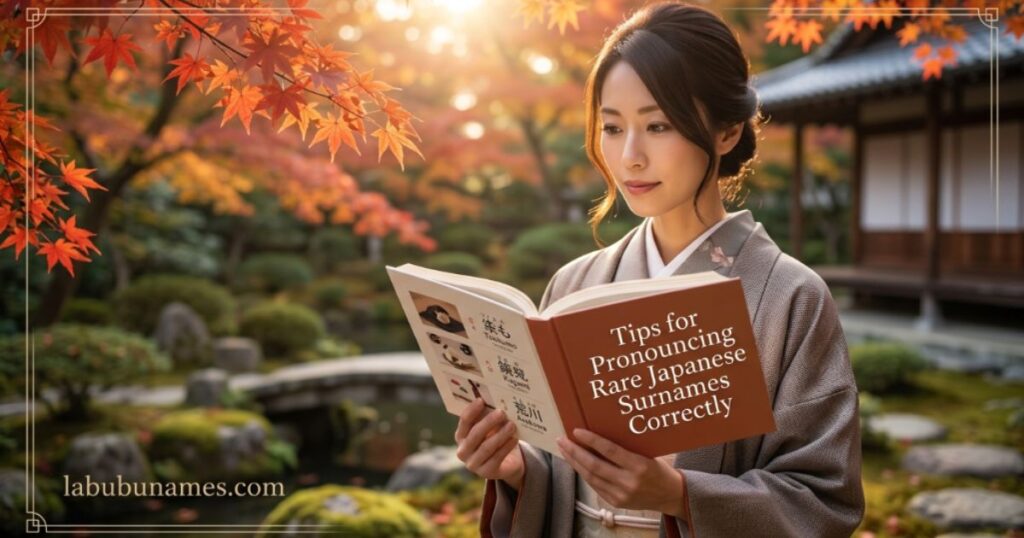
Pronouncing rare Japanese surnames can feel tricky at first. Japanese pronunciation follows consistent rules, but exceptions exist in traditional names. Learning a few basics helps you speak Japanese surname pronunciation more naturally and confidently.
1. Break the name into syllables
Say each part slowly instead of rushing.
2. Follow vowel sounds
A = ah, I = ee, U = oo, E = eh, O = oh
3. Avoid English stress patterns
Japanese does not stress one syllable heavily.
4. Practice common endings
Names ending in “-shi”, “-koji”, “-mura” are very common.
5. Listen to native pronunciation
Hearing real speech improves accuracy quickly.
6. Learn kanji readings
One kanji can have multiple pronunciations.
7. Keep rhythm even
Each syllable gets a similar timing.
8. Don’t overcomplicate it
Simple pronunciation often works better than guessing.
9. Practice with examples
Try names like “Takeda”, “Ayanokoji”, or “Shinonome”.
10. Repeat daily
Consistency builds natural fluency over time.
11. Focus on flow, not perfection
Communication matters more than exact accuracy.
12. Use phonetic guides
They help beginners avoid mistakes.
13. Watch anime or dramas
You’ll hear real surname usage in context.
14. Slow down when unsure
Speed causes most pronunciation errors.
15. Match tone gently
Keep a soft and steady voice style.
FAQ’s
Why do some Japanese family names feel uncommon today?
Many historical regions preserved rare Japanese surnames, while modernization reduced usage, making some family names appear uncommon today overall now.
Are rare surnames still used in modern Japan?
Yes many rural areas still carry rare Japanese surnames, often passed through generations, keeping cultural identity strong in communities today.
What makes Japanese surnames rare compared to common ones?
Some surnames come from specific landscapes or ancient clans, making rare Japanese surnames less widespread than common modern ones today.
Can people trace their history through uncommon Japanese surnames?
Yes, genealogical records often reveal origins behind Japanese surnames, helping families trace ancestry back to regions or clans clearly.
Do rare Japanese surnames have special meanings?
Many Japanese surnames describe nature, geography, or occupations, reflecting deep cultural meanings passed through generations in Japan society values.
Are rare surnames linked to specific regions in Japan?
Yes, certain Japanese surnames originate from mountains, islands, or villages, showing strong regional identity across historical Japan areas today.
Why are some Japanese surnames disappearing?
Urban migration and changing lifestyles reduce usage of rare Japanese surnames, causing some family names to fade gradually over time.
Conclusion
In conclusion, rare Japanese surnames show the deep history and culture of Japan. These uncommon Japanese last names often come from old regions and strong family roots. Many people still find them interesting today.
These rare Japanese surnames are not only old but also meaningful. They connect families to nature, places, and traditions. Many unique Japanese surnames are still used in rural areas. They keep history alive in simple ways.
Overall, uncommon Japanese last names uncommon and unique Japanese last names are becoming less common in modern life. Still, rare Japanese surnames continue to attract attention. These uncommon Japanese last names and unique Japanese surnames help people understand culture, identity, and heritage in a better way.